Tejashwi demands disqualification of 2 indie MLCs who joined BJP
Synopsis
Tejashwi Yadav has filed a memorandum with Bihar Legislative Council Chairman Ramvachan Rai demanding the immediate disqualification of two independent MLCs — Banshidhar Brajwasi and Rahul Raj — for joining BJP after winning their seats as independents, citing a violation of the Tenth Schedule.
Key Takeaways
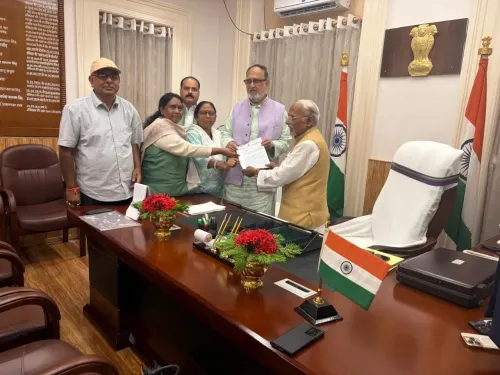
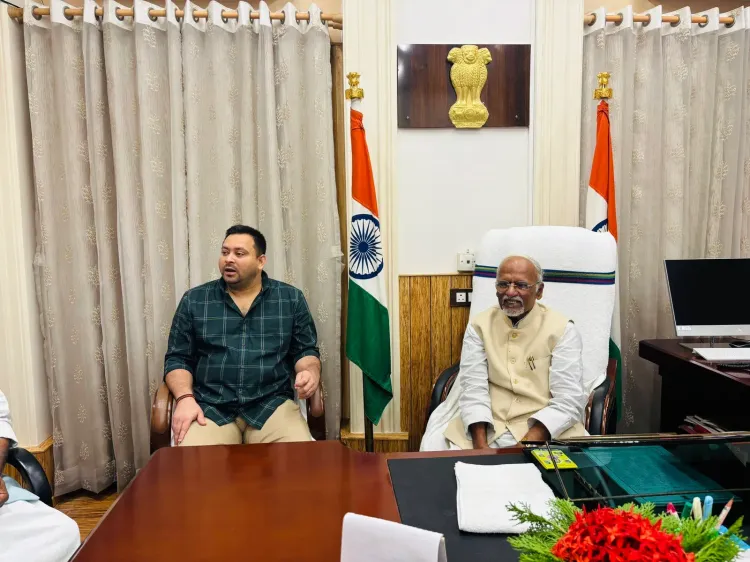
Tejashwi Yadav personally submitted a memorandum to Bihar Legislative Council Chairman Ramvachan Rai on November 17, 2026 .
Independent MLCs Banshidhar Brajwasi and Rahul Raj are accused of joining the BJP after winning their seats as independents.
Tejashwi invoked the Tenth Schedule (anti-defection law), inserted by the 52nd Constitutional Amendment of 1985 , as the legal basis for disqualification.
The final disqualification decision rests with the Council Chairman , and any adverse order can be challenged in court.
The RJD has characterised the move as BJP 'tearing the Constitution to shreds.'
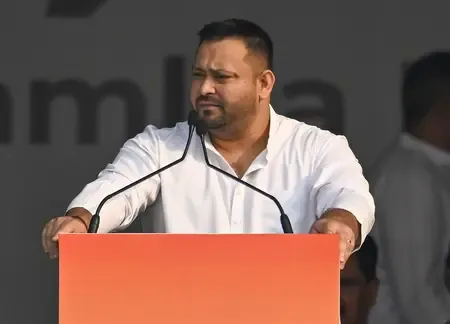
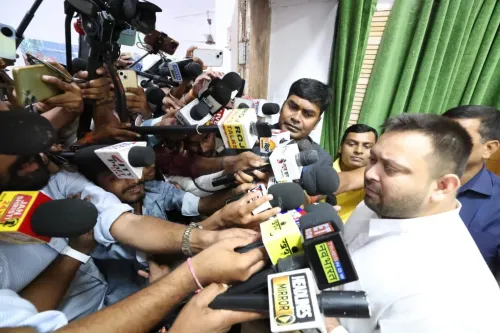
Two independent members of the Bihar Legislative Council stand accused of a constitutional violation — and RJD leader Tejashwi Yadav is demanding they pay the price with their seats. On Tuesday, November 17, 2026, the Leader of the Opposition submitted a formal memorandum to Bihar Legislative Council Chairman Ramvachan Rai, calling for the immediate disqualification of independent MLCs Banshidhar Brajwasi and Rahul Raj.
The charge: winning as independents, governing as BJP
The allegation is straightforward and politically explosive. Both legislators contested and won their seats as independents — then, after the results, joined the Bharatiya Janata Party. Tejashwi argues this post-poll switch places them squarely in the crosshairs of the Tenth Schedule of the Constitution, India's anti-defection law.
'BJP sanvidhan ki dhajjiyan uda rahi hai' (BJP is tearing the Constitution to shreds), Tejashwi wrote in his post, demanding the disqualification take 'immediate effect.' The memorandum, delivered in person to the Chairman, is designed to force a formal institutional response.
What the Tenth Schedule actually says
The Tenth Schedule, inserted into the Constitution through the 52nd Amendment Act of 1985, was designed precisely to end the era of 'aaya ram, gaya ram' — the phenomenon of legislators switching parties at will for political or financial advantage. Under its provisions, a member can be disqualified if they voluntarily give up their party membership or vote contrary to party direction.
The application of these rules to independents is a sharper legal question. An independent, by definition, has no party affiliation at the time of election — but once elected, joining a political party has historically been treated as a voluntary act that could trigger disqualification. The final call rests entirely with the Chairman of the Bihar Legislative Council, whose decision can then be challenged in court.
A pattern playing out across Indian states
This is not Bihar's first such battle. Across Indian states, opposition parties routinely file anti-defection petitions when independents or opposition legislators migrate to the ruling alliance after polls. The cases almost always generate political heat, prolonged legal proceedings, and — critically — a test of whether the presiding officer acts with speed or caution.
That dynamic is exactly what Tejashwi is now activating. By going directly to the Chairman with a written memorandum, the RJD has set a clock ticking. Every day the two MLCs continue to function as BJP members inside the Council, the opposition's constitutional argument gets louder.
The Chairman's response — and whether Brajwasi and Raj challenge any adverse ruling in court — will determine whether this becomes a landmark anti-defection case or another political skirmish that fades in the procedural maze.
Point of View
Not merely a political statement — by forcing the Council Chairman onto the record, the RJD converts a post-election party switch into a formal constitutional proceeding. The case tests how robustly the Tenth Schedule applies to independents, a legal grey area that courts have not settled uniformly across states. For the broader opposition, the optics are equally important: framing the ruling alliance as a Constitution-breaker ahead of any future electoral cycle is a narrative the RJD has consistently tried to build. How quickly — or slowly — the Chairman acts will itself become part of the political story.
NationPress
17 Nov 2026
Frequently Asked Questions
Why is Tejashwi Yadav demanding disqualification of two Bihar MLCs?
Tejashwi Yadav argues that MLCs Banshidhar Brajwasi and Rahul Raj violated the anti-defection law by joining the BJP after winning their seats as independent candidates, which he says contravenes the Tenth Schedule of the Constitution.
What is the Tenth Schedule of the Indian Constitution?
The Tenth Schedule is the anti-defection law, added to the Constitution through the 52nd Amendment in 1985. It allows for the disqualification of legislators who voluntarily give up their party membership or act against party direction after being elected.
Can an independent MLC be disqualified for joining a party after winning?
This is a contested legal question. Independent legislators who join a political party after winning their seats have been held to be covered by anti-defection provisions in several cases, but the final authority is the presiding officer — in Bihar's case, the Council Chairman — whose ruling can then be challenged in court.
Who decides the disqualification of Bihar Legislative Council members?
The Chairman of the Bihar Legislative Council has the constitutional authority to decide disqualification petitions filed under the Tenth Schedule. Such decisions can subsequently be challenged before the High Court or the Supreme Court.
What action did Tejashwi Yadav take on November 17, 2026?
Tejashwi Yadav met Bihar Legislative Council Chairman Ramvachan Rai and submitted a formal memorandum demanding the immediate cancellation of the membership of independent MLCs Banshidhar Brajwasi and Rahul Raj.