Jan Suraaj seeks disqualification of two Bihar MLCs who joined BJP after election
Synopsis
Jan Suraaj Party has moved the Bihar Legislative Council seeking disqualification of two newly elected independent MLCs — Banshidhar Brajwasi and Rahul Raj — who reportedly joined the BJP within 72 hours of winning their seats on 28 October. The petition invokes the Tenth Schedule and alleges the move was designed to inflate BJP's council tally from 2 to 4.
Key Takeaways
Jan Suraaj Party filed a disqualification petition on 2 November 2026 against Bihar MLCs Banshidhar Brajwasi and Rahul Raj .
Both MLCs were elected as independent candidates in results declared on 28 October before reportedly joining the BJP within 72 hours .
The petition invokes Schedule 10, Article 190 , and Paragraph 12(K) of the Constitution — the anti-defection provisions.
Acting Chairman Prof Dr Ramvachan Rai described the matter as 'serious' and promised to consult legal experts.
The Election Commission of India , Bihar's Chief Electoral Officer , and other officials have been named as parties to the petition.
The Bihar council election results split 7 seats across BJP ( 2 ), RJD ( 2 ), independents ( 2 ), and Jan Suraaj ( 1 ).
Jan Suraaj Party on Monday, 2 November 2026, moved the Bihar Legislative Council seeking the disqualification of two newly elected independent members — Banshidhar Brajwasi and Rahul Raj — after they reportedly joined the Bharatiya Janata Party (BJP) within 72 hours of their election victories. The petition was submitted in Patna to the council's Acting Chairman, Prof Dr Ramvachan Rai, by a delegation led by former MLA Kishore Kumar Munna.
What the Petition Alleges
The Jan Suraaj delegation contended that Brajwasi, elected from the Tirhut Graduate constituency, and Rahul Raj, elected from the Saran Teachers' constituency, both won their seats as independent candidates before publicly acknowledging membership of the BJP. The party argued this constitutes a direct violation of the Tenth Schedule of the Constitution — the anti-defection law — which bars independently elected legislators from joining a political party after their victory.
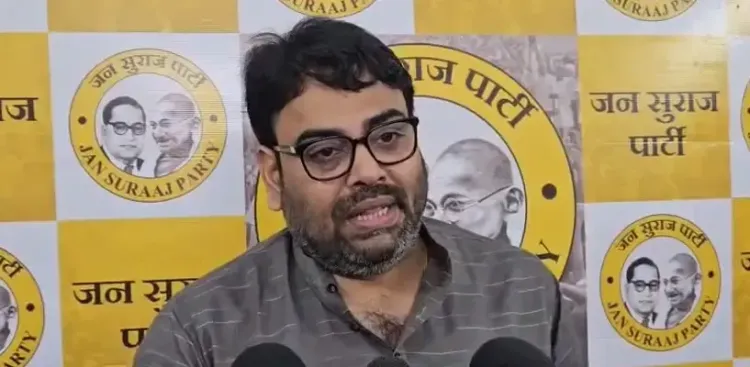
Jan Suraaj spokesperson Kumar Saurabh said the move amounted to a 'betrayal of the voters' mandate and a violation of democratic principles.' He alleged that the BJP was attempting to manufacture the optics of a broader victory than it actually secured.
What the Spokesperson Said
'The reason being, the results came out on October 28 — 2 seats were won by BJP, 2 were won by independent candidates, and 2 were won by RJD, and 1 by Jan Suraaj, and just to create the perception that you won four seats and not two, you tried to tweak the mandate given by the public,' Saurabh said. He added that the two MLCs were 'clearly going against the Schedule 10, 190, and 12(K) provisions of the Constitution.'
Constitutional Provisions Invoked
The delegation specifically cited Schedule 10 (the Tenth Schedule), Article 190, and Paragraph 12(K) of the Constitution as the basis for disqualification. Former MLA Munna explained that an independent member elected to a legislative body could face disqualification for joining a political party after the election — a settled position under Indian constitutional law.
The petition also named the Election Commission of India, the Chief Electoral Officer of Bihar, the Chief Secretary, and the Commissioner concerned as parties, broadening the scope of the complaint beyond the council alone.
Acting Chairman's Response
According to Munna, Acting Chairman Rai assured the delegation that he would consult legal experts and take appropriate action under the applicable rules and legal provisions. Former MLC Rambali Singh Chandravanshi, also part of the delegation, said Rai described the matter as 'serious.'
The delegation submitted supporting material — including newspaper reports, public statements by the two leaders, and other relevant evidence — on a pen drive. Chandravanshi expressed confidence in the Acting Chairman's impartiality and said he hoped a decision would be taken in the interest of protecting the Constitution and democratic values.
Background and Broader Context
The Bihar Legislative Council elections, whose results were declared on 28 October, saw seats split across the BJP, the Rashtriya Janata Dal (RJD), Jan Suraaj, and independent candidates. The alleged near-immediate shift of two independent winners to the BJP has drawn sharp attention to how post-election party-switching can alter the effective outcome of a council ballot without triggering a fresh mandate from voters.
This is not an isolated phenomenon in Indian legislative history — anti-defection petitions at the state council level have historically taken months or even years to resolve, raising questions about timely enforcement of the Tenth Schedule. How quickly the Acting Chairman acts will now be closely watched, both within Bihar and as a signal for similar contests elsewhere.
Point of View
And enforcement timelines at the state council level are notoriously slow. If the Acting Chairman defers to prolonged legal consultations, the practical effect of disqualification — reversing the BJP's apparent gain — diminishes with every passing day. Jan Suraaj's decision to simultaneously petition the Election Commission and the Chief Secretary signals it does not trust the council mechanism alone to move at speed. The broader irony is that a party founded on accountability politics is now testing whether the institutions it wants to reform are capable of policing themselves in real time.
NationPress
2 Nov 2026
Frequently Asked Questions
Why has Jan Suraaj sought disqualification of the two Bihar MLCs?
Jan Suraaj contends that Banshidhar Brajwasi and Rahul Raj were elected as independent candidates in the Bihar Legislative Council elections on 28 October but joined the BJP within 72 hours of winning — a move the party argues violates the Tenth Schedule of the Constitution, which bars independently elected legislators from joining a political party post-election.
Which constitutional provisions have been invoked in the petition?
The petition invokes Schedule 10 (the Tenth Schedule or anti-defection law), Article 190, and Paragraph 12(K) of the Constitution. Together, these provisions can lead to the termination of a legislator's membership of a house if they switch affiliation after being elected as an independent.
What was the outcome of the Bihar Legislative Council elections?
Results declared on 28 October gave the BJP 2 seats, the RJD 2 seats, Jan Suraaj 1 seat, and independent candidates 2 seats. Jan Suraaj alleges the BJP engineered the defection of both independents to project a tally of 4 seats rather than 2.
Who is the Acting Chairman of the Bihar Legislative Council and what has he said?
Prof Dr Ramvachan Rai is the Acting Chairman. He reportedly described the matter as 'serious' and assured the Jan Suraaj delegation that he would consult legal experts before taking action under the applicable constitutional and legal provisions.
What happens next in this case?
The Acting Chairman has said he will consult legal experts before deciding on notices to the parties concerned. The petition has also been filed with the Election Commission of India, Bihar's Chief Electoral Officer, the Chief Secretary, and the relevant Commissioner — widening the avenues through which action could be initiated.