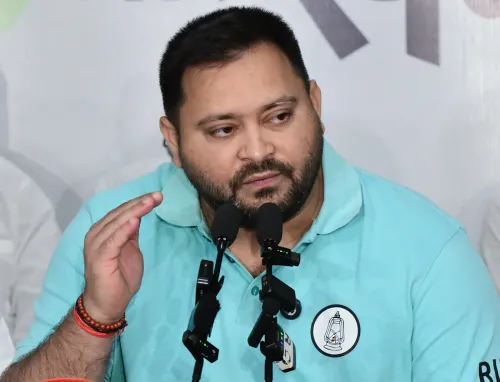
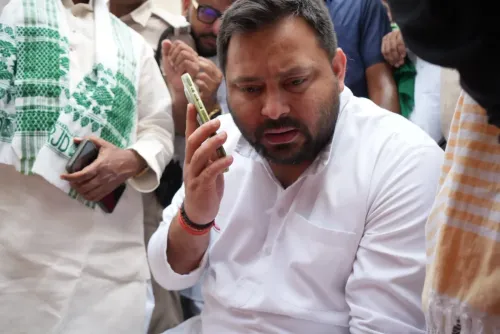
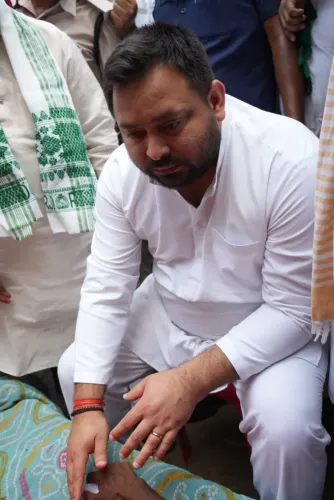
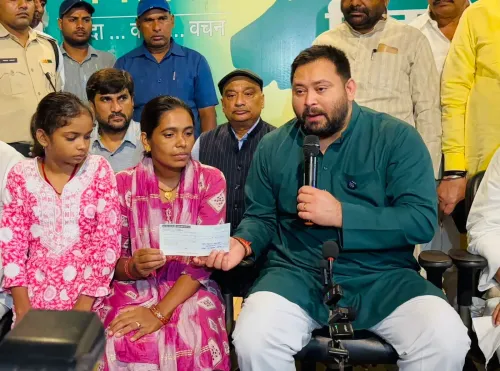
Tejashwi Yadav demands FIR against NDA MLA in Bihar official's murder
Synopsis
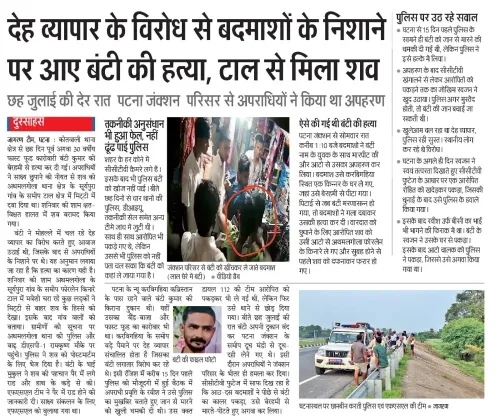
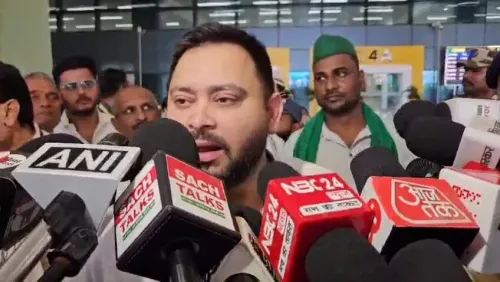
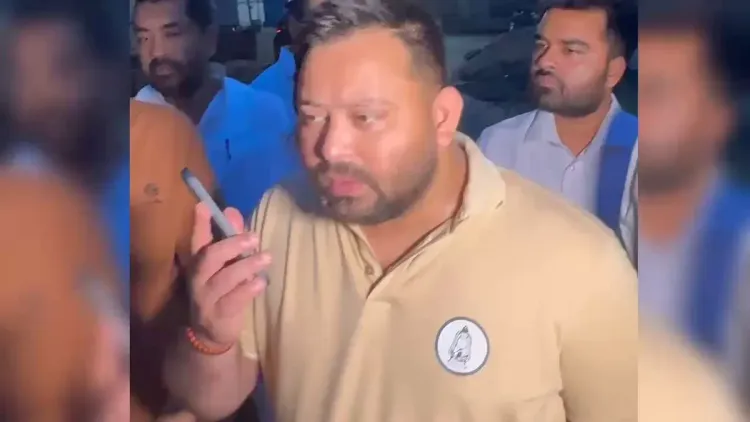
RJD leader Tejashwi Yadav has accused an NDA MLA of ordering the murder of a Bihar government official who refused to pay ₹50 lakh in extortion. Yadav alleges police quickly deflected suspicion to shield the legislator and is demanding a named FIR and judicial inquiry from Chief Minister Nitish Kumar.
Key Takeaways
Tejashwi Yadav says this is the second killing of a government official in Bihar within a few days.
The victim's family has allegedly named an NDA MLA who reportedly demanded ₹50 lakh and ordered the murder when refused.
Yadav alleges a police Inspector General rushed to the scene and redirected suspicion toward the deceased's driver without investigation.
Yadav has issued a direct public challenge to Chief Minister Nitish Kumar to register a named FIR against the accused MLA.
He has also demanded a judicial inquiry — a court-supervised probe independent of the Bihar Police hierarchy.
As of the time of posting, no official response from the Bihar government or state police has been made public.
A second government official murdered in Bihar within days — and RJD leader Tejashwi Yadav is now pointing his finger directly at an NDA legislator, alleging the killing was ordered after the official refused to pay a ₹50 lakh extortion demand. Yadav posted the charge on Sunday, 2 August 2026, demanding the Bihar Chief Minister act — or admit he cannot.
The allegation: extortion demand, then murder
In his post, Yadav states that the victim's family has directly named an NDA MLA, alleging the legislator was pressuring the executive officer for ₹50 lakh and had him killed when the money was not paid. The post describes this as the doosre adhikari ki hatya — 'second killing of an official' — within a matter of days in the state, framing it as a pattern, not an isolated incident.
Yadav further alleges that a senior police officer — an Inspector General — rushed to the scene and, without any investigation, redirected suspicion toward the deceased's driver. The implication: the probe was steered to keep the MLA out of the inquiry's crosshairs from the very first hour.
Tejashwi's direct challenge to Nitish Kumar
'Forget an encounter,' Yadav wrote in effect — 'if you have the courage, register a named FIR against the accused MLA and order a judicial inquiry.' The post calls out Chief Minister Nitish Kumar by title, noting that the same leader who makes 'boastful statements' about hunting criminals to the depths of the earth has gone silent (khud hi gayab hai — 'has himself disappeared') when an MLA from his own alliance stands accused.
The challenge is pointed and public: Yadav is not asking for an internal inquiry or a committee. He is demanding a named FIR and a judicial probe — the two mechanisms that would take the investigation out of the Bihar Police's hands and create a court-supervised record.
Bihar's recurring fault line: MLAs, officials, and shielded investigations
The allegation fits a well-worn groove in Bihar politics. Opposition parties — whether RJD in the current role or NDA when it sat across the aisle — have repeatedly accused ruling dispensations of using police first-response to protect allied legislators. Bihar has seen multiple cycles of NDA and RJD governments, and the charge of 'criminalisation of politics' has been levelled in both directions across decades.
What makes this moment sharper is the speed of the police response Yadav describes: an IG-level officer at the scene almost immediately, and the investigation needle moved to the driver before any formal inquiry concluded. In Indian criminal procedure, that kind of early framing can shape an entire case. Yadav's demand for a judicial inquiry is precisely because such a probe would be ordered by a court, not managed by the same police hierarchy he is accusing of bias.
What would a named FIR actually mean?
A named FIR against a sitting legislator is a significant legal and political step. It triggers mandatory police action, can lead to arrest, and — crucially — becomes a matter of public court record. Yadav's framing of this as a test of the Chief Minister's himmat (courage) is a calibrated political dare: either the government acts and implicates its own MLA, or its inaction becomes the story.
As of this report, neither the Bihar government nor the state police have issued a public response to the allegations. The two questions Bihar is now watching: will a named FIR be registered, and will the Chief Minister order an independent judicial inquiry?
Point of View
He is setting a concrete, verifiable benchmark: either the government acts against its own legislator, or the silence becomes evidence of complicity. The allegation of early police deflection — an IG steering the probe toward the driver within hours — is the sharpest detail, because it suggests institutional cover rather than individual failure. Bihar's history of mutual accusations on criminalisation of politics means this charge will be familiar to voters, but the specificity of the ₹50 lakh demand and the two-killings-in-days framing gives this cycle unusual urgency.
NationPress
17 Sept 2026
Frequently Asked Questions
What did Tejashwi Yadav allege about the Bihar official's murder?
Tejashwi Yadav alleged that an NDA MLA demanded ₹50 lakh from a government executive officer and had him killed when the money was not paid. He also alleged that a senior police officer quickly shifted suspicion to the deceased's driver to protect the MLA from investigation.
Which party's MLA has been accused in the Bihar official murder case?
Tejashwi Yadav's post alleges the accused legislator belongs to the NDA alliance currently governing Bihar. The specific name of the MLA has not been independently verified.
What is Tejashwi Yadav demanding from the Bihar government?
Yadav is demanding two specific actions: a named FIR against the accused MLA and a judicial inquiry ordered by the Chief Minister — both of which would take the probe out of the Bihar Police's sole control.
What is a named FIR and why does it matter in this case?
A named FIR identifies a specific accused person by name, triggering mandatory police action including the possibility of arrest. In this case, filing one against a sitting MLA would create a public court record and legally compel the police to investigate the legislator.
How has the Bihar government responded to Tejashwi Yadav's allegations?
As of the time of Yadav's post on 2 August 2026, no public response had been issued by the Bihar government or state police to the allegations.