Tejashwi meets DGP, demands FIR over AK-47 firing on students
Synopsis
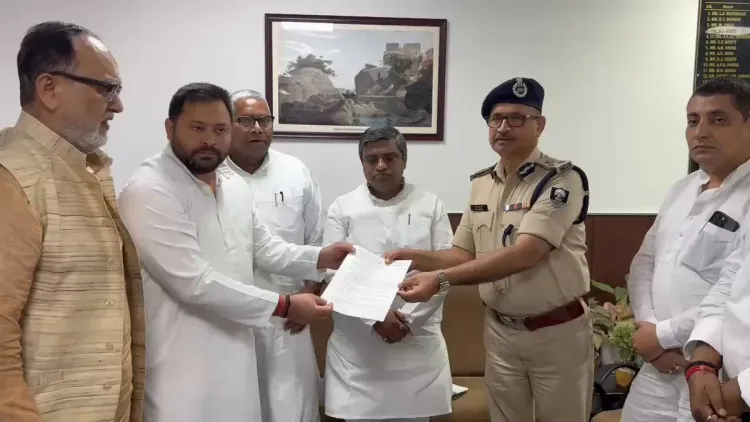
RJD leader Tejashwi Yadav met Bihar's DGP on August 7, 2026, submitting a memorandum demanding FIRs against senior officers accused of ordering AK-47 fire and baton charges on students protesting exam paper leaks, warning of opposition protests if the government fails to act.
Key Takeaways
Tejashwi Yadav met the Bihar DGP on August 7, 2026 and submitted a formal memorandum demanding criminal cases against senior police officers.
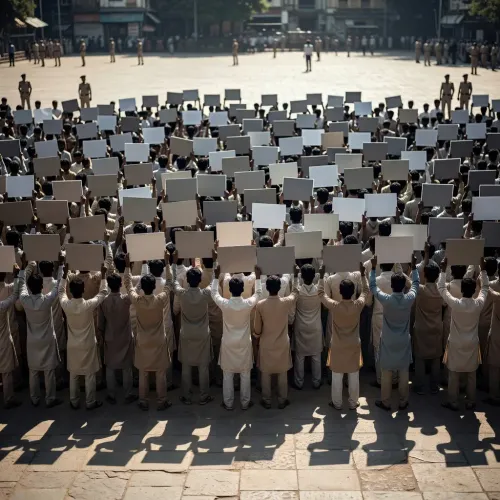
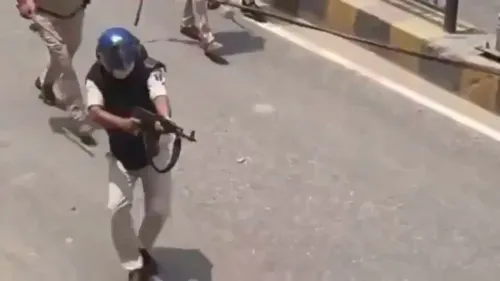
The memorandum accuses Bihar Police of using AK-47 rifles and conducting baton charges on students staging democratic protests against paper leaks.
Five specific demands include an explanation for the use of AK-47s, accountability for officers who gave the firing order, and a judicial inquiry into the crackdown.
Tejashwi questioned why police did not follow the Graded Response Action Plan (GRAP) crowd-control protocol before resorting to live fire.
The RJD leader warned that the opposition will launch a formal protest movement if the Bihar government fails to take strict action against the officers involved.
Bihar has a documented history of student agitations over examination irregularities, with police lathi charges reported in 2023–2024 as well.
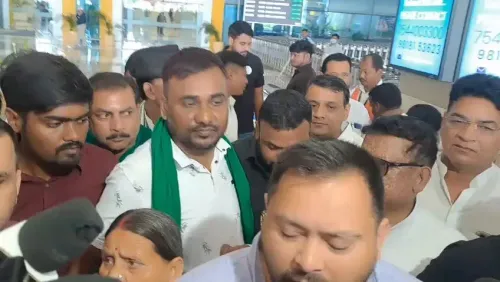
Students protesting Bihar's paper-leak crisis were met with AK-47 fire and baton charges — and now the state's Leader of the Opposition is demanding criminal accountability at the top. RJD leader Tejashwi Yadav met with the Bihar Director General of Police on Friday, August 7, 2026, submitting a formal memorandum that calls for FIRs against the Superintendent of Police and other senior officers of the concerned district.
Five demands, one ultimatum to Nitish Kumar's government
The memorandum Tejashwi handed to the DGP is pointed and sequenced. First, it demands an explanation for why AK-47s — assault rifles designed for combat, not crowd control — were deployed against student demonstrators. Second, it flags what he calls a 'Trigger Happy' (trigger-happy) posture, accusing the police of adopting a 'Shoot to Kill' mindset against children. Third, it asks why the force bypassed the state's own 'Graded Response Action Plan' (GRAP) Standard Protocol of Operations for crowd management — a protocol that exists precisely to prevent escalation.
The fourth demand cuts to the chain of command: why have the senior officers who gave the firing order faced no concrete action so far? The fifth, and broadest, calls for a judicial inquiry into the entire police crackdown during the student agitation, alongside binding directives to rein in what Tejashwi describes as arbitrary police conduct and prevent any recurrence.
He closed the meeting with an explicit warning: if the Bihar government does not take strict action against the officers who ordered fire on students, the opposition will launch a formal protest movement.
Bihar's paper-leak crisis: a recurring wound
The students who took to the streets were not protesting in a vacuum. Bihar has seen repeated agitations over examination irregularities — from BPSC competitive tests to university papers — with prior cycles of lathi charges reported as recently as 2023–2024. Each episode follows a familiar script: a leak surfaces, students mobilise, police respond with force, and opposition parties demand accountability that rarely arrives.
What marks this episode as sharper is the nature of the alleged weapon. The use of AK-47s — if confirmed — would represent a significant escalation beyond the rubber bullets and water cannons typically associated with crowd control. That question sits at the centre of Tejashwi's memorandum, and it is the one the state government will find hardest to sidestep.
Opposition pressure and the law-and-order test
For Tejashwi Yadav and the RJD, this is both a moral stand and a political calculation. As Leader of the Opposition in the Bihar Legislative Assembly, his role is to hold the ruling dispensation to account — and a government that fires assault rifles at students protesting exam fraud is a target-rich environment. The memorandum to the DGP is also a paper trail: if the government acts, the opposition gets credit for forcing it; if it does not, the promised protest movement has a documented foundation.
Bihar's law-and-order record is a perennial flashpoint. The state's examination system, its police conduct, and its governance credibility are all on trial here. The DGP's response — or silence — will set the temperature for what comes next.
Point of View
Preserving the moral high ground before any street protest. The invocation of the GRAP protocol is legally significant: it shifts the argument from political outrage to procedural dereliction, making it harder for the government to dismiss as partisan noise. Bihar's cyclical paper-leak agitations have repeatedly exposed the gap between the state's examination reform promises and ground reality; each crackdown that goes unaccountable widens that gap. If the government does not act on the memorandum, the opposition gains a ready-made narrative of impunity ahead of any future electoral contest in the state.
NationPress
7 Aug 2026
Frequently Asked Questions
Why did Tejashwi Yadav meet the Bihar DGP on August 7, 2026?
Tejashwi Yadav met the Bihar Director General of Police to submit a memorandum demanding FIRs against the district Superintendent of Police and other senior officers accused of ordering AK-47 fire and baton charges on students protesting paper leaks.
What are the five demands in Tejashwi's memorandum to the Bihar DGP?
The five demands are: an explanation for the use of AK-47s on students; accountability for the 'Shoot to Kill' approach; clarification on why the GRAP crowd-control protocol was not followed; immediate action against officers who ordered the firing; and a judicial inquiry into the entire police crackdown during the student agitation.
What is the GRAP protocol that Bihar Police allegedly violated?
The Graded Response Action Plan (GRAP) is a standard protocol for crowd management that mandates a step-by-step escalation of force. Tejashwi's memorandum alleges Bihar Police bypassed this protocol and went directly to live fire against student protesters.
What did Tejashwi Yadav warn if the Bihar government does not act?
Tejashwi warned that if the Bihar government fails to take strict action against the police officers who fired on students, the opposition will launch a formal protest movement.
What is the background of Bihar's student protests over paper leaks?
Bihar has seen repeated student agitations over examination irregularities in competitive exams such as BPSC and university tests, with prior incidents of police lathi charges reported in 2023–2024. These protests reflect systemic failures in the state's examination administration.