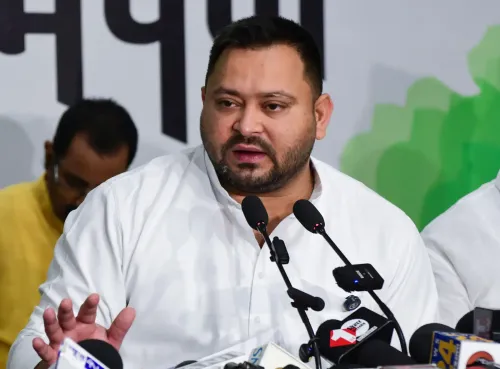
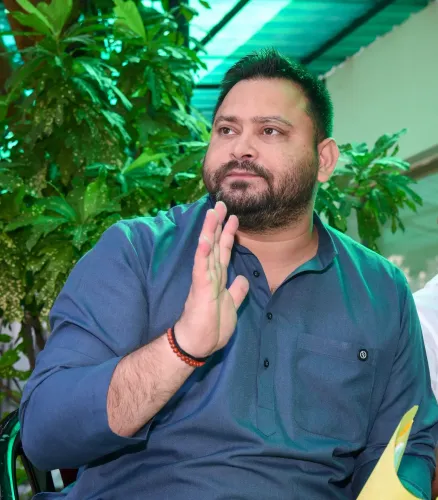
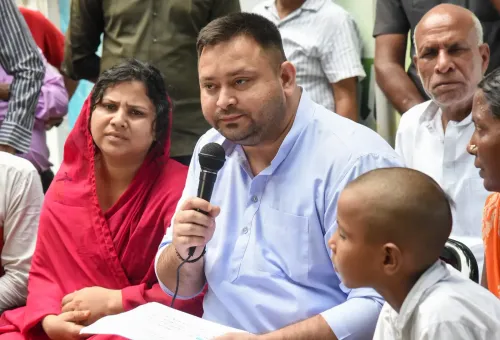
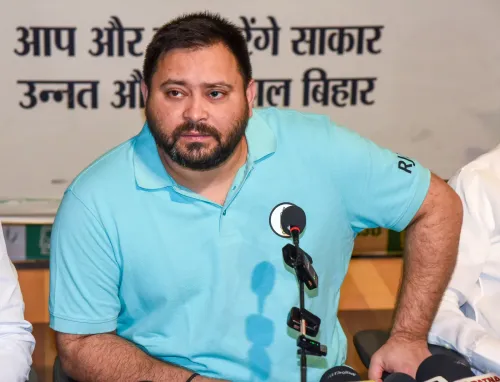
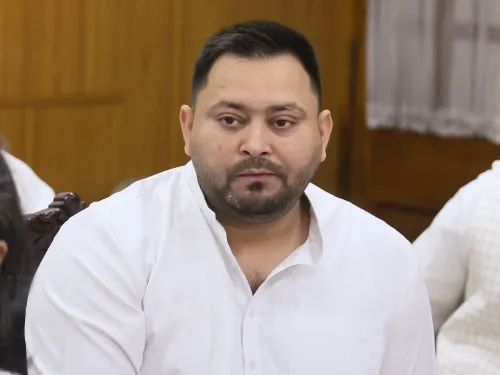
Tejashwi warns of POCSO action against CM Samrat Choudhary
Synopsis
RJD leader Tejashwi Yadav has accused Bihar Chief Minister Samrat Choudhary of violating POCSO Section 23 by disclosing the identity of a minor Jamui victim, and threatened legal action after 24 hours of official inaction.
Key Takeaways
Bihar CM Samrat Choudhary is accused by Tejashwi Yadav of revealing the identity of a minor sexual offence victim in the Jamui incident.
POCSO Act 2012, Section 23 prohibits disclosing any information that could identify a child victim of a sexual offence, with no exemption for public officials.
Five state bodies — Bihar Police , Social Welfare Department , Women's Commission , Child Rights Commission , and Law Department — are accused of taking no action even after 24 hours .
CM Choudhary has not issued a public apology as of Tejashwi's post on September 25, 2026 .
Tejashwi has threatened to invoke POCSO Section 23 in court to hold 'all parties' accountable if official action is not taken.
Nearly 24 hours after Bihar Chief Minister Samrat Choudhary allegedly revealed the identity of a minor victim in the Jamui incident, not a single state agency has acted — and RJD leader Tejashwi Yadav is now threatening to drag every delinquent authority into court under POCSO Act, 2012.
In a pointed post on Friday, September 25, Tejashwi accused Choudhary of committing a 'serious crime' by publicly disclosing the identity of the minor survivor along with her family. The charge is legally specific: Section 23 of the Protection of Children from Sexual Offences Act, 2012 expressly prohibits any person — including public officials — from revealing the name, address, school, or any detail that could identify a child victim of a sexual offence.
Which agencies Tejashwi says have gone silent
Tejashwi listed a striking roster of bodies he says have failed to move: Bihar Police, the Social Welfare Department, the State Women's Commission, the Bihar State Commission for Protection of Child Rights, and the Law Department. The breadth of the list is deliberate — each of these bodies carries an independent statutory or executive obligation to protect child victims and enforce POCSO's confidentiality mandate. By naming all of them, Tejashwi is arguing that the system's silence is institutional, not incidental.
He has also demanded that Chief Minister Choudhary offer a public apology. As of the post, no apology had been tendered.
The POCSO Section 23 lever — and what it means
Section 23 of POCSO 2012 is one of the statute's sharpest provisions. It bars media and any person from disclosing the identity of a child victim, and violations can invite criminal proceedings. Critically, the law does not carve out an exemption for elected officials or constitutional post-holders. Courts across multiple states have previously taken cognizance of complaints against public figures for POCSO identity-disclosure violations — which is precisely the legal pathway Tejashwi says he intends to pursue.
'यदि मुख्यमंत्री पर कोई कार्रवाई नहीं होती है तो फिर पॉक्सो अधिनियम-2012 की धारा 23 के अंतर्गत हम कानूनी विकल्प तलाश सभी पक्षों को कठघरे में खड़ा करेंगे' — ('If no action is taken against the Chief Minister, we will explore legal options under Section 23 of the POCSO Act 2012 and hold all parties accountable'), Tejashwi wrote.
Bihar's recurring fault line over crimes against women and minors
This confrontation fits a pattern in Bihar's political landscape, where the RJD-led opposition and the ruling NDA alliance have repeatedly clashed over law-and-order incidents involving women and children. Opposition leaders routinely invoke POCSO and other gender-protective statutes to pressure the state government — but framing the charge directly against the Chief Minister himself, and publicly giving a 24-hour deadline before legal action, raises the stakes considerably.
The next move belongs to the institutions Tejashwi named. If Bihar Police, the child rights commission, or any other body initiates even a preliminary inquiry against the CM, it would mark an extraordinary moment in the state's political history. If they do not, Tejashwi's threatened court petition could force that question before a judge.
Either way, the silence of Bihar's protective machinery — for a full day after an alleged POCSO violation by its own Chief Minister — is now a political and legal fact on the record.
Point of View
Forcing state institutions to either act or explain their silence. The 24-hour deadline mechanism is a calculated political tool: it publicly logs inaction, building the foundation for a court petition and a media narrative of systemic failure. In Bihar's polarised NDA-vs-RJD political theatre, Tejashwi's choice to name five specific agencies rather than just the CM signals an attempt to delegitimise the entire protective infrastructure of the state government. If a court does take cognizance, the case could set a precedent on whether POCSO's identity-protection clause binds elected officials in the same way it binds journalists and media organisations.
NationPress
25 Sept 2026
Frequently Asked Questions
What is POCSO Act Section 23 and what does it prohibit?
Section 23 of the Protection of Children from Sexual Offences Act, 2012 prohibits any person, including public officials, from disclosing the name, address, school, or any detail that could identify a child victim of a sexual offence. Violations can lead to criminal proceedings.
What did Tejashwi Yadav accuse Bihar CM Samrat Choudhary of?
Tejashwi Yadav accused Bihar Chief Minister Samrat Choudhary of revealing the identity of a minor victim in the Jamui incident along with her family details, which Tejashwi characterised as a serious crime under POCSO Section 23.
Which government bodies did Tejashwi say failed to act?
Tejashwi named Bihar Police, the Social Welfare Department, the State Women's Commission, the Bihar State Commission for Protection of Child Rights, and the Law Department as having taken no action even 24 hours after the alleged violation.
What legal action has Tejashwi Yadav threatened?
Tejashwi has threatened to explore legal options under POCSO Act 2012's Section 23 and hold all responsible parties accountable in court if the Chief Minister faces no official action and does not apologise.
What happened in the Jamui incident in Bihar?
The Jamui incident refers to a case in Jamui district, Bihar, involving a minor victim of a sexual offence. Specific details of the incident have not been independently verified and remain under investigation.