Tejashwi Yadav accuses Bihar CM of violating POCSO Act

Synopsis
RJD leader Tejashwi Yadav has accused Bihar Chief Minister Nitish Kumar of violating POCSO Act Section 23 by allegedly sharing a photo that identifies the minor victim in the Jamui sexual assault case, demanding strict legal punishment for the Chief Minister.
Key Takeaways
Tejashwi Yadav publicly accused Bihar CM Nitish Kumar of disclosing the identity of a minor sexual assault victim from the Jamui case via his social media handle.
Section 23 of the POCSO Act, 2012 strictly prohibits any media or platform from revealing a child victim's identity, including name, photo, address, or family details.
The penalty for violating POCSO Section 23 is imprisonment of six months to one year , a fine, or both.
Tejashwi demanded the 'strictest possible punishment' for the Chief Minister, warning that impunity at the top would render the law meaningless.
The Bihar government had not issued any official clarification in response to the accusation at the time of publication.
The allegation adds a specific legal dimension to the long-running RJD offensive against the JD(U) government over women's safety and victims' rights in Bihar.
A sharp legal accusation landed in Bihar's political arena on Thursday, September 24, 2026, when RJD leader and Leader of the Opposition Tejashwi Yadav publicly charged Bihar Chief Minister Nitish Kumar with violating the Protection of Children from Sexual Offences (POCSO) Act, 2012 — alleging that the Chief Minister personally shared a photograph on his social media handle that disclosed the identity of the minor victim in the Jamui sexual assault case.
The specific POCSO provision at the centre of the allegation
Tejashwi's post is not a vague political broadside — it cites chapter and verse. Section 23 of the POCSO Act, 2012 is unambiguous: no media platform, print, electronic, or social, may disclose any information that could identify a child victim of a sexual offence. That includes the child's name, address, photograph, school, or any family detail. The prescribed punishment is imprisonment of six months to one year, a fine, or both.
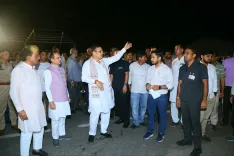
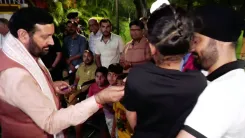
Tejashwi wrote that the Chief Minister released a photograph along with the victim's family members from his own social media handle, thereby exposing her identity. 'पॉक्सो एक्ट की धज्जियाँ उड़ा रहे हैं' — 'shredding the POCSO Act to pieces' — was his characterisation. He demanded that the Chief Minister face the 'strictest possible punishment' for the offence, arguing that without accountability at the top, no one would take the law seriously.
Jamui case: what is known
The Jamui district case involves a minor victim of sexual assault in Bihar. The specific facts of the incident and any recent social media activity by the Chief Minister could not be independently verified at the time of publication. What is on record is Tejashwi's allegation, made publicly on his official X account, that the victim's identity was compromised through an official-level post.
Bihar's law-and-order fault line — and a pointed personal attack
Tejashwi did not stop at the legal argument. He extended the attack to the Chief Minister's personal background, calling him 'सातवीं फेल सात हत्याओं का आरोपी मुख्यमंत्री' — 'a Chief Minister who failed class seven and faces seven murder charges' — and warned that appointing such individuals to the highest office guarantees repeated violations of the law. The closing line was direct: 'Such people are not protectors of the law — they are its predators.'
The charge taps into a recurring fault line in Bihar politics. Opposition parties, led by the RJD, have consistently questioned the Nitish Kumar-led JD(U) government's record on women's safety, victim protection, and law enforcement. The Jamui case has given that long-running argument a specific legal hook: a statutory provision with a named penalty.
What could follow
Legal activists and child-rights groups have in the past filed court petitions over identity disclosures of minor victims by public figures. If the allegation is substantiated, it could invite a suo-motu intervention or a formal complaint — either from civil society or from within the Bihar Assembly. The Bihar government had not issued any official clarification as of the time of this report.
A law written to protect the most vulnerable victims in the courtroom is now the centrepiece of a political confrontation at the top of Bihar's government — and the clock on accountability, as Tejashwi frames it, is running.
Point of View
He forces the debate out of the familiar 'law and order rhetoric' lane and onto a legal-accountability track that is harder to dismiss. If the allegation of identity disclosure is substantiated, it could attract judicial notice independent of the political noise. The broader pattern here is significant — in Bihar's competitive opposition politics, the RJD has increasingly used legal frameworks, not just moral arguments, to build pressure on the ruling dispensation. Whether this escalates into a court petition or fades into the next news cycle depends entirely on whether civil society or the judiciary picks up the thread.
NationPress
25 Sept 2026
Frequently Asked Questions
What is Tejashwi Yadav accusing Bihar CM Nitish Kumar of?
Tejashwi Yadav has accused Bihar Chief Minister Nitish Kumar of sharing a photograph on his social media handle that reveals the identity of the minor victim in the Jamui sexual assault case, which he alleges is a violation of Section 23 of the POCSO Act, 2012.
What does POCSO Act Section 23 say about victim identity?
Section 23 of the POCSO Act, 2012 makes it a criminal offence for any media — print, electronic, or social media — to disclose any information that could identify a child victim of a sexual offence. This includes the child's name, photograph, address, school, or family details. The punishment is six months to one year in jail, a fine, or both.
What is the Jamui case that Tejashwi Yadav is referring to?
The Jamui case refers to a sexual assault incident involving a minor victim in Bihar's Jamui district. The specific details of the incident have not been independently verified, but it has become a political flashpoint in Bihar, with Tejashwi alleging that the victim's identity was compromised by an official-level social media post.
Can a Chief Minister be prosecuted under the POCSO Act?
Under the POCSO Act, 2012, any person — regardless of position — who discloses information that identifies a child victim of a sexual offence can face prosecution under Section 23. A sitting Chief Minister would not enjoy blanket immunity from a criminal provision of this nature, though any actual prosecution would involve standard legal and procedural steps.
Has the Bihar government responded to Tejashwi Yadav's POCSO allegation?
As of the time of this report on September 24, 2026, the Bihar government had not issued any official clarification or response to Tejashwi Yadav's allegation that the Chief Minister violated the POCSO Act by posting a photo identifying the Jamui case minor victim.