Tejashwi Yadav promises jobs, pension for student protesters if RJD forms govt
Synopsis
RJD's Tejashwi Yadav has pledged government jobs and pension for students injured, arrested, or jailed in recent Bihar protest agitations, calling them 'warriors' and vowing to stand with youth demanding a fair examination system and an end to recruitment corruption.
Key Takeaways
Tejashwi Yadav on 28 July 2026 promised government employment and pension for students who faced injury, FIRs, or jail during recent protests.
He explicitly accused the BJP of repression and police brutality against peaceful, constitutionally protected demonstrations.
The pledge covers students agitating for a fair and transparent examination system and an end to corruption in government hiring.
The RJD has a history of making large-scale youth employment promises, dating back to its 2020 Bihar assembly election manifesto.
Bihar has long faced student unrest over repeated exam paper leaks, delayed recruitments, and high youth unemployment.
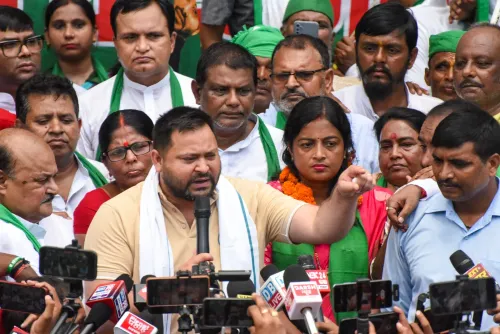
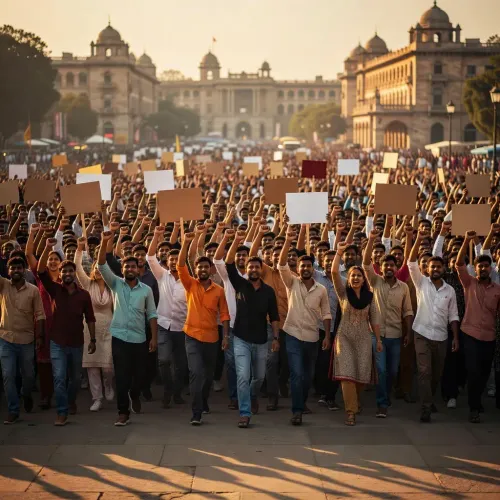
A political promise aimed squarely at Bihar's restless youth — RJD leader Tejashwi Yadav on Tuesday, 28 July 2026 pledged that if his party comes to power, every student injured, arrested, or jailed during recent protests against exam irregularities and unemployment will be guaranteed a government job and pension.
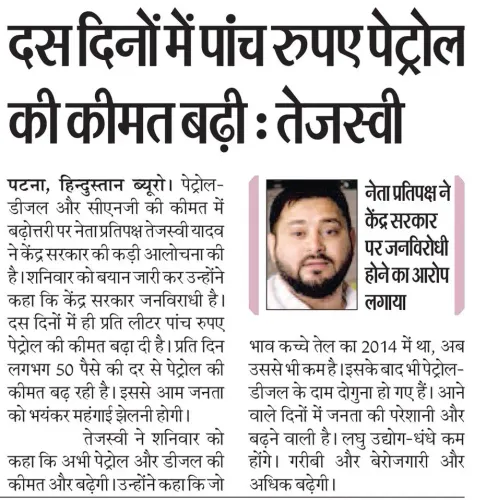
Posting in Hindi on X, Yadav declared: 'For all those warriors who were injured during peaceful, democratic protests as guaranteed by the Constitution — those who had FIRs filed against them or were sent to jail — our government will arrange government employment and pension.' He added that the party would stand 'at every step, at every moment' with students demanding a fair, transparent examination system and an end to corruption in hiring.
The grievance behind the pledge
The promise is rooted in a recurring crisis that has shadowed Bihar for years: paper leaks, delayed recruitments, and a youth unemployment rate that has driven large-scale out-migration from the state. Student agitations over exam integrity have periodically turned confrontational, with protesters alleging heavy-handed police responses — the 'BJP repression and police brutality' Yadav explicitly names in his post.
The Rashtriya Janata Dal has consistently positioned these failures as the defining indictment of the incumbent NDA coalition in Bihar. As far back as the 2020 Bihar assembly elections, the RJD manifesto promised large-scale government job creation and rehabilitation measures for youth affected by recruitment irregularities — making Tuesday's announcement an escalation of that established line, not a departure from it.
What Tejashwi is promising — and what it signals
The specific commitment — government jobs and pension for protesters who faced FIRs or imprisonment — is unusual in its precision. Most opposition rehabilitation pledges stop at promising case withdrawals or compensation. By extending the offer to include pensionable employment, Yadav is framing detained student protesters not as troublemakers but as public servants deserving state recognition.
It is a move that sharpens the contrast he wants voters to draw: a government that lathi-charged students versus one that would hire them. Whether the promise finds formal shape in a policy document or manifesto ahead of the next Bihar assembly election will be the real test of its seriousness.
For now, the message lands where it is intended — with a generation of Bihar's youth watching the political weather and deciding which way to move.
Point of View
He elevates a protest-rehabilitation promise into a statement about the state's moral debt to its youth. The specificity of the offer — jobs and pension, not merely case withdrawals — raises the stakes ahead of the Bihar assembly election cycle. Whether the RJD can translate this emotive positioning into a concrete, costed policy commitment will determine whether the pledge moves votes or fades as rhetoric.
NationPress
28 Jul 2026
Frequently Asked Questions
What did Tejashwi Yadav promise to student protesters in Bihar?
Tejashwi Yadav promised that if the RJD forms the government in Bihar, students who were injured, had FIRs registered against them, or were jailed during recent protest agitations will be given government jobs and pension.
Which student protests is Tejashwi Yadav referring to?
Yadav referred to recent student agitations in Bihar demanding a fair and transparent examination system, an end to corruption in government recruitment, and jobs for youth — protests he says were met with police lathi-charges and arrests.
Has the RJD made similar promises to youth before?
Yes. The RJD included large-scale government job creation and rehabilitation measures for youth in its 2020 Bihar assembly election manifesto, making Tuesday's pledge a continuation and escalation of that policy line.
What is the RJD's position on Bihar's examination and recruitment system?
The RJD has consistently criticised Bihar's recruitment process, citing repeated paper leaks, delayed appointments, and alleged corruption as evidence of the incumbent NDA coalition's governance failure.
When did Tejashwi Yadav make this announcement?
Tejashwi Yadav posted the announcement on X on Tuesday, 28 July 2026 , at approximately 12:39 PM IST.