Is Tejashwi Yadav's Absence Sending a Wrong Message in Bihar?
Synopsis
JD(U) MP Ramprit Mandal raises concerns over Tejashwi Yadav's absence during the crucial Winter Session of the Bihar Assembly, suggesting it damages public trust. Amidst discussions on critical international relations, this issue highlights the political landscape in Bihar post-elections.
Key Takeaways
Tejashwi Yadav's absence raises concerns about leadership accountability.
The ongoing Winter Session is crucial for legislative issues.
Public trust is vital for political success.
International relations discussions are key to India's growth.
Local production of defense equipment is a strategic goal.
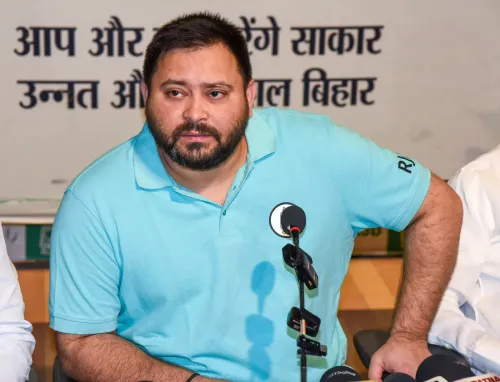
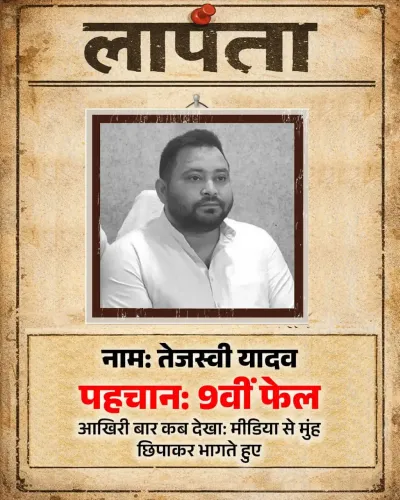
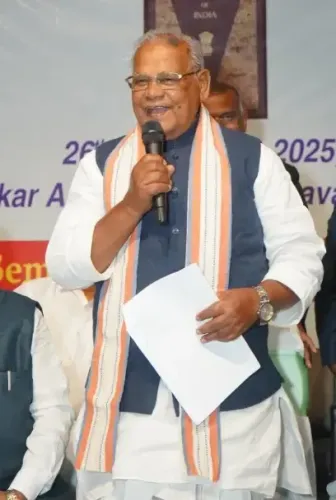
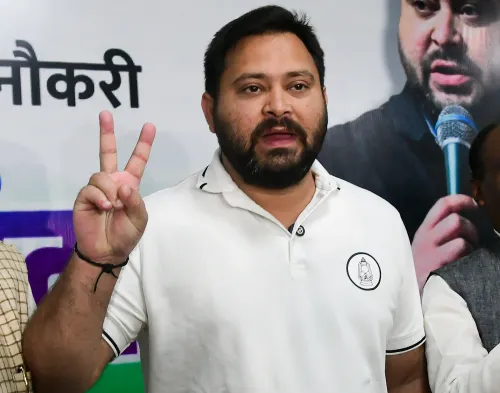
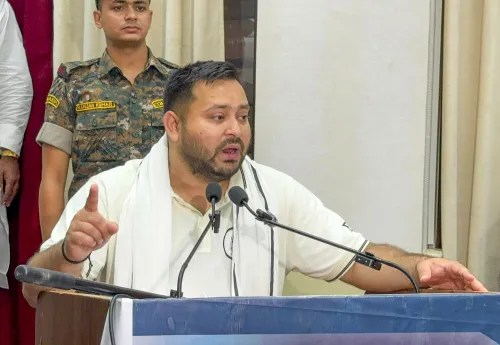
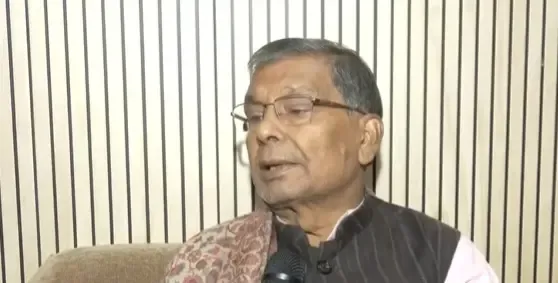
New Delhi, Dec 6 (NationPress) Responding to the absence of Bihar Assembly's Leader of the Opposition, Tejashwi Yadav, during the current Winter Session, JD(U) MP Ramprit Mandal stated on Saturday that his non-attendance conveys a misleading message to the residents of Bihar.
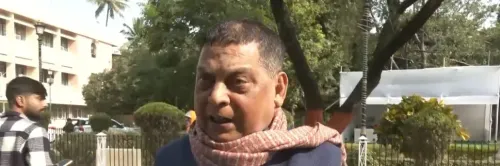
In an interview with IANS, Mandal expressed, “I have heard that following his party's defeat, he traveled to London — possibly to conduct review meetings regarding their loss in Bihar. Furthermore, since his wife is a Christian, he might be there to celebrate Christmas.”
He continued, “However, they should not have left during the Assembly session. This crucial period could have been utilized to address issues affecting the underprivileged. As a result, a misleading message has been communicated across Bihar, leading to a gradual erosion of public trust in them.”
The Winter Session included five sittings, yet Tejashwi Yadav was present only on the initial two days. He was absent for the remainder of the session that concluded on Friday.
It is also notable that Tejashwi missed the swearing-in ceremony of the new NDA government at Gandhi Maidan on November 20. Reports indicate that he is currently enjoying a family vacation in Europe, shortly after his party's disappointing electoral performance.
On the visit of Russian President Vladimir Putin to India, Mandal remarked, “India's relationship with Russia has persisted for over seventy years. In the past, Russian presidents would spend three to four days during their visits. I had anticipated a longer stay this time for enhanced interactions.”
President Putin departed from New Delhi on Friday evening after a banquet hosted by President Droupadi Murmu at Rashtrapati Bhavan. This marked his first visit to India in four years. During his two-day stay, he engaged in bilateral discussions with Prime Minister Narendra Modi, focusing on critical areas of collaboration, including defense, trade, and energy. Foreign Secretary Vikram Misri noted that the two leaders also deliberated on the proposed Free Trade Agreement between India and the Eurasian Economic Union.
In a significant advancement in nuclear cooperation, both parties explored the opportunity of establishing a second nuclear power plant utilizing Russian-designed reactors, with India agreeing to select a suitable site for this initiative.
Additionally, Russia has suggested that India consider local production of the fifth-generation Sukhoi Su-57 fighter aircraft.
President Putin commended Prime Minister Modi's leadership, highlighting that India is progressing towards technological self-sufficiency. He asserted that under PM Modi's guidance, India is adopting an independent and sovereign policy, achieving remarkable outcomes, and maintaining its status as one of the fastest-growing economies in the world.
Point of View
The absence of key political figures like Tejashwi Yadav during crucial legislative sessions can be seen as a disservice to constituents. The public deserves to see their leaders actively addressing pressing issues, especially after electoral setbacks. This situation warrants careful consideration and action from all political parties to restore public confidence.
NationPress
20 Sept 2026
Frequently Asked Questions
Why was Tejashwi Yadav absent from the Winter Session?
Tejashwi Yadav was reportedly in London, possibly for review meetings following his party's electoral defeat and may have also been celebrating Christmas with his family.
What impact does his absence have on public perception?
His absence during an important legislative session has been criticized as sending a misleading message, potentially diminishing public trust in his leadership.
What other events occurred during this period?
During the same period, Russian President Vladimir Putin visited India, discussing key areas of cooperation with Prime Minister Modi.
What are the implications of the discussions with Russia?
The discussions included advancements in nuclear cooperation and the possibility of localizing production of military aircraft, which are significant for India's defense strategy.
How has the political environment in Bihar changed post-elections?
The political environment in Bihar remains tense following recent electoral defeats, with parties needing to regain public confidence through active governance and representation.