Telangana CM Revanth Reddy calls for tough action on paper leaks
Synopsis
Telangana Chief Minister Revanth Reddy, speaking in New Delhi after meeting Union Minister Shivraj Singh Chouhan, called for strict punishment of paper-leak perpetrators, national regulation of coaching centres, greater state control over education, and timely fee reimbursement disbursements — while defending HYDRAA's continued operations.
Key Takeaways
CM Revanth Reddy met Union Minister Shivraj Singh Chouhan in New Delhi on 28 July 2026 and addressed media on multiple education and governance issues.
He argued that offline examinations are more vulnerable to paper leaks than online ones, and called for strict punishment of those responsible.
Unregulated coaching centres were identified as key enablers of paper leaks; a national regulatory framework was demanded.
The CM called for education to remain primarily under state jurisdiction and urged Parliament to debate the centre-state divide on the issue.
TGPSC has been reformed on UPSC lines; the government pledged to pay Rs 2,200–2,400 crore in annual fee reimbursements within the same year, in advance.
On HYDRAA , the CM said the government will review the High Court order but will continue the agency's work.
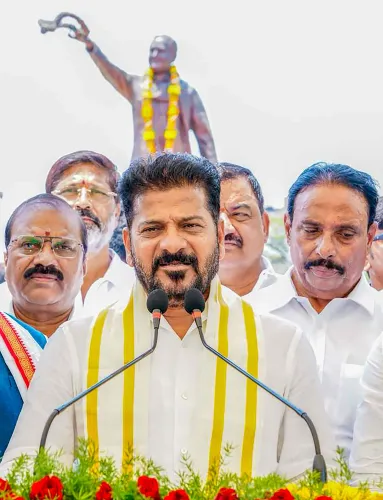
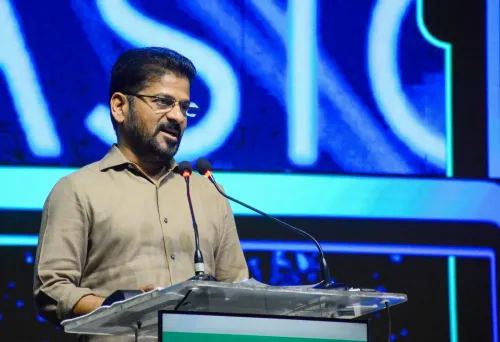
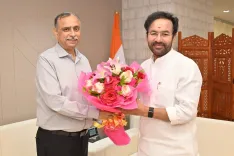
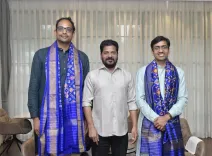
A question-paper leak crisis gripping national examinations has now drawn in a state chief minister — and his prescription is blunt: punish the culprits, rein in unregulated coaching centres, and hand education back to the states. Chief Minister Revanth Reddy of Telangana made these demands in New Delhi on Tuesday, 28 July 2026, speaking to the media after a meeting with Union Minister Shivraj Singh Chouhan.
The Chief Minister's Office of Telangana shared his remarks, which covered exam reforms, coaching centre regulation, fee reimbursement, and the HYDRAA enforcement agency — a sweeping set of positions delivered from the national capital.
Offline exams, online trust: the leak pattern Revanth Reddy flagged
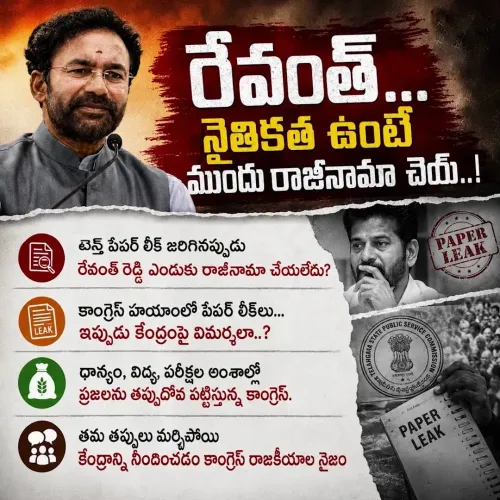
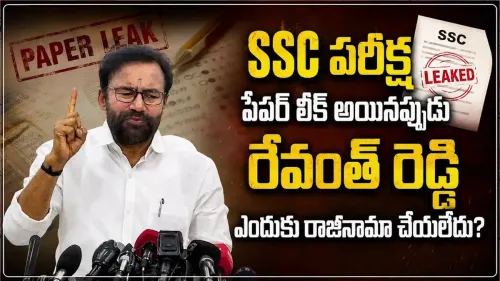
Revanth Reddy drew a pointed contrast: when examinations are conducted online, problems are rare; it is the offline mode that repeatedly becomes the breach point. The argument positions digital exam infrastructure not just as a convenience but as an integrity safeguard — a case the Telangana government has been building since it reformed the Telangana Public Service Commission (TGPSC) on UPSC lines after coming to power in December 2023. The CM claimed that by restructuring the TGPSC to mirror UPSC's processes, his government has conducted recruitments transparently, restoring student confidence. 'We are conducting examinations transparently so that students are not harmed and their trust is maintained,' he said.Coaching centres 'mushrooming without permission' — and leaking papers
Revanth Reddy's sharpest charge was aimed at the coaching industry. Unregulated coaching centres, he said, are 'sprouting like mushrooms across the country without permission' and have become platforms through which question papers are leaked. He cited the case of a firm he referred to as Globarena, alleging that inaction against its earlier irregularities allowed it to expand its reach all the way to CBSE examinations, causing widespread disruption. His call: a national-level policy framework to regulate the coaching sector, backed by strict enforcement. This aligns with a broader pattern playing out across India, where repeated paper-leak scandals in state and central examinations have intensified demands for oversight of what is currently a largely unregulated industry.Centre vs states on education: Revanth Reddy's federalism argument
The CM went further, wading into the structural debate over who should control education. He urged the central government to 'give up its attempt to dominate universities' and argued that keeping education within state jurisdiction as much as possible reduces the scope for error. A parliamentary debate on the issue, he said, is necessary. This is a familiar fault line in Indian federal politics, particularly for opposition-ruled states. Since education sits on the Concurrent List of the Constitution, both Parliament and state legislatures can legislate on it — and the tug of war over that space has sharpened since the National Education Policy of 2020.Fee reimbursement backlog — and a promise to clear it
On the long-running fee reimbursement crisis for professional-course students, the CM acknowledged the burden: arrears left by the previous government have piled up. He said a Vigilance and Enforcement inquiry is already under way into related irregularities. His commitment going forward — fees for any given year will be paid in full within that same year, deposited into student bank accounts in advance. The state requires between Rs 2,200 crore and Rs 2,400 crore annually for the scheme, and the government has drawn up a plan to disburse it without delay. (These figures are as stated by the CM and have not been independently verified.)HYDRAA's mandate — and the High Court order
Asked about HYDRAA, Telangana's urban enforcement agency, Revanth Reddy said the government is clear about its scope and responsibilities. He noted that a High Court order on HYDRAA's operations has not yet been fully examined, and said the government will review it. His bottom line: the courts will be respected, and HYDRAA's work will continue. A chief minister who walked into Delhi with a list — paper leaks, coaching cartels, federal overreach, fee arrears, and a court order — walked out having put all of it on the national record. Parliament, he says, needs to debate this. The clock is ticking.Point of View
Framing state control of education as an anti-corruption measure, is a well-worn opposition playbook but gains traction when paired with concrete reform claims like the TGPSC overhaul. The fee reimbursement pledge — same-year, advance disbursement — is a direct response to student anger that helped unseat the previous government. Taken together, these positions suggest the Congress-led Telangana government is positioning itself as a model for education governance ahead of what will inevitably be a charged parliamentary session on exam integrity.
NationPress
28 Jul 2026
Frequently Asked Questions
Why did Telangana CM Revanth Reddy go to Delhi on 28 July 2026?
He met Union Minister Shivraj Singh Chouhan to discuss exam paper leaks, coaching centre regulation, and education policy, then addressed the media on these issues.
What did Revanth Reddy say about paper leaks in India?
He said offline examinations are more prone to leaks than online ones, blamed unregulated coaching centres for enabling leaks, and demanded strict punishment for those responsible.
How has Telangana reformed its public service commission?
The Telangana Public Service Commission (TGPSC) has been restructured on UPSC lines since the Congress government took office in December 2023, with the aim of conducting transparent, leak-proof recruitments.
What is Telangana's fee reimbursement plan for students?
The CM said the state needs Rs 2,200–2,400 crore annually for fee reimbursement and has committed to paying each year's dues within that same year, deposited in advance into student bank accounts.
What did the CM say about HYDRAA and the High Court order?
Revanth Reddy said the government is clear about HYDRAA's mandate, will review the High Court order, respects the judiciary, and intends to continue HYDRAA's operations.