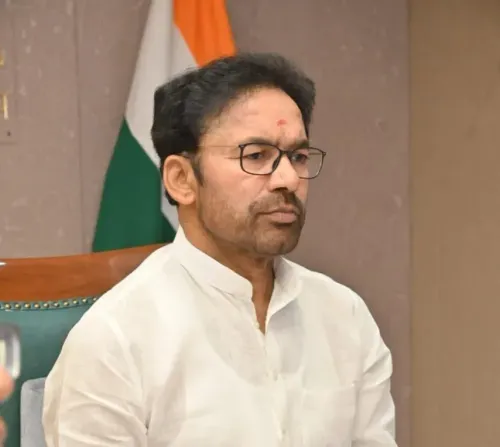
Kishan Reddy Meets CISF Chief on Coal Sector Security

Synopsis
Union Coal and Mines Minister G. Kishan Reddy met CISF Director General Praveer Ranjan in New Delhi to discuss security of India's critical coal and mining infrastructure, underscoring the government's focus on protecting key economic assets.
Key Takeaways
Kishan Reddy , Union Minister of Coal and Mines, met CISF Director General Praveer Ranjan in New Delhi .
Discussions focused on security of critical infrastructure in the coal and mining sectors.
The CISF is the primary paramilitary force responsible for guarding India's industrial and economic infrastructure.
Coal infrastructure security is a long-standing priority given coal's central role in India's power supply.
Possible follow-up actions include deployment reviews or security audits of key mining installations.
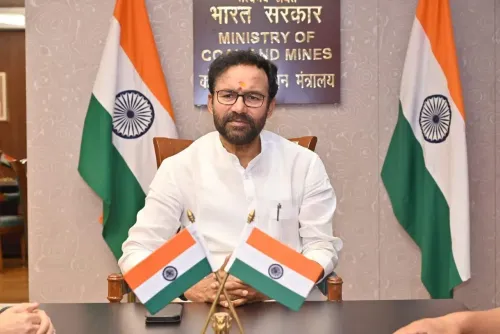
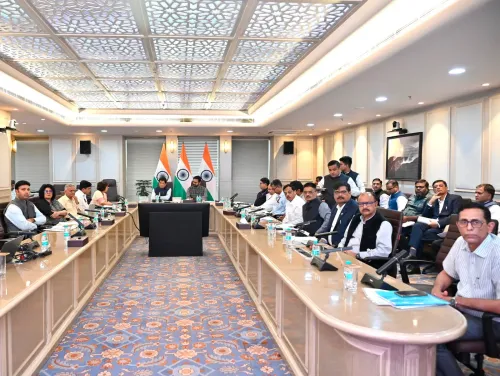
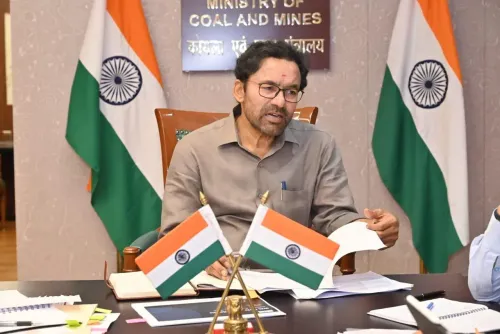
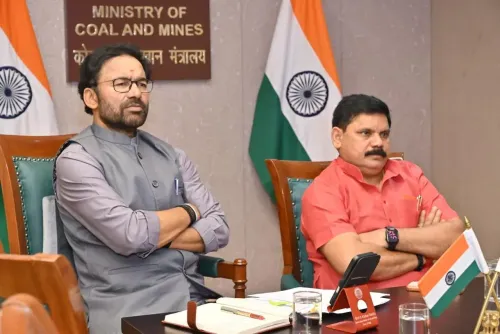
Union Coal and Mines Minister G. Kishan Reddy sat down with Praveer Ranjan, Director General of the Central Industrial Security Force, in New Delhi on Tuesday — a high-level conversation trained squarely on keeping the country's coal and mining infrastructure safe.
The Minister described the meeting as 'productive', with discussions centred on security arrangements for critical national assets in the coal and mining sectors. The CISF, a paramilitary force under the Ministry of Home Affairs, is the primary agency tasked with guarding India's industrial and economic infrastructure — from coalfields to ports to nuclear facilities.
Why Coal Infrastructure Demands a Dedicated Shield
Coal is not just a commodity in India — it is the backbone of the country's power grid. Any disruption to mining operations, whether from theft, illegal extraction, or sabotage, carries downstream consequences for electricity generation and industrial supply chains. The CISF has long maintained deployments across major coal-producing regions, coordinating with mining PSUs to deter encroachments and illegal activities that have historically plagued the sector. Inter-ministerial coordination meetings of this kind — a sector minister sitting with the head of the force protecting that sector — are standard practice in India's security governance architecture. What they signal, however, is active oversight: a reminder that the government is tracking vulnerabilities, not just assuming existing deployments are sufficient.Coal Ministry and CISF: A Standing Security Partnership
The Ministry of Coal oversees major public sector undertakings including Coal India Limited, which operates across multiple states and represents one of the largest concentrations of industrial infrastructure in Asia. Protecting that network requires constant calibration — deployment reviews, threat assessments, and coordination between the Ministry and the force on the ground. Meetings at the DG level suggest the conversation is happening at the highest tier of that partnership. Possible follow-up actions could include revised CISF deployment guidelines for coal-bearing regions or fresh security audits of key mining installations — though no formal announcement has been made. With India's energy transition still years from reducing its dependence on coal, the security of every tonne extracted remains a matter of national economic interest.Point of View
Visible engagement on infrastructure protection reinforces the government's narrative of proactive governance. For the BJP, which holds both the Coal Ministry and the Telangana state presidency through Kishan Reddy, demonstrating command over critical assets carries political weight alongside its administrative logic. The real test will be whether this meeting translates into concrete deployment or policy changes.
NationPress
27 Oct 2026
Frequently Asked Questions
What did G. Kishan Reddy and CISF DG Praveer Ranjan discuss?
They held a 'productive discussion' on security of India's critical infrastructure, with a specific focus on the coal and mining sectors.
What is the role of CISF in coal and mining security?
The Central Industrial Security Force, a paramilitary body under the Ministry of Home Affairs, is responsible for protecting critical industrial infrastructure including coal mines and related facilities across India.
Why is coal infrastructure security important for India?
Coal powers a large share of India's electricity generation. Disruptions from illegal mining, theft, or sabotage can affect energy supply and industrial output, making security of coalfields a national economic priority.
Which PSU does the Coal Ministry oversee?
The Ministry of Coal oversees Coal India Limited, one of the world's largest coal producers, which operates mines across multiple Indian states.
What could follow from this meeting between the Coal Minister and CISF chief?
Possible outcomes include revised CISF deployment plans for coal-bearing regions or fresh security audits of key mining installations, though no formal announcement has been made.