Telangana CM Revanth Reddy Directs TOMCOM Overhaul for Safe Overseas Jobs
Synopsis
Chief Minister Revanth Reddy on 31 July 2026 directed TOMCOM to sign MoUs with foreign manpower firms, issue passports, register overseas agents, and appoint a former IFS officer as CEO — while expanding skill training to include foreign languages, EV servicing, drone tech, and blue-collar scholarships.
Key Takeaways
TOMCOM directed to sign formal agreements with manpower companies in destination countries to protect Telangana workers abroad.
A former IFS officer will be appointed as TOMCOM CEO to handle diplomatic negotiations and worker grievances overseas.
All agents sending workers abroad must be registered, with individual-level records of every person they place.
Young India Skill University to add a foreign-language division covering German, Japanese, Korean, Chinese, and Russian, with native-speaker instructors.
ATCs to introduce EV servicing and drone technology courses; government college students to get paid internships at large companies.
Officials asked to study extending overseas scholarships to blue-collar job trainees, mirroring existing higher-education scholarship schemes.
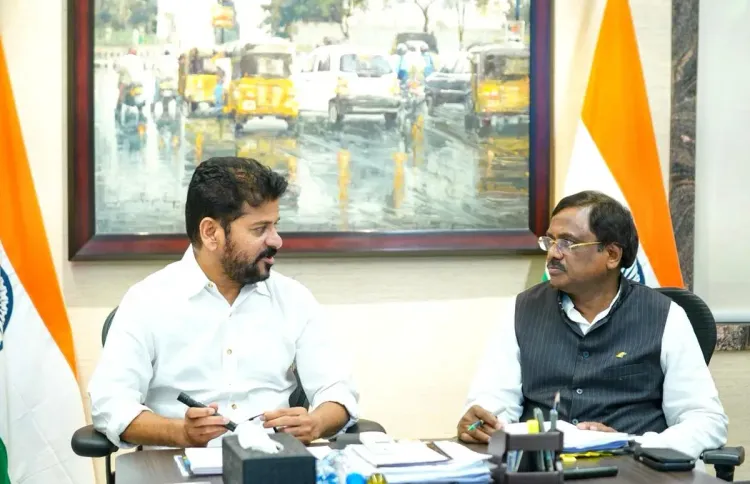
Workers from northern Telangana have long made the journey to the Middle East chasing livelihoods — and far too often, they have paid for it by falling into the hands of fraudulent agents. Chief Minister Revanth Reddy moved on Friday, 31 July 2026 to shut that gap, directing a sweeping overhaul of the Telangana Overseas Manpower Company (TOMCOM) to bring the state squarely between its migrant workers and those who exploit them.
TOMCOM Gets a Mandate — and a Former IFS Officer at the Top
The Chief Minister's instructions are specific and operational. TOMCOM must now handle passports for outbound workers, sign formal agreements with manpower companies in destination countries, and register every agent who sends workers abroad — along with details of every individual they place. To enforce this, Revanth Reddy announced that a former IFS officer will be appointed as TOMCOM's CEO, giving the body the diplomatic heft to negotiate directly with foreign firms and intervene when workers face trouble overseas.
The rationale is straightforward: if the state has an MoU with a manpower company in, say, a Gulf nation, it has a formal channel to demand accountability when a worker is stranded, underpaid, or abused. Without that agreement, workers are on their own.
Northern Telangana Workers and the Agent Trap
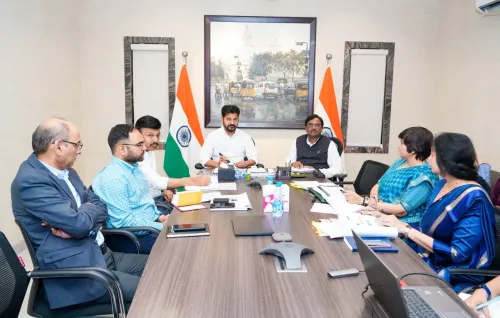
The review meeting — attended by Energy Minister Vivek Venkatswam and senior officials — specifically flagged northern Telangana as the region sending the largest numbers of workers to Middle Eastern countries. It is also the region where agent fraud hits hardest. Workers pay upfront fees, are promised specific jobs, and often arrive to find different conditions or no job at all. Mandatory agent registration, with individual-level records, is designed to create a paper trail that can be acted upon.
Skill University, Foreign Languages, and Blue-Collar Scholarships
Beyond migration safety, the CM directed the Young India Skill University to set up a dedicated research centre and a foreign-language division offering German, Japanese, Korean, Chinese, and Russian — taught by both local experts and native-speaker instructors brought in from those countries. The logic: a worker who speaks even basic Japanese or German commands better wages and fewer misunderstandings on the job.
Revanth Reddy also asked officials to study extending overseas scholarships — currently available to higher-education students — to all those training for blue-collar jobs abroad. Students at government engineering colleges, ITIs, ATCs, and polytechnics are to get internship slots at large companies, earning stipends while still enrolled.
EV Servicing, Drone Tech, and the Nursing Demand Wave
The CM directed ATCs to introduce courses in EV servicing and drone technology — two sectors where trained hands are already scarce. With agricultural drone use rising sharply and electric vehicles multiplying on Indian roads, the skills gap is only widening. Training for Light Motor Vehicle and Heavy Motor Vehicle driving is also to be added for workers heading overseas.
On nursing, the CM pointed to a structural demographic shift: ageing populations across developed economies are driving demand for home nurses. Telangana is already approving new nursing colleges to match that demand — positioning the state as a deliberate supplier to a global market that will only grow.
The test now is execution: TOMCOM agreements signed, an IFS-cadre CEO in place, and course catalogues updated before the next wave of workers boards a flight. Telangana's migrant workers have waited long enough for the state to stand behind them.
Point of View
The government is essentially building a para-diplomatic labour desk — a model that could reduce worker vulnerability but will succeed only if the agreements carry real enforcement teeth. The parallel skill-infrastructure push, from foreign languages to EV and drone courses, signals an ambition to move Telangana's export profile up the value chain, not just protect existing blue-collar flows. Whether TOMCOM can operationalise these directives at scale, before the next batch of workers is defrauded, is the political and administrative test that will define this initiative.
NationPress
31 Jul 2026
Frequently Asked Questions
What is TOMCOM and what is its new role in Telangana?
TOMCOM stands for Telangana Overseas Manpower Company. CM Revanth Reddy has directed it to handle passports for outbound workers, sign MoUs with foreign manpower firms, register overseas placement agents, and appoint a former IFS officer as CEO to protect Telangana workers abroad.
How will Telangana protect workers from fraudulent overseas agents?
TOMCOM will maintain a mandatory registry of all agents sending workers abroad, recording details of every individual placed. MoUs with foreign companies will give the state a formal channel to intervene when workers face exploitation or abuse.
What new courses are being introduced at Telangana skill institutions?
ATCs will add EV servicing and drone technology courses. Young India Skill University will launch a foreign-language division offering German, Japanese, Korean, Chinese, and Russian, taught partly by native-speaker instructors.
Will blue-collar job trainees get scholarships in Telangana?
CM Revanth Reddy has directed officials to study extending overseas scholarships — currently available to higher-education students — to all those training for blue-collar jobs abroad. A formal decision is pending the study.
Why does Telangana want to expand nursing college approvals?
The CM cited rising demand for home nurses in developed countries due to ageing populations. Telangana is approving new nursing colleges to position the state as a structured supplier to this growing global market.