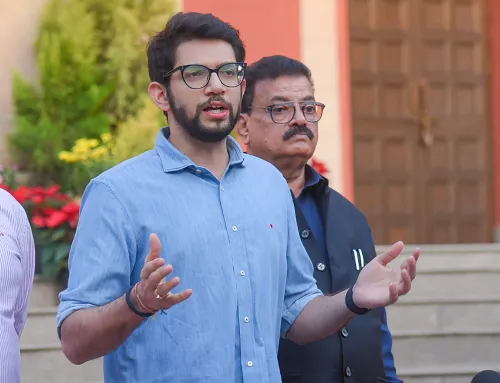
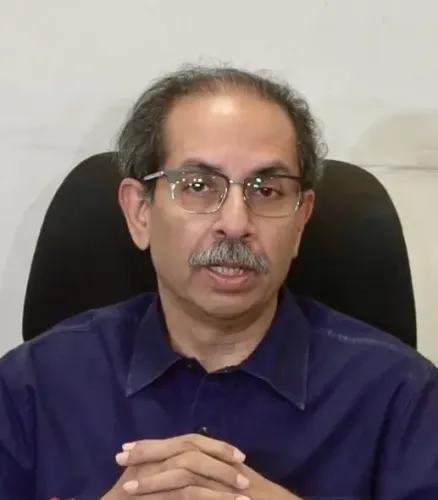
Aaditya Thackeray demands PM-led climate council, slams Centre over pollution crisis
Synopsis
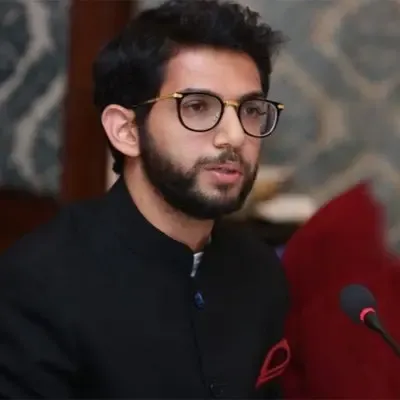
With Mumbai days away from hosting the Earthshot Prize and COP31 underway in Türkiye, Aaditya Thackeray chose the moment to demand a GST Council-style climate body chaired by the Prime Minister — framing India's pollution crisis not as an environmental issue alone, but as an economic and national security threat that official data, he alleges, has systematically understated.
Key Takeaways
Aaditya Thackeray accused the Union government of 'data fudging' and greenwashing on 12 November 2026 , ahead of Mumbai hosting the Earthshot Prize Summit .
He alleged that nearly all of the world's most polluted cities are in India , and that official rankings understate the true scale of the crisis.
Thackeray proposed a Council of Climate Change — modelled on the GST Council — to be chaired by the Prime Minister and to meet quarterly.
He also called for parallel State Councils of Climate Change headed by Chief Ministers to coordinate regional climate action.
He warned that pollution-driven business relocation is causing job losses, framing the environment crisis as an economic and national security risk.
His remarks came as the COP31 climate summit was underway in Türkiye and Mumbai Climate Week was approaching.
Shiv Sena (UBT) leader and former Maharashtra Environment Minister Aaditya Thackeray on Thursday, 12 November, launched a pointed attack on the Union government, accusing it of 'data fudging,' greenwashing, and failing to guarantee citizens access to clean air, water, and food. His remarks came days ahead of Mumbai hosting the Earthshot Prize Summit and Awards, and coincide with the COP31 climate summit underway in Türkiye and preparations for Mumbai Climate Week.
The Pollution Charge
Thackeray pointed out that nearly all of the world's most polluted cities are currently located in India, and argued that official data has masked the country's true standing on global climate indices. He alleged that political apathy toward the environmental crisis is driving citizens to protest and, in some cases, to migrate in search of basic living conditions.
'Most of those who pay direct taxes, and all of those who pay indirect taxes, hoping for these basics, have to spend again on air and water purifiers and sources of food,' Thackeray said, framing deteriorating air and water quality not merely as a public health hazard but as a mounting economic burden. He added that businesses and organisations are relocating out of heavily polluted regions, directly resulting in job losses.
The Council of Climate Change Proposal
Reiterating a demand he has previously put before the Centre, Thackeray proposed the immediate formation of a Council of Climate Change — modelled on the Goods and Services Tax (GST) Council — to institutionalise federal cooperation on environmental governance. He called for the body to be chaired by the Prime Minister and to include all State Ministers for Forest and Environment, alongside relevant Union Ministries covering Urban and Rural Development, Energy, Agriculture, Industry, and Roads.
The council, he said, should convene quarterly to review verified data, track targets, and monitor real-time progress. He further proposed parallel State Councils of Climate Change, headed by respective Chief Ministers, to coordinate interlinked government departments at the regional level.
Lessons From Maharashtra's Climate Plans
Drawing on his tenure overseeing Maharashtra's Environment and Climate Change portfolio, Thackeray noted that the state had drafted Climate Action Plans for Mumbai and several other cities during his tenure. He insisted such plans must be formulated and independently audited by internationally reputed organisations in a transparent manner — a standard he argued the Centre has not met.
Thackeray underscored that environmental governance intersects with virtually every government department and directly determines the overall quality of life for citizens.
The Bigger Warning
Warning that India stands at a defining threshold given its large and young population, Thackeray urged the government to treat climate action as an urgent economic and strategic priority. 'Timely climate action can be a huge opportunity that, if missed, can be a huge risk socially, politically, economically and in terms of national security,' he said.
His remarks arrive at a moment of heightened global climate scrutiny, with India's environmental record drawing increased international attention as the Earthshot Prize — a flagship green innovation award — prepares to hold its summit in Mumbai.
Point of View
And Thackeray's tenure did not resolve Mumbai's chronic air quality and flooding issues. The timing — Earthshot Prize in Mumbai, COP31 in Türkiye — gives his remarks maximum international amplification, but the substance of a quarterly federal review body deserves engagement on its merits regardless of the political moment. What mainstream coverage is missing is that the data integrity allegation is the most consequential charge: if India's pollution indices are systematically manipulated, the entire basis for climate diplomacy and domestic policy targets collapses.
NationPress
12 Nov 2026
Frequently Asked Questions
What is Aaditya Thackeray's Council of Climate Change proposal?
Thackeray has proposed a federal Council of Climate Change modelled on the GST Council, to be chaired by the Prime Minister and to include all State Ministers for Forest and Environment along with key Union Ministries. The body would meet quarterly to review verified climate data, targets, and real-time progress.
Why did Aaditya Thackeray criticise the Centre on pollution now?
His remarks on 12 November came just ahead of Mumbai hosting the Earthshot Prize Summit and Awards, and while the COP31 climate summit is underway in Türkiye — a moment of heightened global environmental scrutiny. He accused the Centre of data fudging and greenwashing that he says masks how severe India's pollution crisis actually is.
What is the Earthshot Prize and why is Mumbai hosting it?
The Earthshot Prize is a flagship global award recognising green innovation and environmental solutions. Mumbai was selected to host the 2026 Summit and Awards ceremony, an occasion Thackeray used to spotlight India's domestic pollution record and contrast it with the city's international environmental showcase role.
What economic argument did Thackeray make about pollution?
Thackeray argued that poor air and water quality forces citizens to spend on private purifiers on top of taxes, while businesses and organisations are relocating out of heavily polluted areas — directly causing job losses. He described timely climate action as a major economic opportunity, and inaction as a risk to national security.
What was Thackeray's record on climate during his tenure as Maharashtra Environment Minister?
Thackeray said Maharashtra drafted Climate Action Plans for Mumbai and several other cities during his tenure overseeing the state's Environment and Climate Change portfolio. He used this experience to argue that such plans must be independently and neutrally audited by internationally reputed organisations to be meaningful.