Anurag Thakur slams Himachal fuel price hike as Congress 'khatara model'
Synopsis
BJP MP Anurag Thakur attacked the Himachal Pradesh Congress government on 12 August 2026, alleging repeated VAT and cess hikes on petrol and diesel have burdened truck drivers, farmers, traders and ordinary citizens, calling it the worst government in the state's history.
Key Takeaways
BJP MP Anurag Thakur posted on X on 12 August 2026 attacking the Himachal Pradesh Congress government over fuel price hikes.
Thakur alleged diesel VAT was raised by Rs 10.40 and an additional cess of Rs 5 per litre was imposed after the Congress government took office.
He claimed earlier hikes in petrol, bus fares, and cement prices preceded the latest fuel price increase.
Thakur identified truck drivers, farmers, traders, and common citizens as the groups most affected by the rising fuel costs in the hill state.
The post mocked the Congress leadership's 'khatakhat model' campaign promise, calling it a 'khatara (jalopy) model' in practice.
The Congress government in Himachal Pradesh came to power following the 2022 state assembly elections .
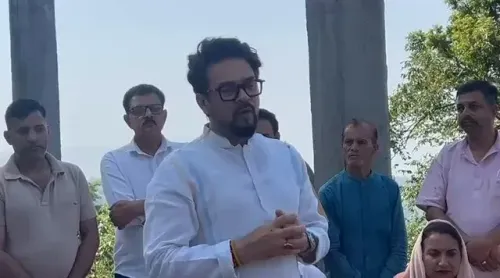
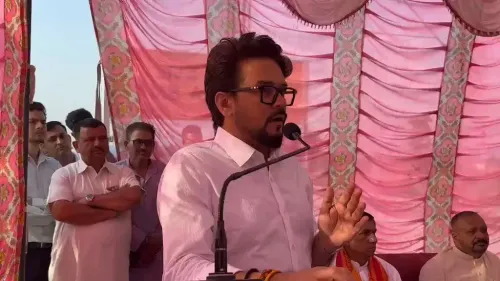
Every time a truck rolls out of a Himachal Pradesh depot or a farmer fills his tractor tank, the latest fuel price hike bites a little harder — and BJP MP Anurag Thakur is making sure no one misses who he holds responsible. On Wednesday, 12 August 2026, the Hamirpur MP took to X to launch a sharp attack on the Congress-led Himachal Pradesh government, accusing it of repeatedly raiding ordinary citizens' pockets through VAT and cess hikes on petrol and diesel.
Thakur's post opened with a pointed wordplay: 'khatakhat model ab khatara model ban chuka hai' — 'the khatakhat model has now become a jalopy model' — a direct jab at the campaign rhetoric of Rahul Gandhi and Priyanka Gandhi that had promised swift, efficient delivery of benefits to citizens. The reality on the ground, Thakur argues, is the opposite: a cascade of price hikes that has squeezed household budgets across the state.
VAT, cess, and a compounding fuel burden
According to Thakur, the Congress government moved quickly after taking office following the 2022 Himachal Pradesh assembly elections — but not in the direction voters expected. He alleges that within the first two months of the government's formation, VAT on diesel was raised repeatedly, ultimately being pushed up by Rs 10.40, followed by an additional cess of Rs 5 per litre. The post also cites earlier hikes in petrol prices, bus fares, and cement costs as part of a pattern of escalating consumer burdens.
State governments in India retain significant authority over fuel taxation through VAT and cess mechanisms, making petrol and diesel pricing a potent political flashpoint. Opposition parties routinely highlight such hikes as evidence of fiscal mismanagement, while ruling governments typically defend the adjustments as necessary for revenue generation to fund welfare schemes.
Who is groaning loudest in Himachal
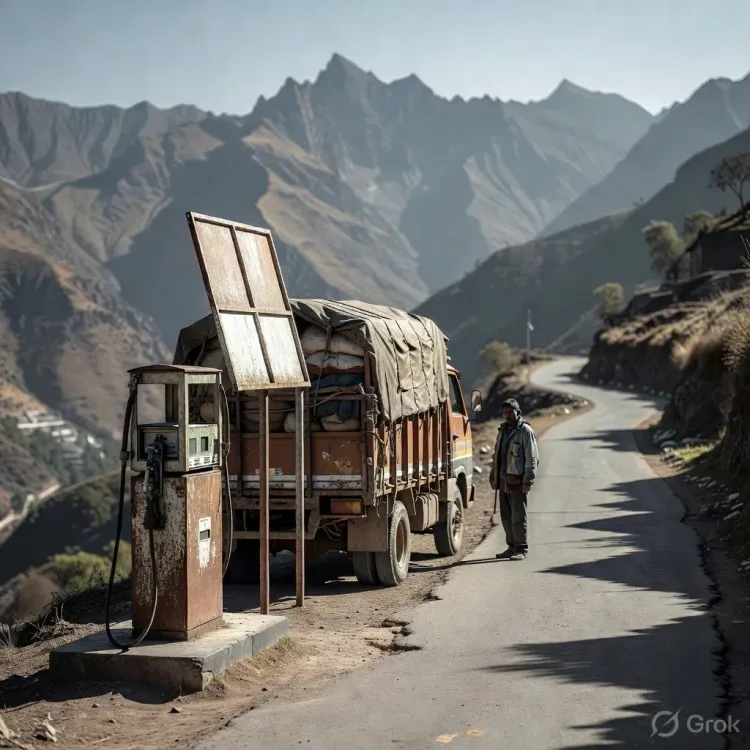
Thakur named four groups he says are bearing the brunt: truck drivers, farmers, traders, and ordinary citizens. In a mountainous state like Himachal Pradesh, where road transport is the primary — and often the only — way to move goods and people, diesel costs ripple quickly into food prices, construction materials, and daily commutes. A hike that looks modest on paper at a fuel station can translate into significantly higher costs by the time produce reaches a market town.
The MP closed his post with a cutting line: the government, he wrote, is 'sleeping under a blanket of obliviousness' while citizens groan — 'yeh sarkar besudhi ki chadar tane so rahi hai.' It is the language of a politician who senses electoral traction in a cost-of-living argument.
BJP vs Congress: the fuel-tax tug-of-war
The exchange fits a well-worn pattern in Indian state politics. Whichever party is in opposition at the state level tends to amplify fuel price increases as proof of the ruling party's indifference to the common person — and the BJP and Congress have both played each role in different states. Thakur, as a former Union Minister of Information and Broadcasting and a senior BJP voice, carries enough national profile to ensure the attack lands beyond Shimla's assembly corridors.
Whether the Himachal government responds with a rollback, a justification, or silence will signal how much political heat this particular hike is generating — and whether the 'khatara model' label sticks heading into the next electoral cycle.
Point of View
Transport, and commodity price hikes in Himachal Pradesh, he attempts to reframe the 'khatakhat' welfare promise as an empty slogan — a line of attack that could prove durable if inflation remains a voter concern heading into the next state cycle. The post also signals that senior BJP leaders with national visibility are being deployed to amplify state-level grievances, suggesting the party sees Himachal as a winnable battleground worth keeping in the news cycle. Whether the Congress government in Shimla chooses to defend the revenue rationale or quietly absorbs the criticism will determine how much oxygen this particular controversy gets.
NationPress
26 Sept 2026
Frequently Asked Questions
Why has petrol and diesel become expensive in Himachal Pradesh?
BJP MP Anurag Thakur alleges the Congress state government has raised VAT and imposed an additional cess on petrol and diesel since coming to power after the 2022 elections, increasing the retail price burden on consumers.
What is the 'khatakhat model' that Anurag Thakur is criticising?
'Khatakhat' was a phrase used by Congress leaders Rahul Gandhi and Priyanka Gandhi during election campaigning to signal swift delivery of benefits. Thakur is mocking it by calling it a 'khatara' (broken-down) model, arguing the government has delivered price hikes instead.
How much has diesel VAT increased in Himachal Pradesh according to Thakur?
Thakur's post claims diesel VAT was raised by Rs 10.40, followed by an additional cess of Rs 5 per litre — though these specific figures come from his post and have not been independently verified.
Who is most affected by the fuel price hike in Himachal Pradesh?
Thakur specifically named truck drivers, farmers, traders, and ordinary citizens as those bearing the highest burden, given that road transport is critical in the mountainous state.
When did the Congress government come to power in Himachal Pradesh?
The Indian National Congress formed the Himachal Pradesh state government following the 2022 state assembly elections.