Anurag Thakur Hails Himachal's Daughters at Asian Games
Synopsis
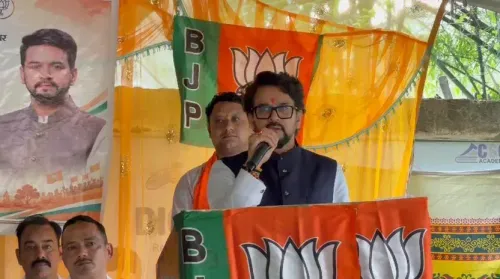
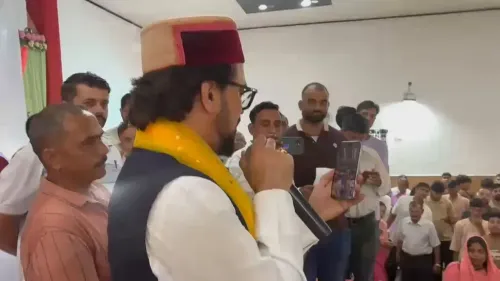
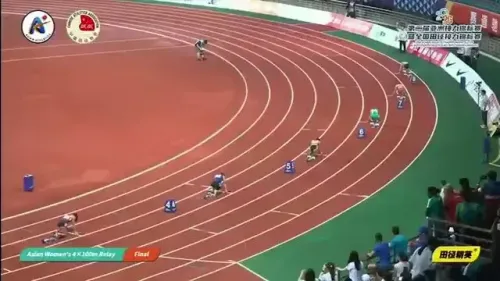
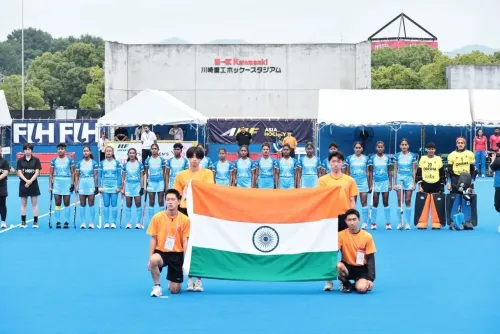
BJP MP Anurag Thakur celebrated Himachal Pradesh's women athletes at the 2026 Asian Games in a video post on X, calling them the stars of the event and reinforcing the state's growing sports profile under schemes like Khelo India.
Key Takeaways
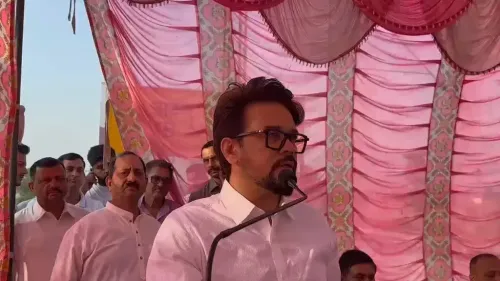
BJP MP Anurag Thakur posted a video on 26 September 2026 celebrating Himachal Pradesh's women athletes at the Asian Games.
His Hindi post declared: 'Himachal's daughters are ruling the Asian Games.' Himachal Pradesh has steadily increased its national sports presence, especially in women's disciplines, since the 2010s.
The Khelo India programme (launched 2017 ) targeted talent identification in smaller states including Himachal Pradesh.
Thakur served as Union Minister for Youth Affairs and Sports before returning to his Hamirpur constituency as a sitting MP.
The post fits a broader pattern of BJP leaders from non-metro states using Asian Games and other multi-sport events to spotlight regional sporting achievements.
From the mountains of Himachal Pradesh to the podiums of the Asian Games — BJP MP Anurag Thakur celebrated the state's women athletes on Saturday, 26 September 2026, posting a video tribute on X that captured the surge of pride back home in Hamirpur.
Thakur's post, in Hindi, declared: 'एशियन गेम्स में हिमाचल की बेटियों का बोलबाला है' — 'Himachal's daughters are ruling the Asian Games.' Short. Declarative. And aimed squarely at an audience watching every scoreboard update with a state's worth of expectation riding on it.
A small-state story on the continental stage
Himachal Pradesh, a hill state better known for its apple orchards and high-altitude terrain than its sports infrastructure, has nonetheless been punching above its weight in multi-sport competitions. Women athletes from the state have featured in archery, athletics, and several other disciplines at the national level — a trend that has grown steadily since the 2010s.
The Asian Games, held every four years, remains the most prestigious continental multi-sport event on the calendar and a key proving ground for Indian athletes before Olympic cycles. Performances there carry significant weight — for careers, for state recognition, and for the funding conversations that follow.
Khelo India's fingerprint on the hills
The central government's Khelo India programme, launched in 2017, specifically targeted talent identification and development in states that had historically been overlooked in national sports infrastructure planning — Himachal Pradesh among them. The idea was simple: great athletes do not only emerge from metro academies. Find them early, fund them properly, and the results follow.
Thakur, who served as Union Minister for Youth Affairs and Sports before his return to Hamirpur as a sitting MP, has a direct personal stake in that policy story. His celebration of Himachal's women athletes today is both a moment of genuine regional pride and a visible data point in the longer argument that central sports investment in smaller states delivers.
Why this pattern keeps repeating — and why it matters
After every major multi-sport event since 2010, a predictable but not unimportant moment plays out: leaders from non-metro states use social media to spotlight their constituents on the national podium. It matters because it shapes the policy conversation at home — in state assemblies, in sports budget hearings, in the quiet decisions about which districts get a synthetic track next year.
Himachal's women winning attention on the Asian Games stage, celebrated publicly by one of the state's most prominent political voices, keeps that momentum alive. The question is whether the applause translates into the next round of state-level sports allocations when the Himachal assembly sits — and whether more names from these hills make the next selection list.
Point of View
High-visibility, and genuinely popular. Coming from a former sports minister who championed Khelo India, it also functions as implicit credit-claiming: the athletes on the podium are, in part, a product of the infrastructure and funding pipeline he helped build. For BJP's strategy in Himachal — a state it lost to Congress in the 2022 assembly elections — elevating local heroes on a continental stage keeps the party's profile warm in the hills. Watch whether this moment triggers concrete follow-through, such as state sports budget announcements or new Khelo India centre allocations in Himachal.
NationPress
26 Sept 2026
Frequently Asked Questions
What did Anurag Thakur post about the Asian Games?
Anurag Thakur posted a video on X on 26 September 2026 celebrating women athletes from Himachal Pradesh at the Asian Games, writing in Hindi that 'Himachal's daughters are ruling the Asian Games.'
Which Himachal Pradesh athletes competed at the 2026 Asian Games?
Specific athlete names and results from the 2026 Asian Games involving Himachal Pradesh have not been independently confirmed in available records at this time.
What is Anurag Thakur's connection to Indian sports?
Anurag Thakur served as Union Minister for Youth Affairs and Sports in the central government before his current role as BJP Lok Sabha MP from Hamirpur, Himachal Pradesh. During his tenure he was associated with the Khelo India talent development programme.
What is the Khelo India programme and how does it relate to Himachal Pradesh?
Khelo India is a central government programme launched in 2017 to identify and develop sporting talent across India, with a focus on states like Himachal Pradesh that have historically had less sports infrastructure than metro regions.
When are the Asian Games held?
The Asian Games are a multi-sport continental event held every four years. They are one of the most prestigious platforms for Indian athletes and a key qualifier cycle ahead of the Olympics.