Anurag Thakur hails India's kabaddi gold at Asian Games 2026

Synopsis
BJP MP Anurag Thakur congratulated the Indian Women's Kabaddi Team on winning gold at Asian Games 2026 in Aichi-Nagoya, highlighting four Himachal Pradesh players — Captain Pushpa Rana, Ritu Negi, Bhavna Devi Thakur, and Jyoti Thakur — calling their grit an inspiration for young women across India.
Key Takeaways
The Indian Women's Kabaddi Team won gold at the Asian Games 2026 in Aichi-Nagoya, Japan on 26 September 2026 .
BJP MP Anurag Thakur (Hamirpur, Himachal Pradesh) named four Himachali players in his congratulatory post: Captain Pushpa Rana (Sirmaur), Ritu Negi (Sirmaur), Bhavna Devi Thakur (Mandi), and Jyoti Thakur (Solan).
India's women's kabaddi team has a sustained record of gold-medal success at the Asian Games, including the 2018 Jakarta-Palembang edition.
The four Himachali players hail from smaller hill districts, reflecting growing decentralisation of elite sport beyond urban centres.
Thakur called the team's 'grit and determination' an inspiration for young women across the country.
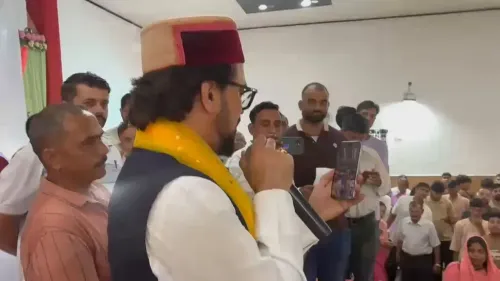
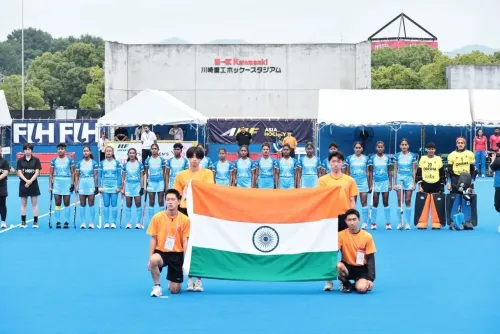
Four daughters of Himachal Pradesh stood at the centre of a continental triumph on Saturday, 26 September 2026, as the Indian Women's Kabaddi Team seized gold at the Asian Games 2026 in Aichi-Nagoya, Japan — and BJP MP Anurag Thakur was among the first to make sure their home state knew it.
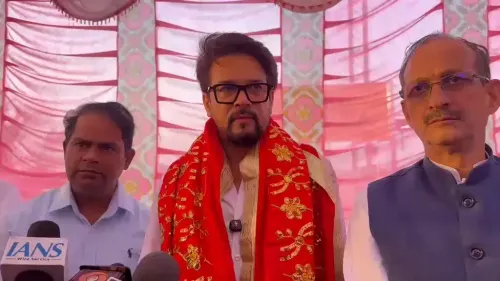
Thakur, the Lok Sabha MP from Hamirpur and former Union Minister for Sports, named all four Himachali players by district in his congratulatory post: Captain Pushpa Rana from Sirmaur, Ritu Negi also from Sirmaur, Bhavna Devi Thakur from Mandi, and Jyoti Thakur from Solan. 'You have made Himachal and the entire nation proud,' he wrote, crediting their 'grit and determination' as an inspiration for young women across the country.
Captain Pushpa Rana and Himachal's four-strong footprint
The detail that sets this celebration apart is the geography. Sirmaur, Mandi, Solan — these are not traditional sporting powerhouses. They are hill districts where infrastructure has historically lagged behind India's urban athletic corridors. That four players from a single Himalayan state anchored a national gold-medal campaign speaks to a genuine decentralisation of elite sport.
India's women's kabaddi team has a record of dominance at the Asian Games — the squad had claimed gold at the 2018 Jakarta-Palembang edition and has sustained that continental edge through successive cycles. The 2026 gold extends that lineage, underlining kabaddi's transformation from a village-square tradition into a high-profile international discipline.
The bigger picture: kabaddi as a vehicle for women's sport
Kabaddi's rise on the Asian Games stage has coincided with — and arguably accelerated — a broader push to grow female participation in Indian sport. Domestic leagues, talent-identification drives, and state-level academies have collectively deepened the talent pool, making results like Saturday's gold a product of years of systemic investment rather than any single moment of inspiration.
For Thakur, whose ministerial tenure at the Sports Ministry kept him closely involved in exactly these programmes, the win carries an additional personal resonance. His post's pivot from national pride to regional identity — singling out each player's home district — reflects a pattern of local political acknowledgement, but it also spotlights a real story: that India's medal machinery is drawing from smaller towns with increasing confidence.
The next test for this golden generation is the domestic league circuit and the qualification cycle for the next major continental event. For now, Sirmaur, Mandi, and Solan have a gold medal to celebrate — and the nation has four new names to remember.
Point of View
Whose tenure as Sports Minister overlapped with key investment cycles in grassroots sport, the acknowledgement is both a homecoming celebration and an implicit claim of policy continuity. The real measure of this gold's legacy will be whether domestic leagues and the next qualification cycle can retain and build on this generation of players.
NationPress
26 Sept 2026
Frequently Asked Questions
Did India win gold in women's kabaddi at Asian Games 2026?
Yes, the Indian Women's Kabaddi Team won gold at the Asian Games 2026 held in Aichi-Nagoya, Japan, on 26 September 2026.
Which Himachal Pradesh players were in the Indian women's kabaddi team at Asian Games 2026?
Four players from Himachal Pradesh featured: Captain Pushpa Rana and Ritu Negi (both from Sirmaur), Bhavna Devi Thakur (Mandi), and Jyoti Thakur (Solan).
Who is Anurag Thakur and why did he congratulate the kabaddi team?
Anurag Thakur is the BJP Lok Sabha MP from Hamirpur, Himachal Pradesh, and a former Union Minister of Sports. He congratulated the team because four of its players are from his home state.
Has India won women's kabaddi gold before at the Asian Games?
Yes, India's women's kabaddi team won gold at the 2018 Asian Games in Jakarta-Palembang, establishing a pattern of continental dominance in the sport.
Where are the 2026 Asian Games being held?
The 2026 Asian Games are hosted by Aichi-Nagoya in Japan.