Anurag Thakur Marks 12th Yoga Day in Mumbai
Synopsis
BJP MP Anurag Thakur participated in the 12th International Yoga Day in Mumbai on June 21, 2026, crediting PM Modi's UN initiative with transforming yoga from an ancient Indian tradition into a global movement and a cornerstone of India's cultural diplomacy.
Key Takeaways
BJP MP Anurag Thakur attended a public yoga event in Mumbai on June 21, 2026 for the 12th International Yoga Day .
He described yoga as a holistic medium of mental clarity, spiritual peace and physical strength — not merely physical exercise.
PM Narendra Modi proposed International Yoga Day at the UN General Assembly in September 2014 ; the UN adopted Resolution 69/131 in December 2014 .
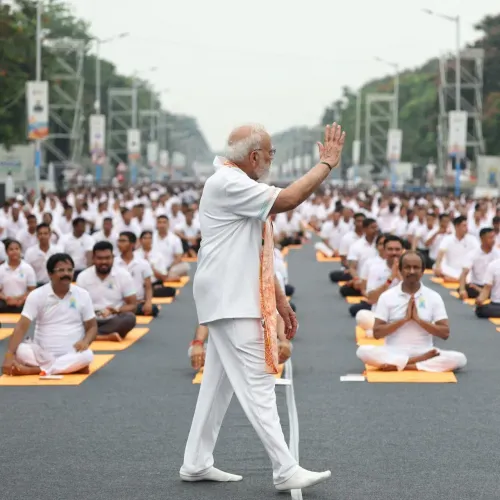
The first International Yoga Day was observed in 2015 ; the annual event now sees participation across hundreds of countries.
Thakur framed India's promotion of yoga as a demonstration of cultural diplomacy and soft power, fostering global dialogue and harmony.
The Mumbai event reflects India's dual strategy of domestic grassroots outreach and international image-building through yoga.
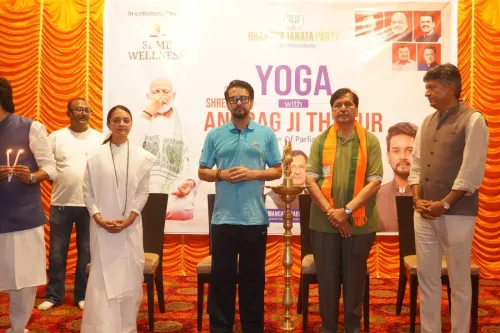
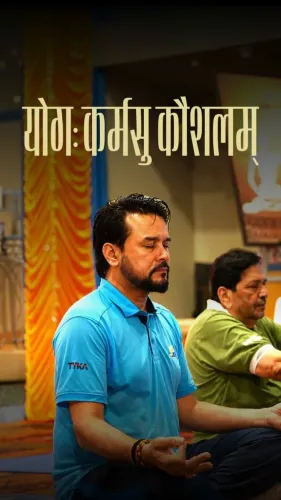
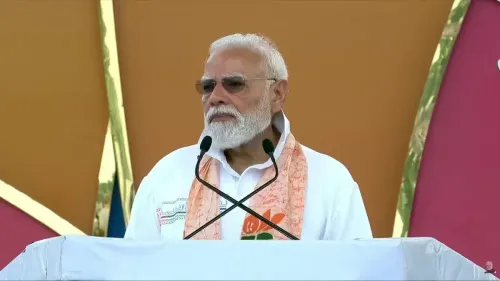
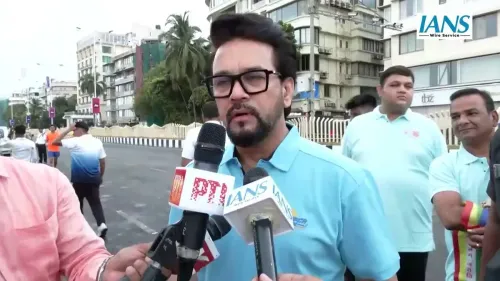
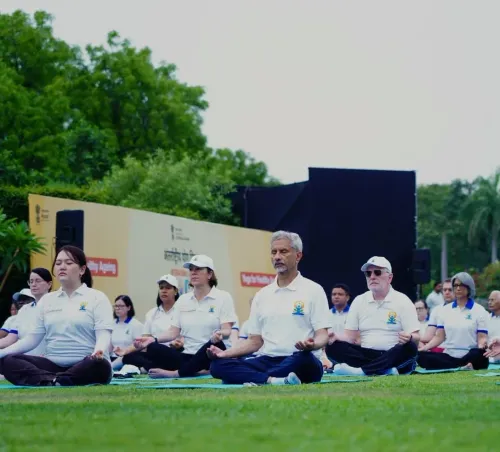
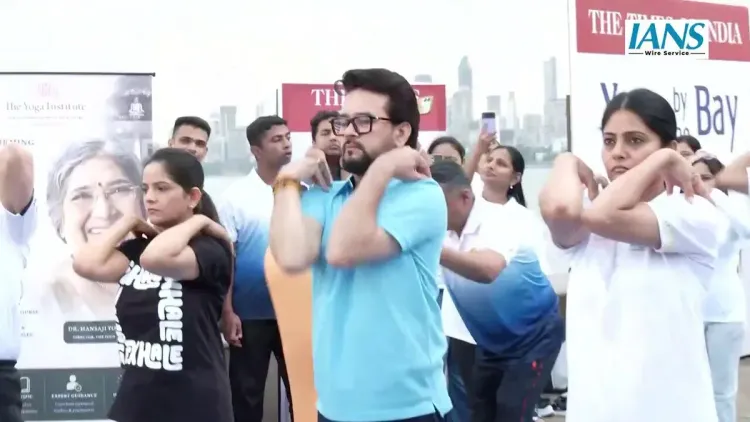
BJP MP Anurag Thakur participated in a public yoga event in Mumbai on Sunday, June 21, 2026, marking the 12th International Yoga Day by sharing his views on the relevance of yoga in modern life through yogasanas and a public address.
In a post on X, Thakur described yoga as far more than physical exercise, calling it 'mansik spashṭatā, ādhyātmik śānti aur śārīrik sudṛḍhatā kā samagra mādhyam' — 'a holistic medium of mental clarity, spiritual peace and physical strength.' He argued that amid the pressures and pace of modern life, yoga is 'an effective means of building a healthy, empowered and focused society.'
Context
The 12th International Yoga Day falls on June 21, 2026, continuing an annual tradition that has grown into a worldwide observance. Thakur, a Lok Sabha MP from Hamirpur, Himachal Pradesh and former Union Minister, chose Mumbai as the venue for his participation, underscoring the event's reach beyond the national capital.
His post credited Prime Minister Narendra Modi with transforming yoga 'from an ancient Indian tradition into a global mass movement,' describing it as a powerful example of India's cultural diplomacy and soft power.
Policy Backdrop
The origins of International Yoga Day trace directly to Indian diplomacy. In September 2014, PM Modi proposed the observance at the UN General Assembly. The UN General Assembly adopted Resolution 69/131 in December 2014, declaring June 21 as International Day of Yoga — the proposal garnered co-sponsorship from a record number of nations.
The first International Yoga Day was celebrated in 2015, and since then India has used the annual event as a platform for cultural diplomacy, projecting traditional Indian knowledge systems as contributions to global health and people-to-people ties. Thakur's framing of yoga as a vehicle for 'peace, health and global unity' aligns with this long-standing official narrative.
Stakeholders and Impact
The event in Mumbai drew yoga practitioners and citizens participating in public yogasana sessions, reflecting the dual domestic-international outreach strategy India has pursued since 2015. For the international community, India's consistent championing of yoga has reinforced its image as a source of wellness traditions with universal appeal.
Thakur noted that India sharing this heritage with the world has 'given a new direction to dialogue and harmony among different cultures and nations,' framing the exercise as bridge-building across civilisational lines rather than mere health promotion.
What's Next
With each successive International Yoga Day, attention will focus on the scale of official participation, the cities chosen for flagship events, and whether new central or state schemes further integrate yoga into public health, school curricula, or wellness programmes. The 12th edition marks over a decade of the UN-recognised observance, a milestone that is likely to prompt policy reviews on how deeply yoga has been institutionalised in India's domestic health architecture.
As India continues to position yoga at the intersection of cultural heritage and modern wellness, the annual observance serves as a recurring diplomatic signal — one that BJP leaders like Thakur actively amplify through grassroots participation across the country.
Point of View
The party reinforces a civilisational narrative that resonates with its core voter base while also projecting a non-divisive, globally palatable image of India. The choice of Mumbai — India's commercial capital — over a smaller constituency venue signals an intent to reach a cosmopolitan audience. Over twelve years, this messaging has shifted from novelty to institutional fixture, raising the question of whether the diplomatic dividend is now being taken for granted or whether each successive Yoga Day still moves the needle on India's global standing.
NationPress
19 Sept 2026
Frequently Asked Questions
What is International Yoga Day and when is it celebrated?
International Yoga Day is observed every year on June 21 . It was established by the UN General Assembly through Resolution 69/131 in December 2014 following a proposal by PM Narendra Modi at the UN General Assembly in September 2014, and was first celebrated in 2015 .
What did Anurag Thakur do on International Yoga Day 2026?
BJP MP Anurag Thakur participated in a public yoga event in Mumbai on June 21, 2026 , performed yogasanas, and shared his views on yoga's relevance in modern life, calling it a medium of mental clarity, spiritual peace and physical strength.
How did PM Modi contribute to International Yoga Day?
PM Narendra Modi proposed the International Day of Yoga at the UN General Assembly in September 2014 . The UN adopted the resolution in December 2014 , making June 21 an annual global observance, the first edition of which was held in 2015 .
Why does India promote yoga internationally?
India promotes yoga internationally as an instrument of cultural diplomacy and soft power, sharing an ancient Indian tradition with the world to foster peace, health and people-to-people ties across cultures and nations.
Which city hosted Anurag Thakur's Yoga Day 2026 event?
Mumbai hosted the public yoga event attended by BJP MP Anurag Thakur on June 21, 2026 , the 12th International Yoga Day.