Anurag Thakur flags sports budget rise to ₹4,497 cr in Nadaun
Synopsis
BJP MP Anurag Thakur, speaking in Nadaun, Himachal Pradesh, contrasted the Congress-era ₹800 crore sports budget with the current ₹4,497 crore outlay and highlighted a five-year ₹36,441 crore Khelo India allocation to drive tenfold growth in athlete participation.
Key Takeaways
BJP MP Anurag Thakur made the announcement in Nadaun, Himachal Pradesh on 26 September 2026 .
India's annual sports budget has grown from ₹800 crore (Congress era) to ₹4,497 crore under the Modi government.
A ₹36,441 crore allocation has been made under Khelo India for the next five years .
The outlay aims to grow athlete participation by tenfold .
Khelo India was launched in 2017 to promote grassroots sports, talent identification, and infrastructure across India.
Thakur served as Union Minister of Youth Affairs and Sports from 2021 to 2024 , directly overseeing the scheme.
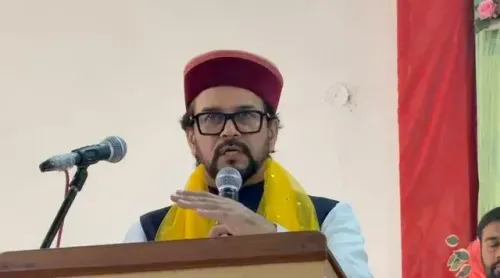
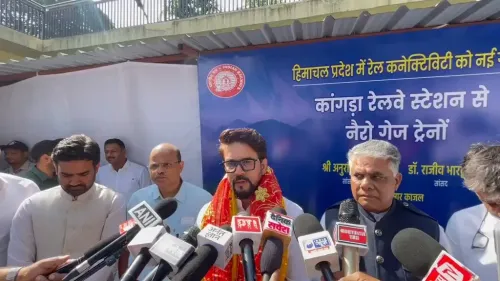
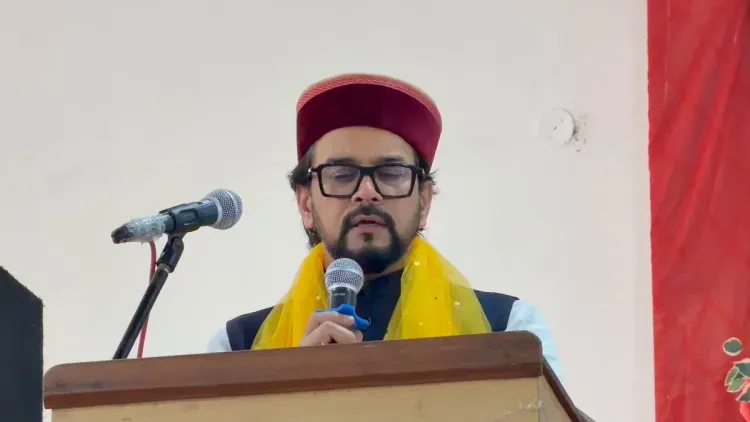
From ₹800 crore to ₹4,497 crore — that is the arc BJP MP Anurag Thakur drew on Saturday, 26 September 2026, at an event in Nadaun, Himachal Pradesh, contrasting the sports budget under Congress-led governments with what the Modi government allocates today.
The numbers Thakur put on the table in Nadaun
Thakur, a BJP Lok Sabha MP from Hamirpur and former Union Minister of Youth Affairs and Sports, cited the jump from the Congress-era ₹800 crore sports outlay to the current ₹4,497 crore — a near six-fold rise. More striking was the forward-looking figure he anchored the argument on: an allocation of ₹36,441 crore under the Khelo India scheme over the next five years, aimed at increasing athlete participation tenfold.
Khelo India, launched in 2017 as a flagship central scheme for grassroots sports, talent identification, and infrastructure development, has become the government's primary vehicle for that ambition. Thakur was its ministerial steward between 2021 and 2024, giving him particular standing to present these numbers.
Why the Congress-era comparison carries political weight
Comparisons between pre- and post-2014 sports spending are a recurring feature of the BJP's governance narrative. By anchoring the baseline at ₹800 crore — the level attributed to Indian National Congress governments — Thakur frames the current allocation not as incremental growth but as structural transformation. The backdrop of Nadaun, a constituency town in his home district of Hamirpur, gives the messaging a local resonance: Himachal Pradesh has produced several nationally recognised athletes, and sports spending is a tangible, if politically useful, metric for voters.
The Khelo India benchmark and what follows
The ₹36,441 crore five-year outlay, if deployed as announced, would dwarf previous multi-year sports commitments and signal a deliberate push to move India up global sporting rankings by widening the participation base rather than concentrating only on elite coaching. The scheme's architecture — regional games, university games, winter games, and athlete stipends — is designed precisely for that funnel effect: identify talent early, fund it consistently, and build the infrastructure at the district level that elite academies cannot reach.
The real test, as any sports-policy observer will note, is utilisation. Announced allocations and actual expenditure on the ground — new courts, trained coaches, functional Khelo India centres — are the numbers that will determine whether the tenfold participation target becomes a headline or a result.
Point of View
441 crore Khelo India figure is designed to shift the conversation from past comparisons to future accountability: it sets a measurable target that both validates the government's intent and creates a benchmark opponents and civil society can test. For Thakur personally, invoking these numbers in his home state reinforces his identity as the architect of India's sports spending surge. Whether the five-year outlay translates into verifiable participation gains will determine whether this becomes a durable political asset or an unfulfilled promise.
NationPress
26 Sept 2026
Frequently Asked Questions
What is India's current sports budget under the Modi government?
BJP MP Anurag Thakur cited India's current annual sports budget at ₹4,497 crore, up from ₹800 crore during the Congress era.
What is the Khelo India scheme and how much has been allocated?
Khelo India is a central government scheme launched in 2017 to promote grassroots sports and talent development. A ₹36,441 crore allocation has been announced for the scheme over the next five years to grow athlete participation tenfold.
What did Anurag Thakur say at Nadaun, Himachal Pradesh?
Anurag Thakur highlighted that India's sports budget had grown nearly sixfold since the Congress era and announced the ₹36,441 crore five-year Khelo India outlay aimed at a tenfold increase in athlete participation.
When was the Khelo India scheme launched?
Khelo India was launched in 2017 as a flagship central scheme for grassroots sports promotion, talent identification, and sports infrastructure development across India.
What was Anurag Thakur's role in Indian sports policy?
Anurag Thakur served as Union Minister of Youth Affairs and Sports from 2021 to 2024, directly overseeing Khelo India and national sports budget decisions. He is currently a BJP Lok Sabha MP from Hamirpur, Himachal Pradesh.