Tharoor Demands ECI Explain Bengal Booth Vote Anomaly
Synopsis
Congress MP Dr. Shashi Tharoor has publicly demanded that the Election Commission of India explain a reported anomaly in booth-level BJP vote data from a Muslim-majority polling station in New Town, West Bengal, warning that public trust in the electoral process is at risk.
Key Takeaways
Shashi Tharoor called on the Election Commission of India on June 12, 2026 to explain what he termed a 'bizarre inconsistency' in West Bengal booth data.
The controversy centres on a polling booth in New Town, Kolkata , where BJP is reported to have recorded only 97 votes in a Muslim-majority area.
Tharoor tagged both @ECISVEEP and @INCIndia , signalling a coordinated Congress push for electoral accountability.
Opposition parties have raised EVM and booth-data concerns with the ECI repeatedly since the 2004 nationwide EVM rollout.
No formal response from the Election Commission of India has been issued at the time of publication.
The issue is expected to be raised in Parliament during the next session as part of broader electoral reform debates.
Congress MP Dr. Shashi Tharoor on Friday, June 12, 2026, publicly called on the Election Commission of India (ECI) to explain what he described as a 'bizarre inconsistency' in booth-level voting data from New Town, West Bengal, warning that public faith in the electoral process was at stake.
Context
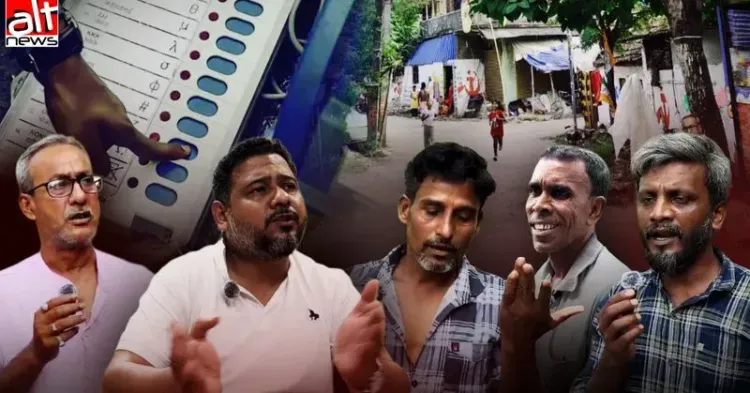
Tharoor's post was anchored to a fact-checking report examining a polling booth in New Town — a planned satellite township in the Kolkata metropolitan area — where the Bharatiya Janata Party (BJP) is reported to have polled only 97 votes in what is described as a Muslim-majority booth. The report raised questions about whether the booth-level tallies accurately reflected actual voter choices.
Tagging both the Election Commission of India's official handle (@ECISVEEP) and the Indian National Congress (@INCIndia), Tharoor wrote: 'It's clear that @ECISVEEP needs to explain this bizarre inconsistency to the nation if the people are not to lose faith in our election process.'
Policy Backdrop
Questions over booth-level vote data and the reliability of Electronic Voting Machines (EVMs) have been a recurring flashpoint in Indian electoral politics. Opposition parties have sought clarifications from the ECI on EVM-VVPAT discrepancies and anomalous booth results since the nationwide rollout of EVMs in the 2004 general elections.
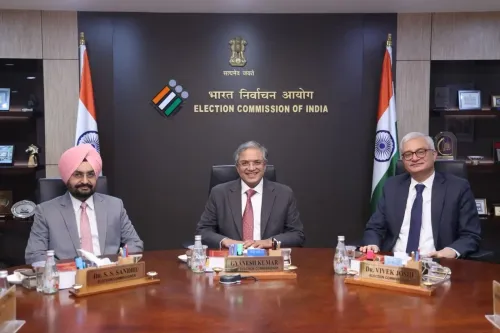
The Election Commission of India is an autonomous constitutional body mandated to conduct and supervise elections to Parliament and state legislatures. It has consistently maintained the integrity of the EVM system, dismissing past allegations of tampering as unsubstantiated.
Stakeholders and Impact
The immediate stakeholders are voters in West Bengal, particularly those in New Town, whose confidence in the accuracy of recorded results is directly implicated. Political parties contesting in the state — including the BJP, the ruling Trinamool Congress, and the Congress — all have an interest in the Commission's response.
Indian opposition leaders, including from Congress, have frequently flagged alleged inconsistencies in polling data from West Bengal to raise broader questions about electoral integrity. Such interventions typically intensify after assembly or Lok Sabha polls in states with polarised voting patterns, and Tharoor's post follows that established pattern.
What's Next
Attention will now turn to whether the Election Commission of India issues a formal response or releases granular booth-level data to address the concerns raised. Any such clarification, or the absence of one, is likely to feed into debates on electoral reform expected to surface in Parliament during its next session.
Dr. Tharoor's intervention, amplified through the Congress party's handle, signals that the opposition intends to keep electoral transparency on the national agenda — and that the ECI's silence, if prolonged, will itself become a political issue.
Point of View
He converts a localised data anomaly into a national accountability question, applying institutional pressure without making unverifiable claims himself. The intervention fits a well-worn Congress playbook of using West Bengal's polarised electoral geography to spotlight broader EVM and transparency concerns. What distinguishes this instance is the specific granularity — a single named booth, a single reported figure — which makes it harder for the Commission to deflect with generalities. If the ECI does not respond with booth-level data, the silence will likely be framed by the opposition as confirmation of systemic opacity ahead of future electoral cycles.
NationPress
26 Oct 2026
Frequently Asked Questions
What did Shashi Tharoor say about the Election Commission in June 2026?
Dr. Shashi Tharoor demanded that the Election Commission of India publicly explain an alleged inconsistency in booth-level vote data from a Muslim-majority polling station in New Town, West Bengal, where BJP reportedly polled only 97 votes.
What is the New Town Bengal booth controversy about?
A fact-checking report raised questions about why the BJP recorded an unusually low tally of 97 votes in a Muslim-majority booth in New Town, a satellite township near Kolkata, prompting calls for the ECI to release and explain the data.
Has the Election Commission of India responded to Tharoor's demand?
As of publication, the Election Commission of India had not issued a formal response to Dr. Tharoor's call for an explanation regarding the New Town booth data.
Why do opposition parties question booth-level EVM data in India?
Indian opposition parties have sought EVM and booth-level data clarifications from the ECI since the nationwide EVM rollout in 2004, arguing that unexplained anomalies in results undermine public trust in the electoral process.
What is the Election Commission of India's role in addressing such concerns?
The Election Commission of India is an autonomous constitutional body responsible for supervising all parliamentary and state elections; it is empowered to release booth-level data and issue clarifications on result anomalies when formally queried.