Tharoor at Berlin Forum on India-Germany Ties, Global Shifts
Synopsis
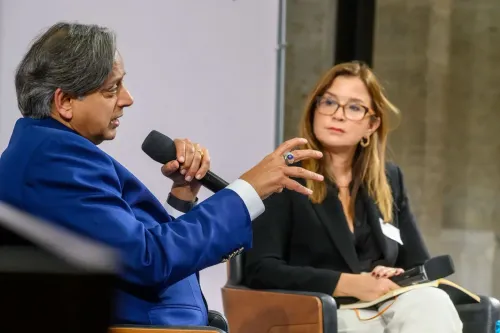
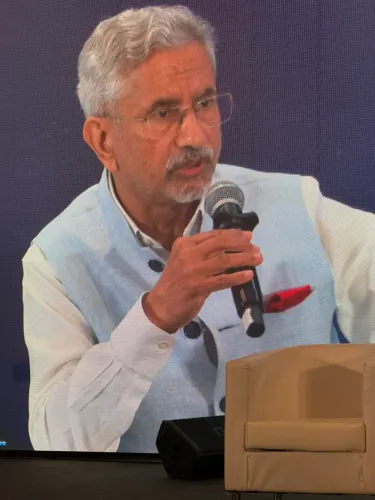
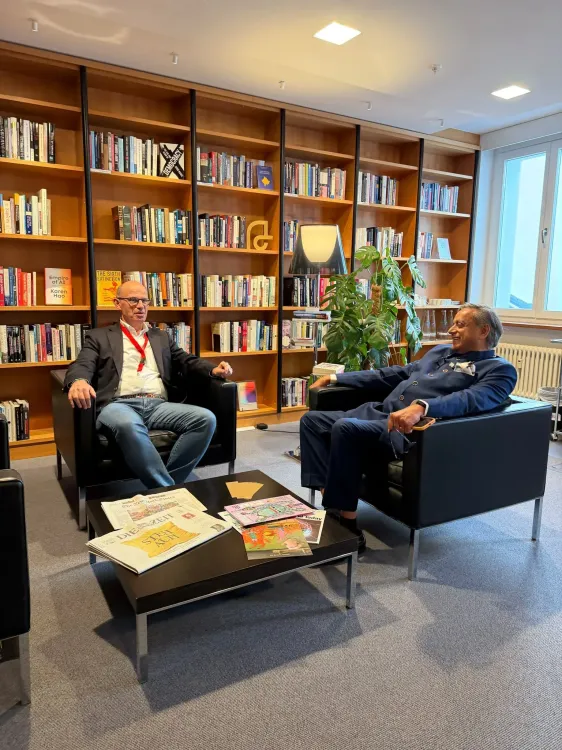
Congress MP Dr. Shashi Tharoor is in Berlin for the Richard von Weizsäcker Forum 2026, where he discussed India-Germany relations and how nations can retain strategic autonomy as the post-Cold War international order fractures — in conversation with Robert Bosch Stiftung CEO Dr. Bernhard Straub.
Key Takeaways
Shashi Tharoor is participating in the Richard von Weizsäcker Forum 2026 in Berlin on 6 October 2026 .
He held a direct conversation with Dr.
Bernhard Straub , CEO of the Robert Bosch Stiftung , a major German philanthropic and policy institution.
Topics ranged from India-Germany bilateral relations to the changing international landscape and the question of strategic autonomy for nation-states.
Tharoor framed the central challenge as how countries retain 'room for manoeuvre' when old global certainties no longer hold.
His appearance at the forum reflects growing European demand for an Indian perspective on multipolarity and global governance.
Tharoor served as UN Under-Secretary-General before his career as a Congress MP, giving him unusual diplomatic depth on multilateral issues.
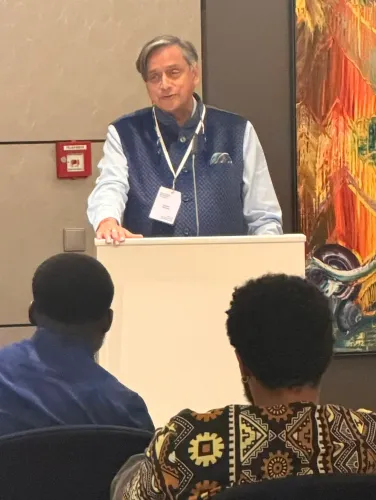
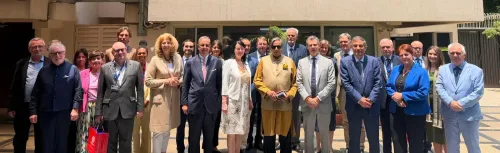
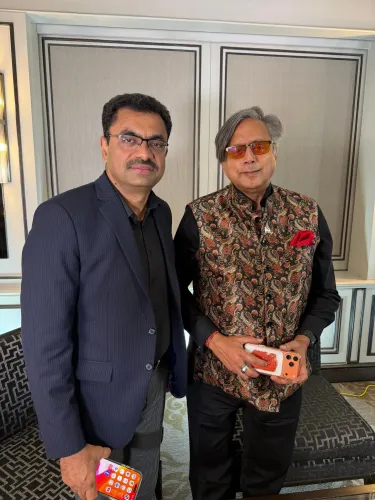
From New Delhi to Berlin — Congress MP Dr. Shashi Tharoor arrived in the German capital on Tuesday, 6 October 2026, to participate in the prestigious Richard von Weizsäcker Forum 2026, engaging with one of Europe's foremost foundations on the sharpest questions reshaping the international order.
Tharoor held a conversation with Dr. Bernhard Straub, Chief Executive Officer of the Robert Bosch Stiftung, covering ground that stretched from the bilateral relationship between India and Germany to the broader, unsettling question of how nations navigate a world where, as Tharoor put it, 'the old certainties no longer hold.'
Why the Richard von Weizsäcker Forum matters
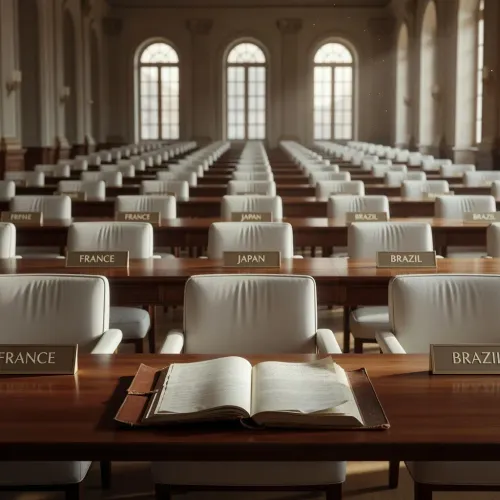
The Richard von Weizsäcker Forum — named after the former German Federal President widely admired for his moral clarity in post-war European politics — is convened by the Robert Bosch Stiftung, a major German philanthropic powerhouse with a long record of fostering transatlantic and Euro-Asian dialogue. The forum brings together policymakers, intellectuals, and civil-society voices to grapple with precisely the kind of structural disruptions in global governance that Tharoor flagged: the erosion of rules-based norms, the fracturing of alliances, and the search for what diplomats increasingly call 'strategic autonomy.'
For an Indian voice to feature prominently at such a forum is itself a signal. India and Germany have in recent years deepened their partnership across defence technology, green hydrogen, critical minerals, and digital infrastructure — a relationship that has gained new urgency as both countries recalibrate their supply chains and strategic alignments.
The 'room for manoeuvre' question
The phrase Tharoor chose — 'room for manoeuvre' — carries considerable diplomatic freight. It is the language of middle powers and non-aligned traditions asserting the right not to be conscripted into binary geopolitical camps. For India, a founding voice of the Non-Aligned Movement and now the world's most populous democracy balancing relationships with Washington, Moscow, and Brussels simultaneously, this question is anything but academic.
Tharoor's presence in Berlin, engaging a German audience on exactly this theme, underscores the growing demand in European capitals for an Indian perspective on multipolarity — and the extent to which New Delhi's foreign-policy posture is being watched, and courted, by partners who once took the Western-led order for granted.
A veteran of multilateral diplomacy who served as UN Under-Secretary-General before entering Indian parliamentary politics, Tharoor brings rare institutional memory to these conversations — the kind of longitudinal view that traces how far the international system has drifted from the post-Cold War consensus of the 1990s.
The forum continues in Berlin. The conversations it sparks may travel much further.
Point of View
Which has quietly expanded beyond trade into the realm of ideas and governance norms. For the Congress party, such high-profile international platforms lend its foreign-policy thinking visibility and legitimacy at a time when the party seeks to project credibility on global affairs.
NationPress
6 Oct 2026
Frequently Asked Questions
What is the Richard von Weizsäcker Forum?
The Richard von Weizsäcker Forum is a prestigious international policy dialogue convened by the Robert Bosch Stiftung in Germany, named after the respected former German Federal President. It brings together global policymakers and thinkers to discuss shifts in international governance and geopolitics.
Who is Dr. Bernhard Straub?
Dr. Bernhard Straub is the Chief Executive Officer of the Robert Bosch Stiftung, one of Germany's largest and most influential philanthropic foundations, which actively promotes international dialogue and policy exchange.
Why is Shashi Tharoor in Berlin?
Congress MP Dr. Shashi Tharoor is in Berlin to participate in the Richard von Weizsäcker Forum 2026 and to discuss India-Germany relations and the evolving global order with leading German policy figures including Robert Bosch Stiftung CEO Dr. Bernhard Straub.
What did Shashi Tharoor say about the international order?
Tharoor raised the question of how countries can retain 'room for manoeuvre' when, as he put it, 'the old certainties no longer hold' — a reference to the erosion of post-Cold War norms and the challenge of strategic autonomy for mid-sized and emerging powers like India.
What is the state of India-Germany relations in 2026?
India and Germany have deepened their strategic partnership in recent years across areas including defence technology, green hydrogen, critical minerals, and digital infrastructure, with both countries recalibrating their supply chains and global alignments amid a shifting international order.