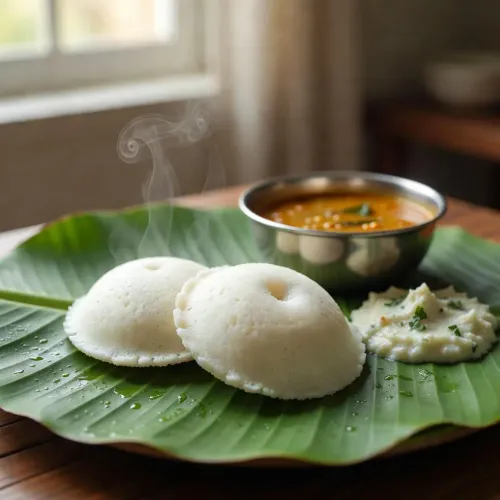
Tharoor Jokes About 'Id-Slice' in Viral Idli Post
Synopsis
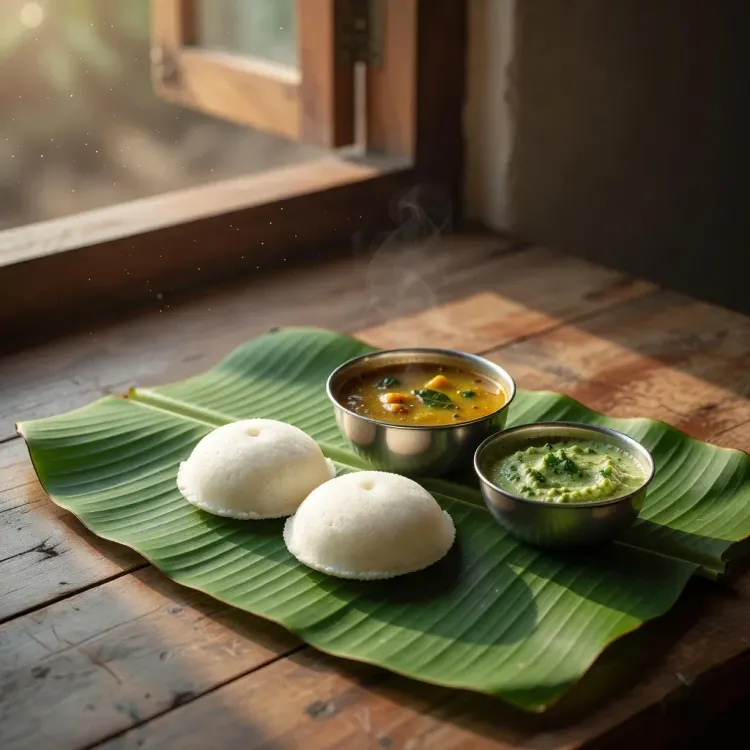
Congress MP Dr. Shashi Tharoor playfully corrected a social media user who apparently sliced an idli in an unusual way, joking that a software engineer had 'partitioned the data' in the kitchen and insisting the dish is called 'idli,' not 'id-slice.'
Key Takeaways
Shashi Tharoor posted a humorous response on June 8, 2026 about an unconventionally cut idli.
He directed the joke at user @ravaldosa , using software engineering terminology — 'partition the data' — as the comic device.
Tharoor insisted the dish be called 'idli,' not 'id-slice,' defending standard South Indian culinary nomenclature.
He jokingly suggested only an Italian mistaking it for pizza would eat an idli that way, and advised against putting sambar on pizza.
The post reflects Tharoor's established pattern of blending cultural commentary with tech-world vocabulary for broad social media appeal.
Congress MP Dr. Shashi Tharoor took to social media on Monday, June 8, 2026, to poke fun at an unusual way of cutting an idli, blending tech-world vocabulary with South Indian culinary pride in a post that quickly drew attention online.
What Happened
Tharoor directed his wit at a user going by the handle @ravaldosa, quipping that 'this is what happens when a software engineer gets into the kitchen and tries to partition the data.' The joke hinged on the computing term 'partition' — used to divide storage or datasets — being applied to the act of slicing an idli, a soft steamed rice cake central to South Indian cuisine.
He was pointed in his correction: 'it's called idli, not id-slice,' a playful dig at the unconventional cut. He added that 'no one eats idlis this way, unless they're Italian and mistake it for pizza' — and signed off with a friendly advisory not to put sambar on pizza.
Context: Tharoor's Brand of Cultural Humour
Dr. Tharoor, the Thiruvananthapuram MP, has long cultivated a reputation for blending erudition with levity on social media. His posts frequently oscillate between weighty policy commentary and sharp cultural observations, making him one of the most-followed Indian politicians online.
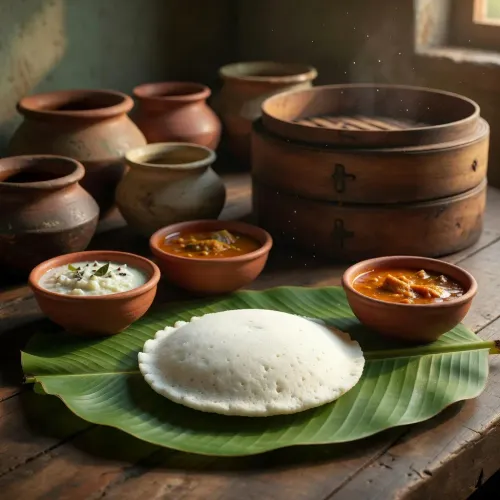
South Indian food — idli, dosa, sambar — occupies a particular place in his public persona, rooted in his Kerala constituency and his broader identity as a champion of Indian cultural heritage. The idli, a staple breakfast dish made from fermented rice and lentil batter, is among the most recognisable foods from the region.
The Software-Kitchen Crossover
The humour in Tharoor's post rests on a precise cultural collision: the language of software engineering — 'partition,' 'data' — mapped onto a domestic kitchen act. The term 'data partitioning' is standard in database and systems engineering, referring to dividing a dataset into discrete segments for efficiency.
By calling the sliced idli an 'id-slice,' the original post (or image it referenced) apparently renamed the dish in a manner that mimicked a technical identifier or variable name, the kind of wordplay that resonates with India's large community of software professionals. Tharoor's response leaned into that register while firmly defending culinary tradition.
Broader Pattern and What It Signals
Indian elected representatives increasingly use informal, humorous social media posts to maintain audience engagement between legislative sessions. Such posts humanise public figures and generate organic reach that formal policy statements rarely achieve.
For Tharoor specifically, this style of post reinforces a consistent public image: cosmopolitan yet rooted, technically literate yet culturally grounded. The light-hearted exchange also underscores how food remains a potent, low-friction vehicle for cultural identity in Indian public discourse — capable of drawing wide engagement without the polarisation that political topics often invite.
Whether the post sparks a wider conversation about the intersection of tech culture and Indian culinary traditions on social media remains to be seen, but it adds another memorable entry to Tharoor's long catalogue of wordplay-driven public moments.
Point of View
Where informal cultural humour serves as a low-risk, high-engagement tool. By framing a culinary joke in the language of software engineering, he simultaneously signals cultural rootedness and tech-literacy — a combination that plays well with both his Kerala base and India's urban professional class. The post also illustrates how South Indian food has become a recurring motif in his public identity, functioning almost as a soft-power assertion of regional pride. In a media environment saturated with partisan noise, such posts carve out a distinct, affable register that keeps an audience tethered across the political news cycle.
NationPress
26 Oct 2026
Frequently Asked Questions
What did Shashi Tharoor post about idli?
Dr. Shashi Tharoor posted a humorous comment on June 8, 2026, mocking an unusual way of slicing an idli, joking that a software engineer had tried to 'partition the data' in the kitchen and coining the term 'id-slice' as a punchline.
What is 'id-slice' that Tharoor mentioned?
'Id-slice' is a playful term Tharoor used to mock an unconventionally cut idli, suggesting it looked like a software variable or identifier name rather than a traditional South Indian dish.
Who is @ravaldosa that Tharoor tagged?
@ravaldosa is a social media user Tharoor addressed in his post; the handle appears to be a play on 'rava dosa,' a South Indian dish, though further details about the account are not independently verified.
Why is Shashi Tharoor associated with South Indian food references?
Tharoor represents the Thiruvananthapuram constituency in Kerala and frequently references South Indian culture and cuisine as part of his public identity, reinforcing his regional roots while engaging a national audience.
Does Shashi Tharoor often post humorous content on social media?
Yes, Dr. Tharoor is well known for blending wit, wordplay, and cultural commentary with political messaging on social media, making humour a consistent and recognisable element of his online presence.