Tharoor Delivers Valedictory at Srinagar Nalanda Dialogue
Synopsis
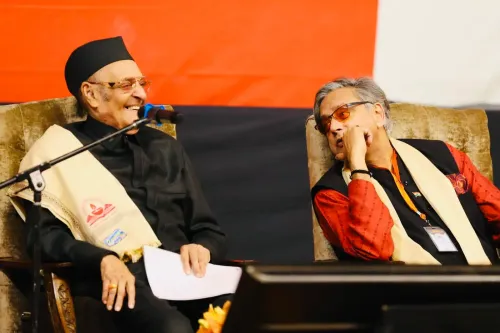
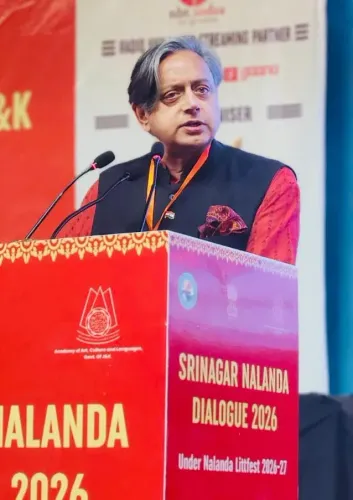
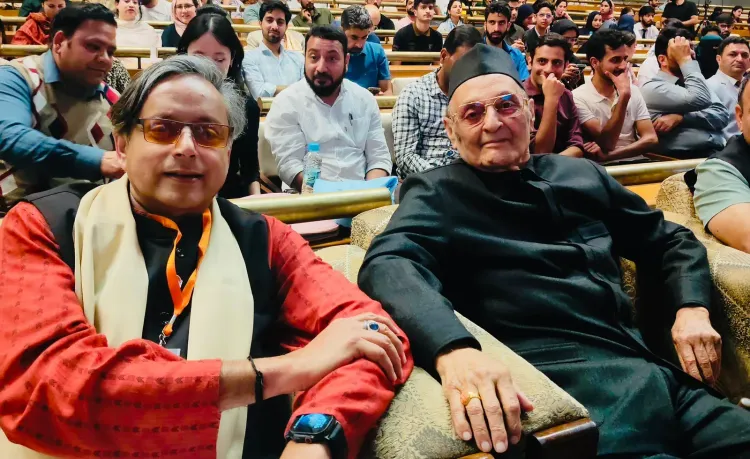
Congress MP Dr. Shashi Tharoor delivered the valedictory address at the Srinagar Nalanda Dialogue on June 21, 2026, alongside veteran scholar-statesman Dr. Karan Singh. The event closed with a cultural programme celebrating Kashmir's syncretic traditions.
Key Takeaways
Shashi Tharoor delivered the valedictory speech at the Srinagar Nalanda Dialogue on Saturday, June 21, 2026 .
Veteran politician and scholar Dr.
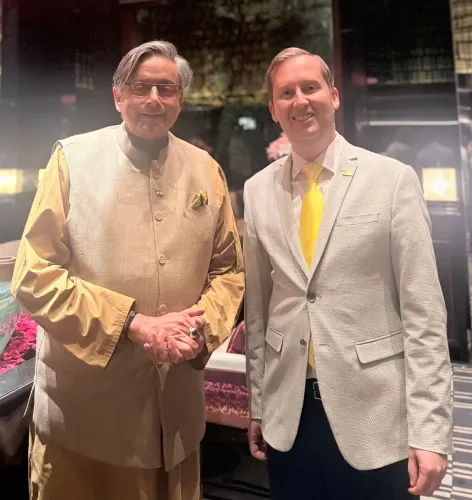
Karan Singh , former Sadr-e-Riyasat of Jammu and Kashmir, shared the stage with Tharoor.
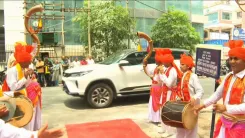
The event concluded with a cultural programme that Tharoor described as reflecting Kashmir's unique spirit .
The dialogue draws on the Nalanda tradition of open scholarly exchange, revived through the Nalanda University Act of 2010 .
The event is part of a broader pattern of national political figures participating in Srinagar -based cultural and intellectual gatherings.
Tharoor indicated a follow-up post with further reflections, suggesting the event covered substantive ground beyond the cultural programme.
Congress MP Dr. Shashi Tharoor delivered the valedictory address at the Srinagar Nalanda Dialogue on Saturday evening, June 21, 2026, sharing the stage with veteran statesman and scholar Dr. Karan Singh. The event concluded with a cultural programme that, in Tharoor's words, 'captured something of Kashmir's unique spirit.'
Context
Tharoor, who serves as the Congress MP from Thiruvananthapuram and is a former UN Under-Secretary-General, was invited to deliver the closing address at the dialogue held in Srinagar, the summer capital of Jammu and Kashmir. He described the occasion as a delight, noting the presence of Dr. Karan Singh, whom he termed 'greatly admired.' The event brought together intellectual and cultural voices in one of India's most symbolically significant cities.
Dr. Karan Singh is a veteran politician, scholar and former Sadr-e-Riyasat of Jammu and Kashmir, with decades of involvement in constitutional, cultural and interfaith matters. His participation lent the dialogue considerable weight as a cross-generational intellectual exchange.
Policy Backdrop
The dialogue draws its name and spirit from the Nalanda tradition — a reference to the ancient centre of learning whose revival was legislated by Parliament through the Nalanda University Act of 2010. That Act sought to re-establish India's heritage of open scholarly exchange, positioning Nalanda as a model for dialogue across disciplines and geographies.
Framing a Kashmir-based event under the Nalanda banner carries clear symbolic intent: it situates the region within a broader narrative of India's civilisational intellectual tradition, rather than solely within the frame of political conflict or security. The choice of Srinagar as the venue underlines the aspiration to normalise high-level cultural and academic engagement in the Valley.
Stakeholders and Impact
For Kashmiri artists and the local intellectual community, events of this kind provide a platform that connects regional talent and scholarship to national audiences and policymakers. The cultural programme that closed the evening — described by Tharoor as reflecting Kashmir's 'unique spirit' — likely drew on the region's rich syncretic traditions, including Sufi music, folk performance and classical arts.
National political figures from across party lines have periodically participated in Srinagar-based cultural and academic gatherings to highlight the region's heritage. Tharoor's presence, alongside a figure of Dr. Karan Singh's stature, signals that such dialogues continue to attract bipartisan intellectual participation. For audiences beyond Jammu and Kashmir, the event is a reminder of the Valley's living cultural depth, often overshadowed in national discourse by administrative and security concerns.
What's Next
The Srinagar Nalanda Dialogue's valedictory marks the formal close of this edition, but the format itself raises questions about continuity. Future editions of the series, and any associated cultural or educational initiatives in Jammu and Kashmir, will be watched by scholars, artists and policymakers interested in sustaining this kind of structured intellectual engagement in the region. Tharoor's post, tagged as part one of a two-part thread, suggests further reflections on the event are forthcoming.
Point of View
Alongside Dr. Karan Singh, reflects a deliberate effort by national political figures to engage Kashmir through the register of culture and intellect rather than politics alone. The Nalanda framing is significant: it roots the event in a pan-Indian civilisational narrative, subtly countering the tendency to view the Valley exclusively through a security or administrative lens. For the Congress party, such appearances allow a senior leader to maintain a visible, constructive presence in Jammu and Kashmir ahead of any future political mobilisation in the region. The bipartisan character of the gathering — with Tharoor and Karan Singh representing different political generations and affiliations — also lends the dialogue a degree of credibility that purely partisan events could not achieve.
NationPress
22 Jun 2026
Frequently Asked Questions
What is the Srinagar Nalanda Dialogue?
The Srinagar Nalanda Dialogue is an intellectual and cultural event held in Srinagar, Jammu and Kashmir, inspired by the Nalanda tradition of scholarly exchange that Parliament sought to revive through the Nalanda University Act of 2010.
Why did Shashi Tharoor attend the Srinagar Nalanda Dialogue?
Dr. Shashi Tharoor was invited to deliver the valedictory address at the event, which brought together scholars and cultural figures in Srinagar on June 21, 2026.
Who is Dr. Karan Singh?
Dr. Karan Singh is a veteran Indian politician, scholar and former Sadr-e-Riyasat of Jammu and Kashmir, known for his long involvement in constitutional, cultural and interfaith matters.
What happened at the end of the Srinagar Nalanda Dialogue?
The evening concluded with a cultural programme that Congress MP Dr. Shashi Tharoor described as capturing 'something of Kashmir's unique spirit,' likely drawing on the region's Sufi, folk and classical traditions.
What is the significance of holding the Nalanda Dialogue in Srinagar?
Hosting the dialogue in Srinagar situates Kashmir within India's broader intellectual and civilisational heritage, and reflects a pattern of national figures using cultural events to highlight the Valley's traditions beyond the usual political and security framing.