Tharoor Slams India's ILO Gig Work Abstention as 'National Disgrace'
Synopsis
Congress MP Dr. Shashi Tharoor on July 30, 2026 called India's abstention on the ILO's platform economy convention 'a national disgrace,' noting that Indian employer and worker delegates had both voted to support the gig worker protections the government chose to sidestep.
Key Takeaways
The ILO Convention on decent work in the Platform Economy sets minimum conditions for gig and platform workers globally.
India abstained on the convention vote, despite Indian employer and worker representatives inside the ILO supporting it.
Shashi Tharoor called the abstention 'a national disgrace' and demanded domestic adoption of the standards.
India's Code on Social Security, 2020 already created a first legislative framework for gig workers, but full implementation rules remain pending.
The abstention drew direct criticism at Labour Minister Mansukh Mandaviya and MoS Dr.
India's gig economy employs lakhs of workers in ride-hailing, food delivery, logistics, and digital services without assured international-standard protections.
India voted to abstain on a landmark International Labour Organization (ILO) convention establishing minimum protections for gig and platform workers — and Congress MP Dr. Shashi Tharoor is not letting it pass quietly. In a sharp post on Thursday, July 30, 2026, Tharoor called the abstention 'a national disgrace,' noting that both Indian employers and workers at the ILO had voted to support the convention.
What India Walked Away From
The ILO's Convention on 'decent work in the Platform Economy' sets out minimum conditions — covering pay, safety, and social security — for the millions worldwide who earn their living through apps and digital platforms. Tharoor's pointed observation: it was not a contested vote where India found itself in a minority. Indian employer and worker representatives both backed the convention. The government's abstention, he argued, put New Delhi out of step with its own constituents inside the chamber.
'Instead of abstaining, the government should have endorsed the standards the whole world has agreed upon to protect gig workers, and adopted them in domestic legislation,' Tharoor wrote, directing his remarks at Labour Minister Mansukh Mandaviya and Minister of State Dr. Jitendra Singh.
Lakhs of App Workers, Left Without a Floor
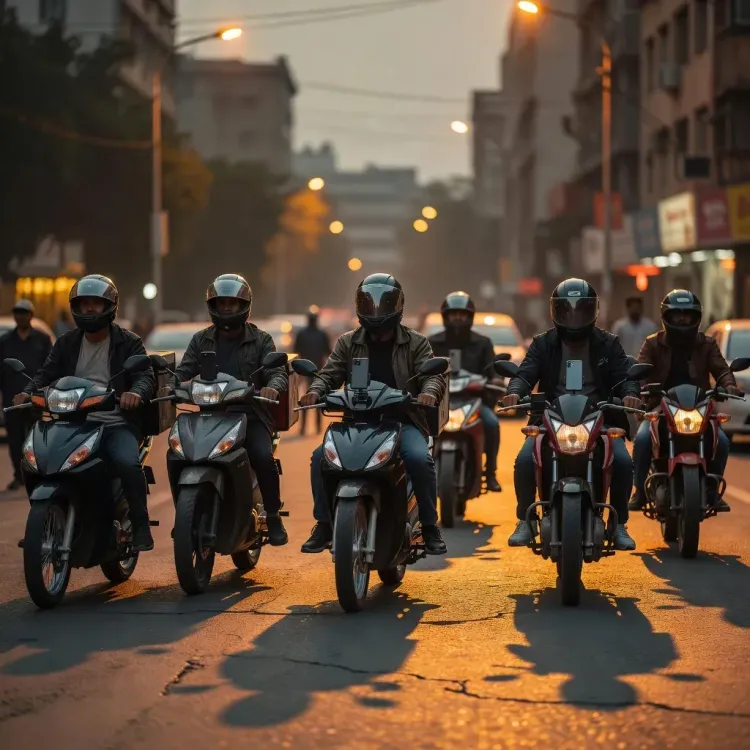
The stakes are not abstract. India's gig economy — spanning ride-hailing, food delivery, e-commerce logistics, and freelance digital services — employs lakhs of workers who operate without the protections that formal employment provides: no minimum wage guarantee tied to international standards, no assured social security, no structured grievance mechanism. Tharoor framed the abstention as emblematic of a broader failure: 'one more example of the establishment's tone-deafness to the needs of young Indians.'
The irony is that India has already acknowledged the gap. Between 2019 and 2020, the government consolidated 29 labour laws into four codes, and the Code on Social Security, 2020 introduced — for the first time — a legislative framework specifically for gig and platform workers. The architecture exists. The ILO convention would have given it an internationally benchmarked spine.
India's Balancing Act at the ILO
New Delhi's positions at the ILO have historically been calibrated: support the principle of worker protection, but guard flexibility on ratification and domestic implementation. The concern is typically about locking the country into standards that may not fit the scale or informality of India's labour market. But critics argue that calculus has a cost — and that cost is borne by the workers the conventions are designed to protect.
What to watch now: whether the Labour Ministry issues any clarification on the abstention rationale, and whether the Code on Social Security rules for platform workers — still pending full implementation — are accelerated in response to the political pressure this vote has now generated.
A convention the world agreed on. A vote India's own labour representatives backed. And a government that chose to sit it out — that is the sequence Tharoor wants on the record.
Point of View
Making the government's position harder to defend on technical grounds. The move fits a longer pattern of New Delhi treating ILO ratification as a sovereignty and flexibility question rather than a welfare commitment, but that logic grows thinner as the gig economy scales and the Code on Social Security sits half-implemented. Tharoor's intervention is also a calculated political move: it ties the BJP government's international posture to the daily economic insecurity of young, urban, app-dependent voters — a demographic both parties are courting. The pressure test will come when the Labour Ministry either explains the abstention or quietly accelerates platform worker rules under the existing code.
NationPress
13 Sept 2026
Frequently Asked Questions
What is the ILO Convention on decent work in the Platform Economy?
It is an International Labour Organization convention that establishes minimum conditions — covering pay, safety, and social security — for workers who earn through digital platforms and apps. It was voted on at the ILO in 2026.
Why did India abstain on the ILO gig worker convention?
The Indian government has not publicly detailed its abstention rationale. Historically, India calibrates ILO votes to preserve flexibility on domestic ratification and implementation, particularly given the scale of its informal labour market.
What did Shashi Tharoor say about India's ILO abstention?
Tharoor called it 'a national disgrace,' arguing that the government should have endorsed and domestically adopted the standards, especially since Indian employer and worker delegates at the ILO had both voted to support the convention.
Does India have any law protecting gig and platform workers?
Yes. The Code on Social Security, 2020 introduced India's first legislative framework for gig and platform workers, but the implementing rules under the code have not been fully notified or enforced.
Who is responsible for India's labour policy and ILO representation?
Union Minister of Labour and Employment Mansukh Mandaviya heads the ministry responsible for labour policy and India's representation at the ILO. Tharoor addressed his post directly to Mandaviya and MoS Dr. Jitendra Singh.