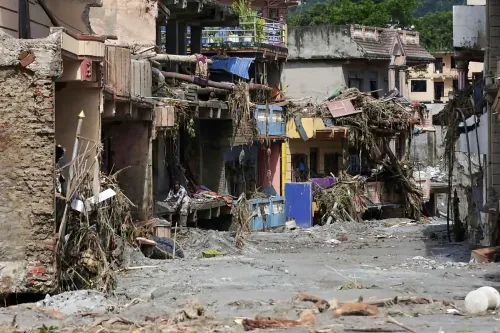
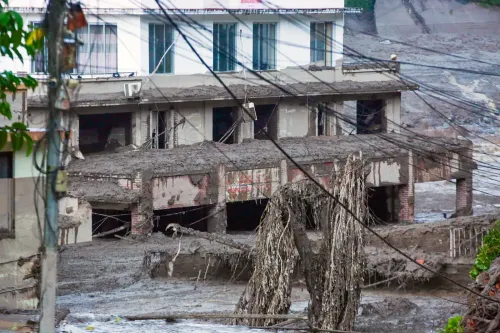
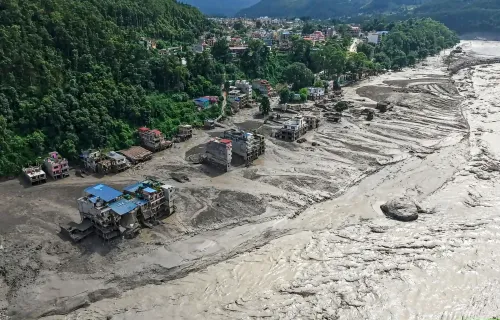
Tharoor in Kathmandu as Bhote-Koshi Floods Leave 130+ Indians Missing
Synopsis
Congress MP Dr. Shashi Tharoor, present in Kathmandu for scheduled engagements, has flagged that over 130 Indian nationals — including several Malayalis — are reported missing following flash floods along Nepal's Bhote-Koshi river, calling for urgent attention to affected families.
Key Takeaways
Over 130 Indian nationals are reported missing following flash floods along the Bhote-Koshi river in Nepal.
A significant number of the missing are Malayalis , reflecting Kerala's highly mobile population.
Shashi Tharoor was already in Kathmandu for a series of engagements when the floods struck.
Tharoor posted on August 27, 2026 , expressing solidarity with the families of the missing.
The Indian Embassy in Kathmandu is the key institutional body expected to coordinate rescue and identification efforts with Nepali authorities.
India and Nepal's open-border policy means Indian citizens in Nepal often lack formal registration, complicating emergency tracking.
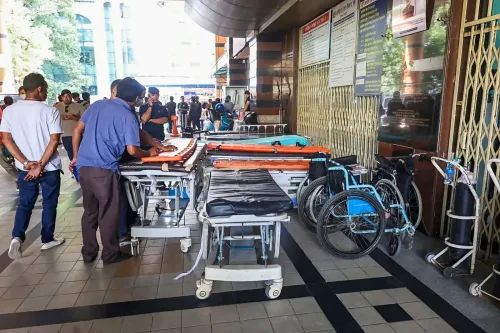
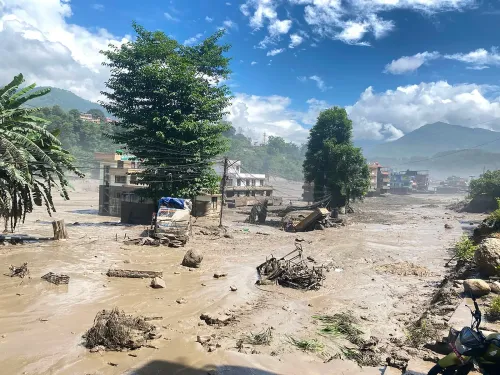
A flash flood along the Bhote-Koshi river in Nepal has left more than 130 Indian nationals missing — including a significant number of Malayalis — as Congress MP Dr. Shashi Tharoor, already present in Kathmandu for a series of engagements, broke his silence on the unfolding crisis on Thursday, August 27, 2026.
Tharoor, who had disclosed his Kathmandu visit earlier in the day, said he found himself in the Nepali capital as the country 'reels from the Bhote-Koshi flash floods.' He expressed that his 'thoughts are with every family' affected by the disaster, drawing particular attention to the Malayali community among those unaccounted for — a constituency he directly represents as the MP from Thiruvananthapuram.
The Bhote-Koshi's Deadly Reach
The Bhote-Koshi — a fast-flowing river that descends from the Tibetan plateau into Nepal's hilly terrain — is historically prone to glacial lake outburst floods and monsoon surges. Its catchment sits in some of Nepal's most rugged geography, and when it breaks, the consequences cascade rapidly downstream, leaving little time for warning or evacuation.
India and Nepal share an open border with deep people-to-people ties — citizens cross for tourism, pilgrimage, and work with minimal formality. That openness, a point of pride in bilateral relations, also means Indian nationals can be caught in Nepali emergencies with little institutional tracking. Flash floods in Nepali river basins have previously prompted urgent consular coordination between the Indian Embassy in Kathmandu and Nepali authorities.
Why the Malayali Count Matters
The specific mention of Malayalis among the missing reflects a well-established pattern: Kerala has one of India's most mobile populations, with citizens working and travelling across South Asia, the Gulf, and beyond. When disasters strike in transit zones — whether in Nepal, the Gulf, or Southeast Asia — Keralites are often disproportionately represented among those affected, and their families back home mobilise quickly for information.
Tharoor's dual position — a sitting parliamentarian from Thiruvananthapuram physically present in Kathmandu — places him in an unusual vantage point. Whether he engages formally with the Indian Embassy or Nepali officials on behalf of affected families remains to be seen, but his public acknowledgement amplifies pressure on consular machinery to accelerate identification and rescue coordination.
What Families and Authorities Are Watching
The immediate priority for Indian authorities is a verified count from the Indian Embassy in Kathmandu, which typically coordinates with Nepal's National Disaster Risk Reduction and Management Authority in such emergencies. Families of missing persons — particularly in Kerala — will be tracking embassy helplines and state government channels for updates.
With over 130 Indians reported missing and the monsoon season still active, the window for rescue operations is narrow and the terrain is unforgiving. Every hour of delay in establishing contact narrows the odds.
Point of View
But it also reflects a genuine pattern: Kerala families are among the most organised and vocal when their kin go missing abroad. The broader arc here is India-Nepal disaster diplomacy — an open border that facilitates deep ties also creates accountability gaps when emergencies strike. How quickly the Indian Embassy produces a verified list and activates coordination with Nepali authorities will be the real measure of the bilateral relationship's operational depth.
NationPress
27 Aug 2026
Frequently Asked Questions
How many Indians are missing in the Nepal Bhote-Koshi floods?
Over 130 Indian nationals are reported missing following flash floods along the Bhote-Koshi river in Nepal, according to a post by Congress MP Dr. Shashi Tharoor on August 27, 2026.
What is the Bhote-Koshi river and why does it flood?
The Bhote-Koshi is a fast-flowing river descending from the Tibetan plateau into Nepal's hilly terrain. It is prone to glacial lake outburst floods and sudden monsoon surges, leaving little time for warning or evacuation.
Why are so many Malayalis among the missing in Nepal?
Kerala has one of India's most mobile populations, with citizens regularly travelling across South Asia for tourism, pilgrimage, and work. Malayalis are frequently among those affected when disasters strike in transit regions like Nepal.
What is Shashi Tharoor doing in Kathmandu?
Congress MP Dr. Shashi Tharoor had travelled to Kathmandu for a series of engagements and found himself there as the Bhote-Koshi flash floods unfolded, prompting him to publicly address the crisis.
Which Indian authority is handling the Nepal flood rescue for missing Indians?
The Indian Embassy in Kathmandu is the primary body coordinating with Nepal's disaster management authorities to identify and assist missing Indian nationals in the flood-affected areas.