Tharoor Joins India-Japan Diet Talks With Cross-Party MPs
Synopsis
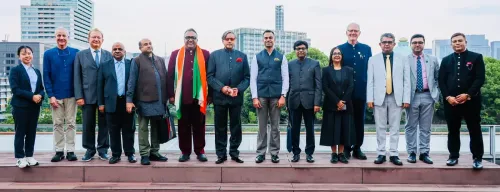
Congress MP Dr. Shashi Tharoor attended a cross-party parliamentary interaction on India-Japan relations at Japan's National Diet on June 30, 2026. The session drew senior former ministers including a former Prime Minister, underlining strong Japanese legislative interest in deepening ties with India.
Key Takeaways
Shashi Tharoor participated in an India-Japan parliamentary interaction at the National Diet in Tokyo on June 30, 2026 .
The Japanese side included a former Prime Minister , a former State Minister for Foreign Affairs , a former Finance Minister , and three former Education Ministers .
Tharoor noted 'no doubt about the real level of interest in India' among the Japanese legislators despite translation delays.
India and Japan have maintained a Strategic and Global Partnership since 2006 , reinforced by the CEPA (2011) and the 2+2 Ministerial Dialogue (2019) .
Parliamentary-level exchanges complement formal diplomatic mechanisms under India's Act East Policy .
The interaction could feed into the scheduled annual India-Japan summit and potential follow-up delegation visits.
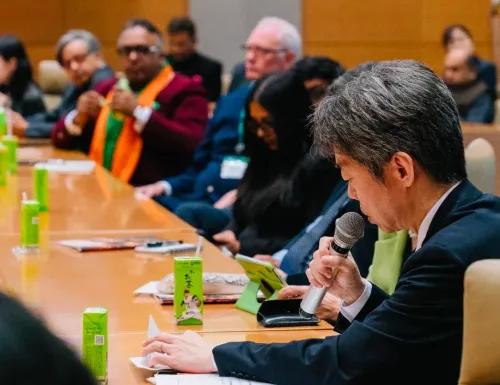
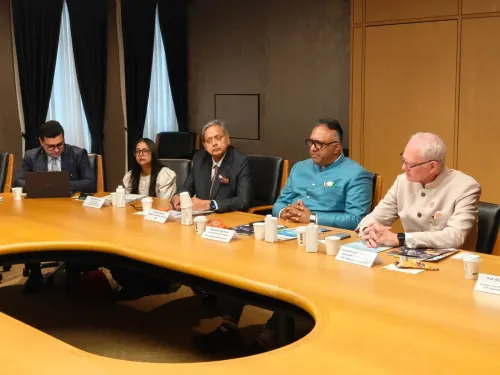
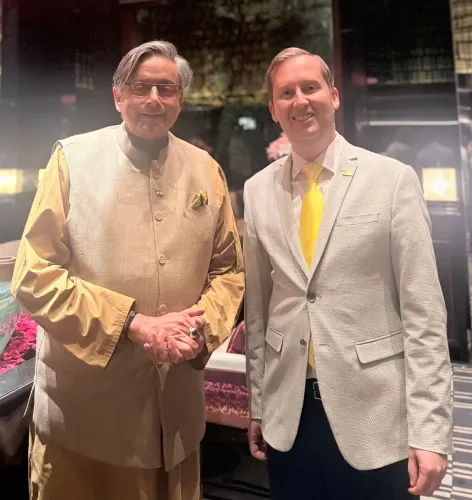
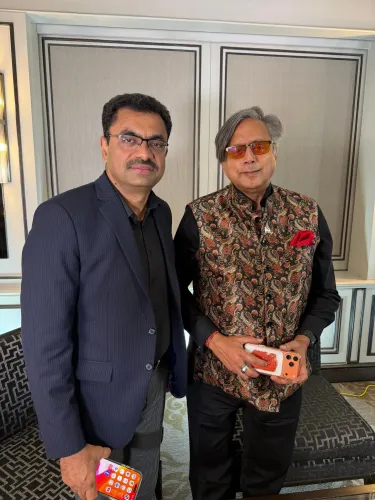
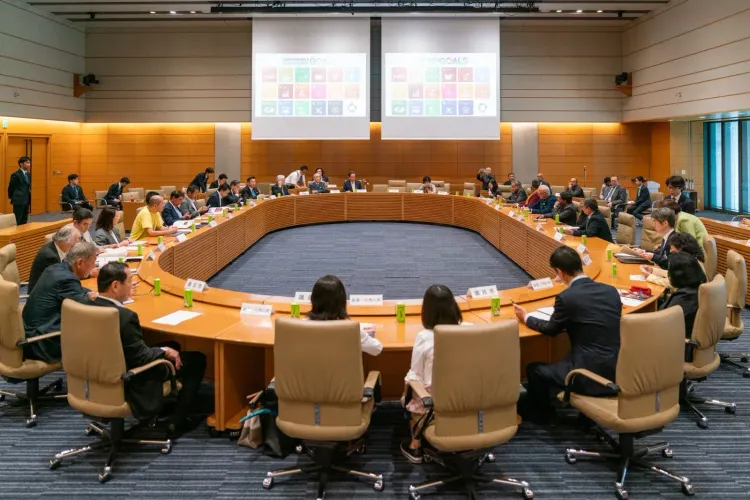
Congress MP Dr. Shashi Tharoor participated in a parliamentary interaction on India-Japan relations at Japan's National Diet on Tuesday, June 30, 2026, joining a cross-party gathering that included several senior former legislators from the Japanese side.
Context
Tharoor described the session as 'a fascinating interaction,' noting that attendees included a former Prime Minister, a former State Minister for Foreign Affairs, a former Finance Minister, and three former Education Ministers from the Japanese parliament. The broad seniority of the Japanese delegation underscored the significance both sides attached to the meeting. Simultaneous translation was required, which Tharoor acknowledged 'slightly slowed down the lively discussion,' though he said it did not diminish the evident enthusiasm on either side.
Policy Backdrop
India and Japan elevated their relationship to a Strategic and Global Partnership during Prime Minister Manmohan Singh's visit to Tokyo in 2006, laying the institutional foundation for sustained high-level engagement. The two countries signed the Comprehensive Economic Partnership Agreement (CEPA) in 2011, liberalising trade and investment flows. More recently, the 2+2 Foreign and Defence Ministerial Dialogue, instituted in 2019, has added a structured security dimension to the relationship, covering maritime cooperation and Indo-Pacific coordination.
Parliamentary-level interactions like the one at the Diet serve as a supplementary channel to these formal mechanisms, allowing legislators to exchange perspectives outside the constraints of official diplomatic protocol. India's Act East Policy has consistently identified Japan as a priority partner in this framework.
Stakeholders and Impact
The participation of multiple former ministers from Japan's major parties signals that interest in India cuts across political lines in Tokyo, not confined to any single ruling coalition. For India, having a parliamentarian of Tharoor's profile — with his background as a former UN Under-Secretary-General and former Union Minister of State for External Affairs — represent the Indian side lends diplomatic credibility to what is an informal exchange. Such interactions help build personal relationships between legislators that can later inform formal policy positions.
Diplomatic officials and business communities in both countries stand to benefit from the goodwill and agenda-setting that parliamentary diplomacy generates, particularly as both nations deepen cooperation in defence technology, semiconductors, and infrastructure financing.
What's Next
The Diet interaction could lay the groundwork for follow-up parliamentary delegation visits in either direction, a format both countries have used productively in the past. The annual India-Japan summit — a fixture of the bilateral calendar — remains the principal venue where outcomes of such preliminary exchanges are translated into concrete commitments. With momentum building at the legislative level, pressure may grow on both governments to accelerate deliverables across defence, trade, and technology cooperation.
Point of View
Mirroring New Delhi's own cross-government consensus on Japan as a strategic anchor in the Indo-Pacific. For Tharoor, the visit reinforces his long-cultivated role as an informal diplomatic interlocutor — a function that carries particular weight when the official 2+2 and summit tracks are between scheduled meetings. The episode also highlights how parliamentary diplomacy is increasingly being used by both sides to sustain momentum and build the personal networks that underpin durable bilateral relationships.
NationPress
1 Jul 2026
Frequently Asked Questions
Why did Shashi Tharoor visit Japan's parliament?
Dr. Shashi Tharoor attended a parliamentary interaction focused on India-Japan relations at Japan's National Diet on June 30, 2026, as part of efforts to strengthen legislative ties between the two countries.
Who attended the India-Japan meeting at the Diet?
The Japanese side included a former Prime Minister, a former State Minister for Foreign Affairs, a former Finance Minister, and three former Education Ministers, representing a broad cross-party spectrum.
What is India's current relationship with Japan?
India and Japan share a Strategic and Global Partnership established in 2006, backed by a Comprehensive Economic Partnership Agreement (2011) and a 2+2 Foreign and Defence Ministerial Dialogue instituted in 2019.
What is India's Act East Policy and how does Japan fit in?
India's Act East Policy prioritises deeper engagement with East and Southeast Asian nations, with Japan identified as a key strategic partner in defence technology, infrastructure, and Indo-Pacific maritime security.
What could follow from this parliamentary interaction?
The session could lead to follow-up parliamentary delegation exchanges and may feed into the annual India-Japan summit, where legislative-level goodwill is often translated into formal bilateral commitments.