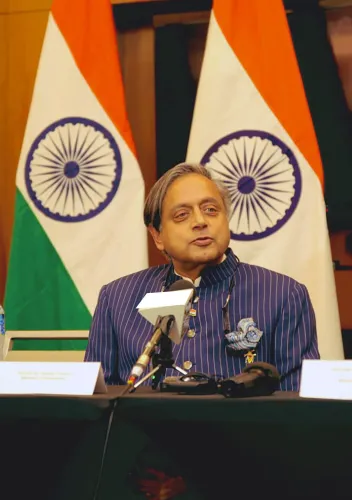
Tharoor Backs Thiruvananthapuram as Permanent IFFK Home
Synopsis
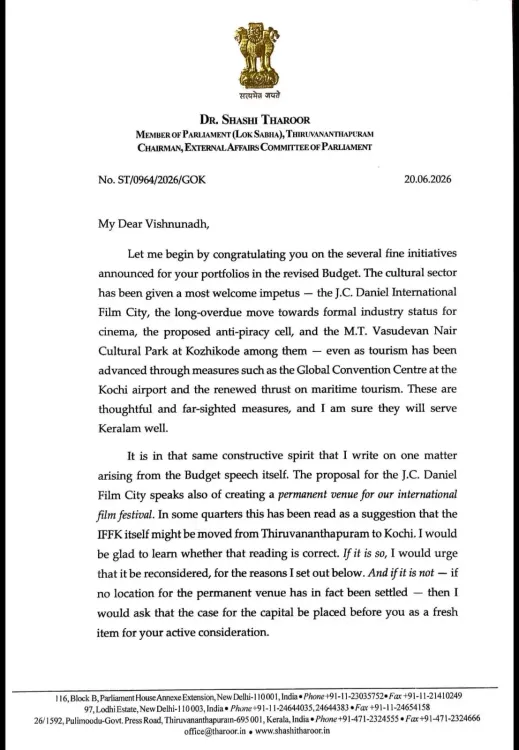
Congress MP Dr. Shashi Tharoor has written to Kerala's Culture Minister urging that the IFFK stay permanently in Thiruvananthapuram, proposing the underutilised 75-acre Chitranjali Studio complex at Thiruvallam as a dedicated festival campus with coastal appeal and strong road connectivity.
Key Takeaways
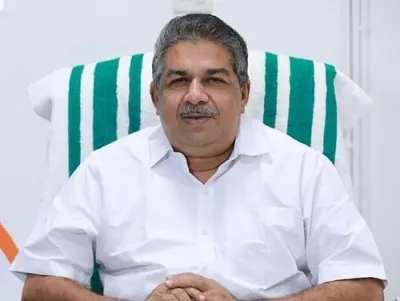
Tharoor wrote to Minister P.C.
Vishnunadh on 20 June 2026 to oppose any relocation of the IFFK from Thiruvananthapuram .
The IFFK has been held in Thiruvananthapuram since its founding in 1996 ; its 30th edition concluded there in December 2025 .
Tharoor proposed converting the 75-acre Chitranjali Studio complex at Thiruvallam into a permanent IFFK campus and year-round cinema hub.
He cited the NH 66 / Thiruvananthapuram bypass — pursued since 2011 — as having resolved earlier connectivity concerns for the Thiruvallam site.
The proposal draws on the global precedent of IFFI in Goa and Cannes to argue that festival prestige rests on continuity, not proximity to production centres.
Tharoor called on director Adoor Gopalakrishnan to lend counsel, framing the initiative as both a cultural and a tourism investment for Kovalam .
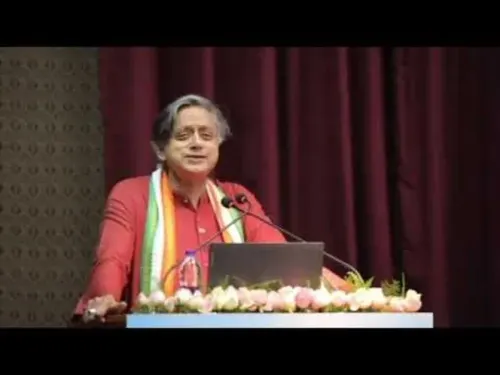
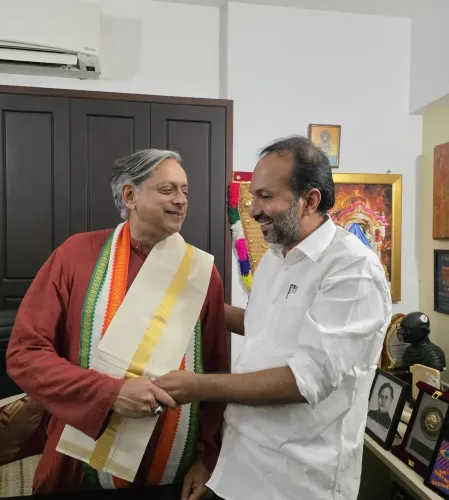
Congress MP Dr. Shashi Tharoor wrote to Kerala's Minister for Culture and Tourism, Shri P.C. Vishnunadh, on Saturday, 20 June 2026, urging that the International Film Festival of Keralam (IFFK) retain Thiruvananthapuram as its permanent host city — a status the capital has held for all 30 editions since the festival's founding in 1996.
Context
Tharoor's letter comes on the occasion of the inauguration of the J.C. Daniel International Film City, a new production facility whose arrival has renewed debate over whether Kerala's premier film festival should shift venue. The MP was unambiguous: 'For 30 years that home has been Thiruvananthapuram, and there it should remain.' The festival's 30th edition concluded in the capital this past December 2025.
The IFFK was established in 1996 and has grown, edition after edition, into one of India's most respected non-competitive international film festivals. Three decades of continuity in a single city, Tharoor argued, is itself a foundational asset that no relocation can easily replicate.
Policy Backdrop
Tharoor anchored his case in a well-established global precedent: the International Film Festival of India (IFFI) is held in Goa, not Mumbai — India's production capital — and Cannes is a small Riviera town, not Paris. A festival's prestige, he noted, is built on the consistency and character of its home, not on proximity to studios.
His concrete proposal centres on the Chitranjali Studio complex at Thiruvallam — a 75-acre, government-owned site established in the 1970s and currently underutilised. Tharoor called for reimagining it as a permanent IFFK campus and a year-round home for cinema, pointing to its coastal setting near Kovalam as a natural draw comparable to the seafront atmospheres of Goa and Cannes.
Connectivity, once cited as a drawback for the Thiruvallam location, is no longer a constraint, Tharoor argued. The NH 66 / Thiruvananthapuram bypass — a project he said he 'doggedly pursued since 2011' — now links the city centre, Thiruvallam, Kovalam, and the international airport along a single corridor.
Stakeholders and Impact
Tharoor framed the proposal as simultaneously a cultural investment and a tourism stimulus for Kovalam, positioning the two goals as complementary rather than competing. Strengthening film production infrastructure in Kochi and keeping the festival anchored in the capital, he wrote, are aims Kerala 'can — and should — have both.'
The MP invoked the legacy of J.C. Daniel — the pioneer regarded as the father of Malayalam cinema — who studied in Thiruvananthapuram, built Kerala's first film studio there, and directed Vigathakumaran in the city. A statue of Daniel already stands at Chitranjali. 'Our festival belongs where our cinema was born,' Tharoor wrote. He also called on acclaimed director Adoor Gopalakrishnan, a respected voice on state film policy, to offer counsel on the proposal.
The Malayalam film industry, Kovalam's tourism sector, and Thiruvananthapuram's cultural institutions all have a direct stake in the outcome. A permanent, purpose-built IFFK campus at Chitranjali would also align with broader national efforts to upgrade underutilised public film infrastructure.
What's Next
The immediate focus shifts to Minister P.C. Vishnunadh and the Kerala state government, whose response will determine whether Tharoor's Chitranjali redevelopment vision enters formal policy consideration. Any consultations involving Adoor Gopalakrishnan and other senior figures from the Malayalam film world will be closely watched as signals of the proposal's traction.
With Chitranjali approaching its own golden jubilee, a decision on its future use carries both cultural and fiscal weight. If the state moves to adopt the permanent-campus model, it could set a template for how Indian states anchor festival identity to heritage infrastructure — and how tourism and cinema policy are woven into a single, durable investment.
Point of View
By extension, his own constituency's standing. By anchoring the argument in global festival precedent and in the J.C. Daniel legacy, he elevates what could read as a parochial concern into a principled cultural-policy position. The Chitranjali proposal is shrewd: it gives the state a concrete, low-acquisition-cost alternative that doubles as a tourism play for Kovalam. Whether the ruling dispensation in Thiruvananthapuram acts on it will test how seriously Kerala's government weighs festival heritage against the political economy of Kochi's expanding film industry.
NationPress
19 Sept 2026
Frequently Asked Questions
Where is the IFFK held and why is its venue being debated?
The International Film Festival of Keralam has been held in Thiruvananthapuram since its founding in 1996. The inauguration of the new J.C. Daniel International Film City has reignited discussion about whether the festival should move to a different city, prompting MP Shashi Tharoor to write to the Culture Minister in defence of the capital's claim.
What is Tharoor's proposal for Chitranjali Studio?
Tharoor has proposed redeveloping the 75-acre, government-owned Chitranjali Studio complex at Thiruvallam — near Kovalam — into a permanent IFFK campus and a year-round centre for cinema, citing its coastal setting and improved road connectivity via the NH 66 bypass.
Why does Tharoor compare IFFK to IFFI in Goa and Cannes?
He uses the comparison to argue that a film festival's prestige derives from the continuity and character of its home city, not from being located in a production hub. IFFI is held in Goa rather than Mumbai, and Cannes is a small town rather than Paris — both are considered among the world's leading festivals.
Who is J.C. Daniel and what is his connection to Thiruvananthapuram?
J.C. Daniel is regarded as the father of Malayalam cinema. He studied in Thiruvananthapuram, established Kerala's first film studio there, and directed the pioneering film Vigathakumaran in the city. His statue already stands at the Chitranjali Studio complex.
What role does Adoor Gopalakrishnan play in this proposal?
Tharoor has called on acclaimed Malayalam director Adoor Gopalakrishnan — a respected voice on state film policy — to offer counsel on the plan to make Thiruvananthapuram the IFFK's permanent home, signalling an intent to build a broad cultural consensus around the proposal.