Tharoor Moved to Tears at Kargil War Memorial Visitor's Book
Synopsis
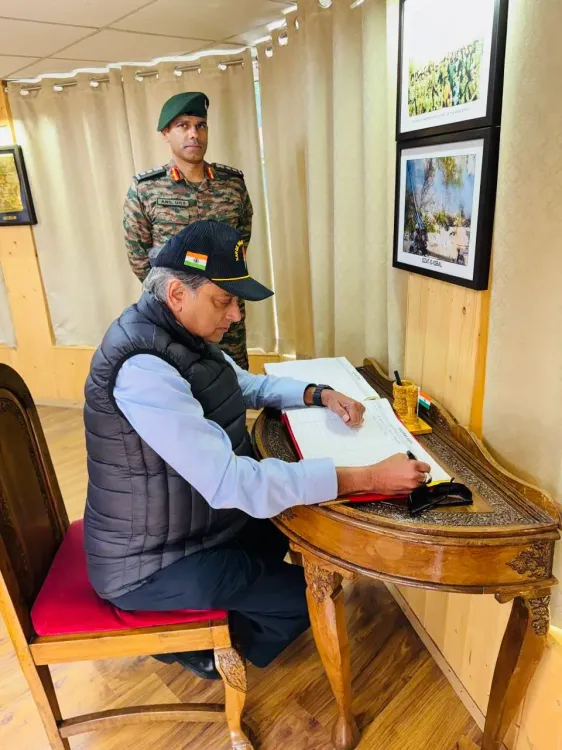
Congress MP Dr. Shashi Tharoor visited a Kargil War Memorial and wrote in the Visitor's Book, sharing on 27 June 2026 that he was 'wet-eyed' and at a loss for words to honour the heroes of the 1999 conflict who fought for India's territorial integrity and prevailed.
Key Takeaways
Shashi Tharoor , Congress MP from Thiruvananthapuram , visited a Kargil War Memorial and signed the Visitor's Book on or before 27 June 2026 .
He described being 'wet-eyed' and 'at a loss for words' to express admiration for the soldiers of the 1999 Kargil War .
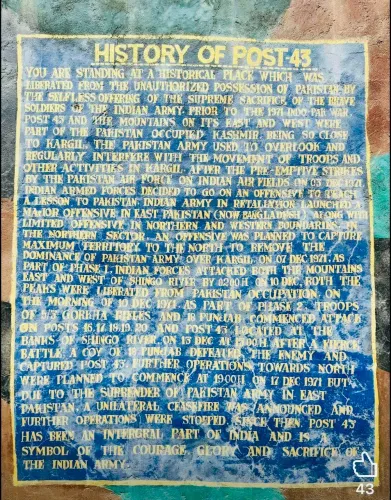
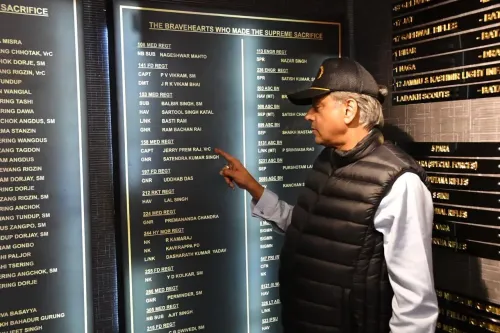
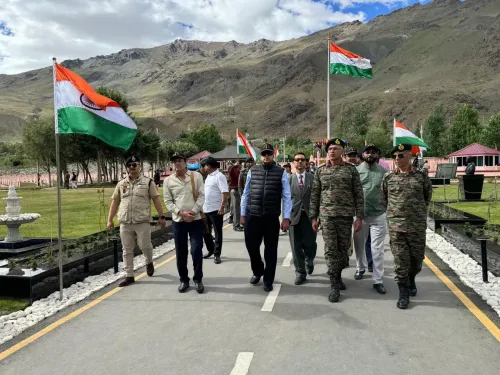
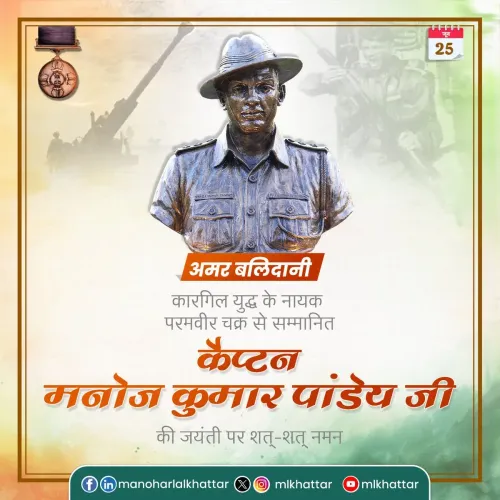
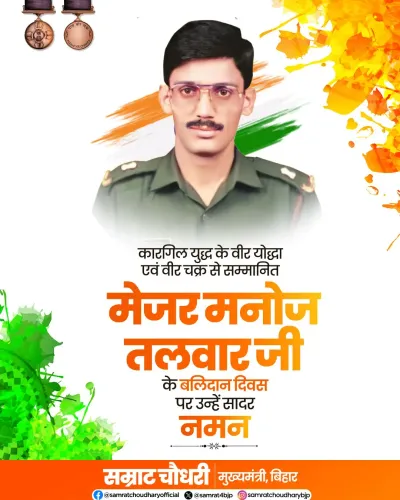
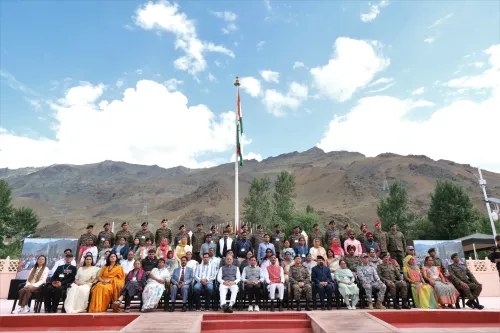
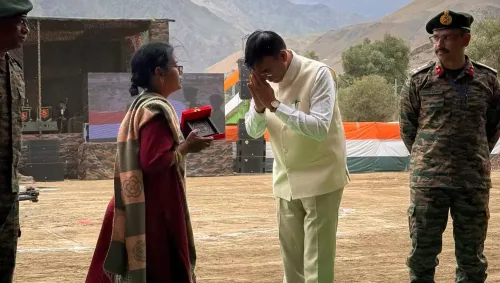
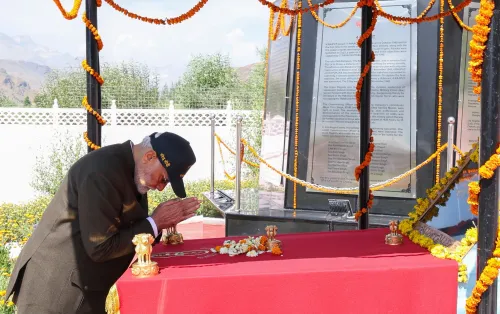
His post on X was accompanied by four images from the visit.
The Kargil War Memorial at Drass, Ladakh is the principal monument honouring soldiers who recaptured Indian positions in the summer of 1999 .
Kargil Vijay Diwas is observed annually on 26 July , with political leaders across parties visiting memorials around this period.
Congress MP Dr. Shashi Tharoor on Saturday, 27 June 2026, shared a deeply personal account of visiting a memorial honouring the soldiers of the 1999 Kargil War, saying he was 'wet-eyed' by the time he came to sign the Visitor's Book and found himself at a loss for words to express his admiration for the heroes who fought for the nation's honour.
Context
In his post on X, Dr. Tharoor wrote that he was 'wet-eyed by the time it came to writing in the Visitor's Book — at a loss for words to express my admiration for the heroes and brave hearts who fought for the nation's honour in 1999, and prevailed.' The tribute was accompanied by four images from the visit, underscoring the personal weight he attached to the experience.
The Kargil War Memorial at Drass, Ladakh — one of the coldest inhabited places on Earth — stands as the principal monument honouring the soldiers who recaptured Indian positions from Pakistani intruders during the summer of 1999. A Visitor's Book at the memorial allows dignitaries and citizens alike to record their tributes to the fallen and the victorious.
Policy Backdrop
The Kargil War of 1999 was a limited but intense high-altitude conflict in the Kargil-Drass sector of Jammu and Kashmir, in which Indian armed forces evicted Pakistani intruders from strategically vital mountain peaks. The operation, conducted at altitudes exceeding 16,000 feet, is widely regarded as one of the most demanding military campaigns in post-Independence Indian history.
Kargil Vijay Diwas, observed every year on 26 July since 2000, commemorates the formal declaration of victory. Political leaders across party lines have made it a practice to visit Kargil memorials around this period, affirming a cross-party consensus on honouring the armed forces and the territorial integrity defended in 1999.
Stakeholders and Impact
Dr. Tharoor, a Congress MP from Thiruvananthapuram and former UN Under-Secretary-General, has consistently engaged with national security and military history in his public commentary. His visible emotional response at the memorial — described in his own words as being 'at a loss' — reflects the personal dimension that such visits carry beyond their ceremonial function.
For Kargil veterans and their families, tributes from senior political figures serve as public affirmations that the sacrifices of 1999 remain embedded in the national memory. Defence forces and veterans' welfare advocates have long emphasised that sustained political attention to Kargil commemorations helps keep pressure on Parliament to address issues such as high-altitude service pensions and the welfare of Veer Naris — war widows.
What's Next
With Kargil Vijay Diwas on 26 July 2026 approaching, visits to the Drass memorial and related commemorative events are expected to intensify across the political spectrum. Parliamentary sessions in the weeks ahead may also see renewed attention to veterans' welfare schemes and high-altitude military infrastructure, particularly in the context of ongoing sensitivities along the Line of Control.
Dr. Tharoor's account is a reminder that the memory of 1999 continues to carry genuine emotional resonance for Indian public figures — and that the Kargil memorial remains a site where national pride and personal grief converge for all who visit.
Point of View
The tribute also signals that national security and military honour remain central to mainstream Congress positioning ahead of Kargil Vijay Diwas. The timing — weeks before the 26 July commemoration — suggests such visits are as much about sustaining public memory as they are about personal reflection. As India-Pakistan tensions remain a live issue, the Kargil memorial continues to function as a site of political consensus-building in an otherwise fractured landscape.
NationPress
27 Jun 2026
Frequently Asked Questions
Why did Shashi Tharoor visit the Kargil War Memorial?
Dr. Shashi Tharoor visited the Kargil War Memorial to pay tribute to the soldiers who fought and prevailed in the 1999 Kargil War, sharing that he was moved to tears while signing the Visitor's Book.
What is the Kargil War Memorial and where is it located?
The Kargil War Memorial is located at Drass in Ladakh, one of the coldest inhabited places on Earth, and serves as the principal monument honouring Indian soldiers who recaptured positions from Pakistani intruders in the summer of 1999.
When is Kargil Vijay Diwas celebrated?
Kargil Vijay Diwas is observed every year on 26 July, marking the day in 2000 when India formally declared victory in the 1999 Kargil War.
What did Shashi Tharoor write about his Kargil memorial visit?
Tharoor wrote on X that he was 'wet-eyed by the time it came to writing in the Visitor's Book' and was 'at a loss for words' to express his admiration for the heroes and brave hearts who fought for the nation's honour in 1999 and prevailed.
Which political leaders visit Kargil memorials?
Leaders across Indian political parties periodically visit Kargil memorials, particularly around the annual Kargil Vijay Diwas on 26 July, reflecting a cross-party consensus on honouring the armed forces and the 1999 victory.