Chhattisgarh's Mahima Rajput Selected for ISRO Mission Shakti SAT
Synopsis
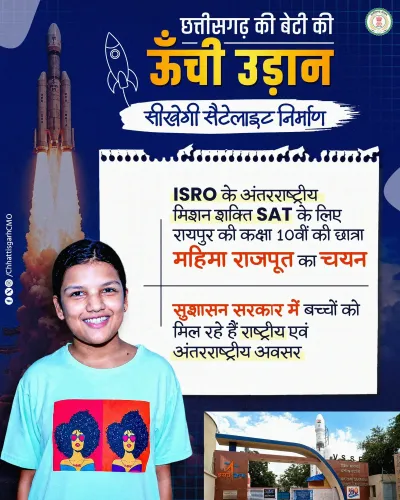
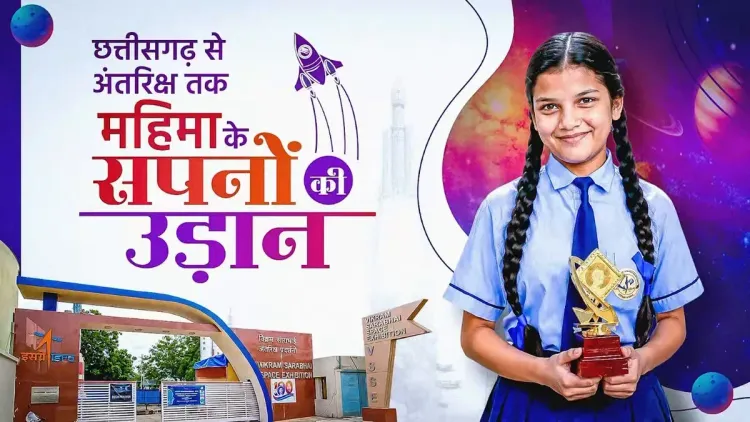
Raipur's Mahima Rajput has been selected among 12,000 participants from 108 countries to build a satellite for a lunar mission alongside ISRO scientists under the Mission Shakti SAT programme, the Chhattisgarh Chief Minister's Office announced on 27 June 2026.
Key Takeaways
Mahima Rajput of Raipur, Chhattisgarh has been selected for ISRO's Mission Shakti SAT programme.
She is among 12,000 participants chosen from 108 countries in a global competitive process.
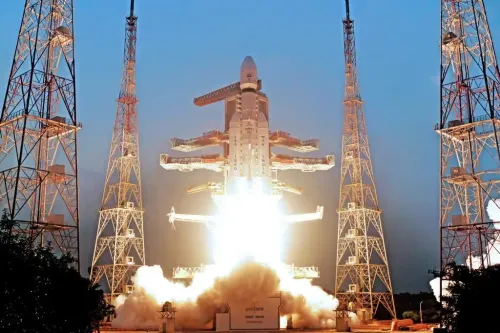
Selected participants will work alongside ISRO scientists to build a satellite for a lunar mission .
The announcement was made by the Chief Minister's Office of Chhattisgarh on 27 June 2026 .
The CMO framed the achievement as evidence of good governance and highlighted women's participation in space science.
ISRO has run student satellite programmes since the early 2000s, progressively expanding reach to non-metropolitan talent.
The Chief Minister's Office of Chhattisgarh on Saturday, 27 June 2026, announced that Mahima Rajput of Raipur has been selected to work alongside ISRO scientists to build a satellite for a lunar mission under the Mission Shakti SAT programme. She is among 12,000 participants chosen from 108 countries, making her selection a landmark achievement for the state.
The CMO posted in Hindi: 'छात्रों के सपनों को मिल रही ऊँची उड़ान, यह है सुशासन की पहचान' ('Students' dreams are soaring — this is the hallmark of good governance'), adding that Mahima's talent would raise the pride of both India and Chhattisgarh in space.
Context
Mahima Rajput, a student from Raipur, has been shortlisted through a global competitive process that drew applicants from 108 countries. Her selection places her among 12,000 participants who will contribute to the Mission Shakti SAT initiative run in collaboration with ISRO. The programme tasks selected students and young scientists with hands-on satellite development work tied to a lunar mission.Policy Backdrop
ISRO has maintained student satellite programmes since the early 2000s, progressively widening participation beyond traditional scientific hubs to include talent from states across the country. These initiatives allow school and university participants to contribute to actual missions rather than simulations, giving them direct exposure to spacecraft engineering. The success of India's Chandrayaan series has amplified institutional interest in expanding such pipelines, and state governments have increasingly highlighted local student achievements as markers of educational governance. Chhattisgarh, a central Indian state, has in recent years positioned science education and skill development as priorities, with the capital Raipur emerging as a growing centre for student achievement in competitive national and international programmes.Stakeholders and Impact
For girl students and STEM aspirants across Chhattisgarh, Mahima Rajput's selection carries symbolic and practical weight. It signals that students from non-metropolitan, non-traditional science cities can compete and succeed at a global level in space technology. The CMO's post specifically invoked the phrase 'बेटियों की प्रतिभा' ('the talent of daughters'), framing the achievement within a broader national narrative of women's participation in science and space exploration. For ISRO, the inclusion of participants from 108 countries in Mission Shakti SAT reflects the agency's expanding international outreach, building on the global attention generated by recent lunar and deep-space missions. Student participants gain direct mentorship from working scientists, a model that strengthens India's long-term space workforce pipeline.What's Next
Mahima Rajput is expected to begin collaborative satellite development work with ISRO scientists as part of the Mission Shakti SAT programme. Progress updates on the satellite's design and construction milestones will be watched closely by both the state government and the broader student community. Any subsequent announcements from ISRO on expanded student participation or programme timelines will further define the scope of this initiative. If Chhattisgarh continues to produce participants selected for national space programmes, it could prompt the state to formalise dedicated pathways — mentorship networks, institutional partnerships with ISRO, or dedicated space-science curricula — that systematically nurture such talent rather than relying on individual breakthroughs.Point of View
The post connects to the broader national narrative of women in space that gained momentum after India's Chandrayaan-3 success. The selection of a student from Raipur — not a traditional science hub like Bengaluru, Pune, or Hyderabad — is politically significant for a state keen to assert its development credentials. If the Mission Shakti SAT programme delivers on its promise, it could become a template for other state governments seeking to institutionalise ISRO partnerships as a governance showcase.
NationPress
27 Jun 2026
Frequently Asked Questions
Who is Mahima Rajput and why is she in the news?
Mahima Rajput is a student from Raipur, Chhattisgarh , selected among 12,000 participants from 108 countries to work with ISRO scientists on building a satellite for a lunar mission under the Mission Shakti SAT programme, as announced by the Chhattisgarh CMO on 27 June 2026 .
What is Mission Shakti SAT?
Mission Shakti SAT is an ISRO -led programme in which selected students and young participants work alongside scientists to develop a satellite intended for a lunar mission . It drew 12,000 participants from 108 countries through a global selection process.
How many countries participated in the Mission Shakti SAT selection?
Participants from 108 countries applied, and 12,000 were selected to take part in the Mission Shakti SAT programme alongside ISRO scientists.
What is ISRO's history with student satellite programmes?
ISRO has run student satellite programmes since the early 2000s, enabling school and university participants to contribute to actual missions. These programmes have progressively expanded beyond traditional science cities to include talent from states across India.
What does this mean for students in Chhattisgarh?
Mahima Rajput's selection demonstrates that students from Chhattisgarh and non-metropolitan cities like Raipur can compete globally in space technology, potentially encouraging the state to formalise partnerships with ISRO and expand science education pathways.