Amit Shah launches Bharat Taxi cooperative in Gujarat
Synopsis
Union Home Minister Amit Shah launched Bharat Taxi, a cooperative-model cab service, in Gujarat on 27 June 2026 from Gandhinagar. The platform converts drivers into co-owners and has enrolled over 7 lakh drivers and 37 lakh users, with a planned rollout to smaller towns and villages nationwide.
Key Takeaways
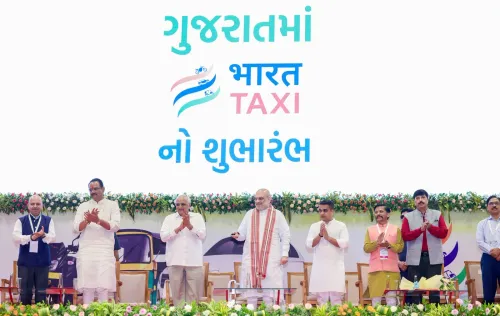
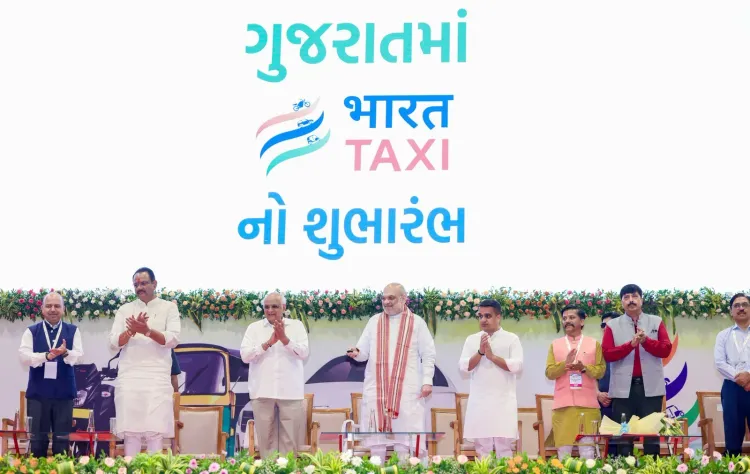
Amit Shah launched Bharat Taxi from Gandhinagar, Gujarat on 27 June 2026 .
The service uses a cooperative ownership model , making drivers co-owners rather than contractors.
More than 7 lakh drivers (Saarthis) and over 37 lakh users have joined the platform so far.
The rollout is being extended to smaller cities, towns, and villages across India.
The initiative falls under the Ministry of Cooperation , established in July 2021 to modernise India's cooperative sector.
Shah personally rode in a Bharat Taxi vehicle in Gandhinagar at the launch event.
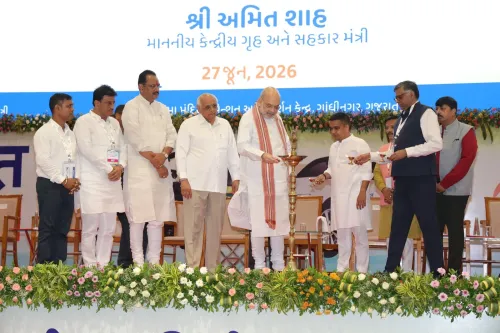
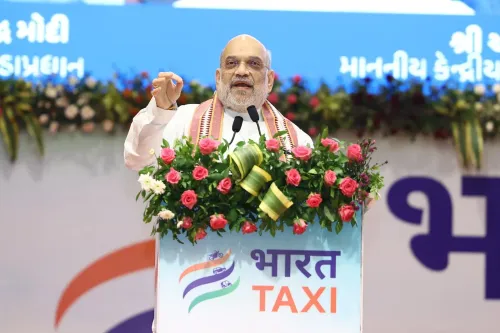
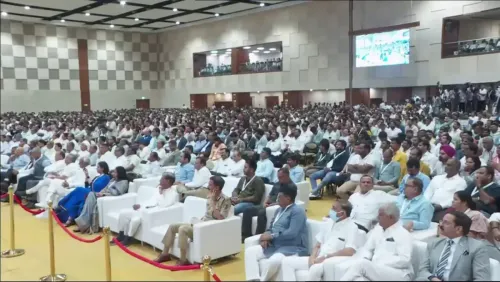
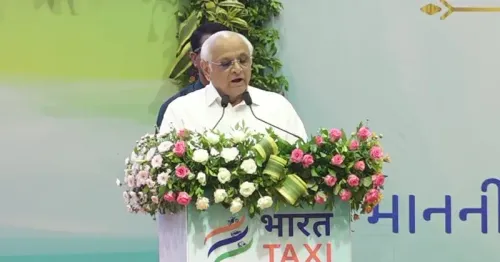
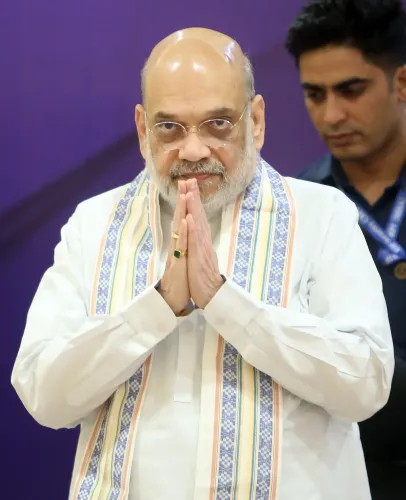
Union Home Minister and Minister of Cooperation Amit Shah launched Bharat Taxi, a cooperative-model taxi service, in Gujarat on Saturday, 27 June 2026, flagging off the initiative from Gandhinagar and taking a ride in the service himself. The launch marks a significant step in the central government's effort to extend cooperative ownership into the urban and semi-urban mobility sector.
Context
Posting on X, Shah described the day as 'very important' (bahut aham) for Gujarat's taxi-driving community. He said Bharat Taxi was designed to make drivers owners with dignity — 'chalakон ko samman ke saath malik banana' [turning drivers into owners with respect] — while simultaneously delivering safe and convenient travel to passengers. He added that the service is being expanded to smaller cities, towns, and villages across the country.
According to figures shared in the post, more than 7 lakh drivers (Saarthis) and over 37 lakh users have already joined the platform. Shah also personally travelled in a Bharat Taxi vehicle in Gandhinagar, signalling political endorsement at the highest level of the cooperative.
Policy Backdrop
Bharat Taxi sits squarely within the mandate of the Ministry of Cooperation, a dedicated central ministry created in July 2021 to modernise and expand India's cooperative sector beyond its traditional strongholds in dairy, credit, and sugar. Shah has headed that ministry since its inception, and has repeatedly cited Gujarat's Amul dairy cooperative — founded in 1946 — as a template for applying the member-ownership model to new economic activities.
The cooperative transport model addresses a structural gap in the gig economy: platform-based cab aggregators have historically kept drivers as contractors with limited income security and no ownership stake. By routing revenue and governance through a cooperative society, Bharat Taxi aims to give drivers a direct share in the platform's earnings and decision-making.
Stakeholders and Impact
The primary beneficiaries are taxi drivers who gain formal membership, ownership rights, and potentially higher net earnings by eliminating intermediary commission layers typical of private aggregator platforms. Passengers, particularly in tier-2 and tier-3 cities and rural areas underserved by existing cab services, stand to gain organised, safer transport options.
Gujarat's launch is significant given the state's deep cooperative culture. The expansion roadmap explicitly targets small towns, townships, and villages, areas where private aggregators have limited penetration, suggesting a deliberate policy to formalise informal transport workers at scale.
What's Next
The government's stated intent to roll out Bharat Taxi nationally means other states are likely to be brought under the cooperative's umbrella in coming months. Observers will watch for any supporting legislation or budgetary allocations for cooperative transport societies in the next parliamentary session, as well as whether the driver and user numbers continue to grow as the network expands beyond Gujarat.
Point of View
The government is offering a structural counter-narrative to private aggregator dominance — with Gujarat serving as a replicable proof-of-concept. The timing, ahead of what could be a busy legislative calendar on cooperative reforms, suggests the ministry is building political and operational momentum. Whether the cooperative governance structure can compete with well-capitalised private platforms at scale remains the central test.
NationPress
27 Jun 2026
Frequently Asked Questions
What is Bharat Taxi and how does it work?
Bharat Taxi is a cooperative-model taxi service where drivers become co-owners of the platform rather than working as contractors, allowing them to earn higher profits while passengers get organised, safe transport.
Who launched Bharat Taxi in Gujarat?
Union Home Minister and Minister of Cooperation Amit Shah launched Bharat Taxi in Gujarat on 27 June 2026 , flagging off the service from Gandhinagar .
How many drivers and users have joined Bharat Taxi?
According to figures shared by Amit Shah, more than 7 lakh drivers (referred to as Saarthis) and over 37 lakh users have joined the Bharat Taxi platform.
Is Bharat Taxi available outside Gujarat?
The service is being expanded to smaller cities, towns, and villages across India, with Gujarat serving as the launch state.
What is the Ministry of Cooperation and what is its role in Bharat Taxi?
The Ministry of Cooperation was created in July 2021 to promote and modernise India's cooperative sector; Bharat Taxi is one of its flagship initiatives to extend the cooperative ownership model into urban and semi-urban transport.