Tharoor shares rare 1962 cricket-for-defence film
Synopsis
Congress MP Dr. Shashi Tharoor shared a newly restored short film documenting a 1962 fundraising cricket match at Bombay's Brabourne Stadium that raised nearly one crore rupees for PM Nehru's National Defence Fund during the Sino-Indian War, urging younger audiences to watch it.
Key Takeaways
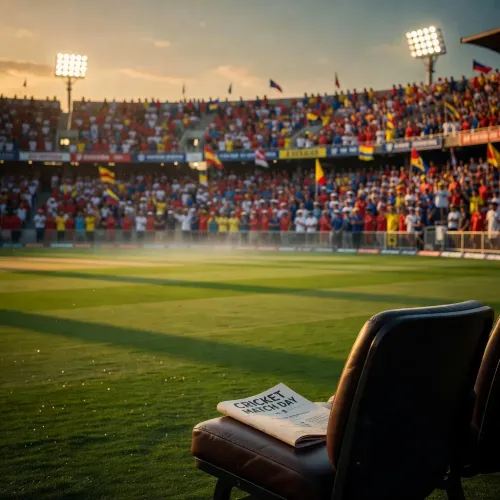
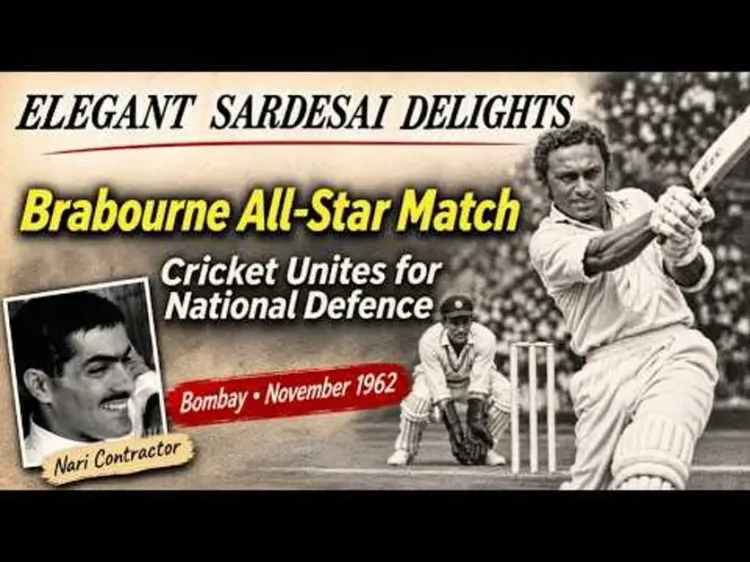
In November 1962 , top Indian cricketers played a fundraising match at Brabourne Stadium, Bombay , in support of the National Defence Fund during the Sino-Indian War.
Prime Minister Jawaharlal Nehru personally appealed to the nation to donate to the National Defence Fund as the war unfolded.
The match reportedly raised nearly one crore rupees , described as an extraordinary sum for the era.
Filmmaker @jaigalagali recovered and restored rare footage of the match, compiling it into a short film.
Shashi Tharoor shared the film on 11 November 2026 , calling for younger audiences to engage with this slice of cricket and national history.
Tharoor highlighted the contrast with modern cricket's commercial focus, framing the 1962 effort as a reminder of the sport's capacity for national service.
Sixty-four years after India's cricketers walked out at Brabourne Stadium not for a trophy but for a nation at war, rare footage of that afternoon has been recovered — and Congress MP Dr. Shashi Tharoor wants the country to watch it.
In November 1962, with the Sino-Indian War still raging along the Himalayan frontier, Prime Minister Jawaharlal Nehru made a direct appeal to the people of India to contribute to the National Defence Fund. Cricket answered. Some of the finest players of the era gathered in Bombay for a fundraising match that, by Tharoor's account, helped raise nearly one crore rupees — a staggering sum for 1962, worth several multiples in today's money.
How a filmmaker recovered a forgotten afternoon
The footage lay dormant for decades until a filmmaker known on X as @jaigalagali undertook what Tharoor describes as 'a painstaking labour of love' to retrieve and restore it. The result is a short film now available on YouTube, capturing the match and the moment it represented: an era when the sport's greatest names placed national duty above commercial gain without a second thought.
Tharoor shared the film on Wednesday, 11 November 2026 — itself Armistice Day, the global day of remembrance for those lost in conflict — lending the post an added resonance that felt anything but accidental.
Cricket, patriotism, and the 1962 National Defence Fund
The National Defence Fund was established in 1962 to channel public donations toward India's urgent wartime defence needs. Nehru's personal appeal transformed it into a nationwide civic moment, drawing contributions from citizens, institutions, and, as this footage confirms, athletes. The Brabourne match stands as an early, documented example of Indian cricket being mobilised for a cause larger than the game itself.
That context is precisely why @jaigalagali — and Tharoor — want younger audiences to see it. 'He believes this is a story that deserves to reach the younger generation,' Tharoor wrote, 'particularly in an era when cricket is increasingly driven by commercial considerations.'
A one-crore moment in a franchise-driven age
The implicit contrast is sharp. Modern Indian cricket operates at a scale of billion-dollar broadcast deals and city-franchise auctions. The 1962 Brabourne match operated at a scale of national survival. Neither cancels the other out — but the footage, now restored, offers a generation raised on IPL jerseys a window into what the game once chose to do with its prestige when the country needed it most.
Archival recoveries of this kind — sports history folded inside national history — rarely surface. When they do, the audience that finds them tends to hold on.
Point of View
Nationalist sentiment, and a subtle critique of cricket's commercialisation — a trifecta well-suited to a politician who has long argued that India's soft power rests on cultural depth. By anchoring the share to a filmmaker's archival project rather than a party initiative, he sidesteps political optics while still occupying the patriotic-heritage space. The choice of date — Armistice Day — sharpens the tribute register considerably. More broadly, the post reflects a wider cultural conversation in India about whether the IPL era has severed younger audiences from the sport's pre-commercial identity, a question that cuts across party lines and resonates deeply in a cricket-obsessed electorate.
NationPress
12 Nov 2026
Frequently Asked Questions
What was the 1962 Brabourne Stadium cricket match?
It was a fundraising match held in November 1962 at Brabourne Stadium in Bombay , organised to support India's National Defence Fund during the Sino-Indian War. Leading cricketers of the era participated, and the event reportedly raised nearly one crore rupees.
What is the National Defence Fund of India?
The National Defence Fund was established in 1962 by the Indian government to receive public donations for the country's defence needs. Prime Minister Nehru made a nationwide appeal for contributions during the border war with China that year.
Who recovered the rare footage of the 1962 cricket match?
A filmmaker identified on X as @jaigalagali undertook the restoration project, describing it as a painstaking effort to recover and bring back to life the rare footage of the historic match.
Why did Shashi Tharoor share this cricket film?
Dr. Shashi Tharoor shared the film to bring this piece of cricket and national history to younger audiences, explicitly noting that the story deserves wider reach 'in an era when cricket is increasingly driven by commercial considerations.'
What was the Sino-Indian War of 1962?
The Sino-Indian War was a border conflict between India and China that began in October 1962 , prompting the Indian government to launch nationwide fundraising drives including the National Defence Fund to support the war effort.