Tharoor slams India's silence on Nobel Peace Prize win by woman of Indian origin

Synopsis
Six days after a woman of Indian origin won the Nobel Peace Prize, the Government of India had offered no congratulations. Congress MP Dr. Shashi Tharoor publicly condemned the silence on 18 October 2026, calling it a 'deplorable decision' and invoking India's 2014 precedent of honouring Kailash Satyarthi.
Key Takeaways
Shashi Tharoor publicly criticised the Government of India on 18 October 2026 for not congratulating a Nobel Peace Prize laureate of Indian origin even after six days .
Tharoor called the omission a 'deplorable decision' and accused unnamed officials of pettiness.
In 2014 , the government promptly congratulated Kailash Satyarthi on his Nobel Peace Prize win — a precedent that sharpens the contrast.
Official Nobel congratulations from India have historically been calibrated to the ruling establishment's view of the laureate.
The episode renews a long-running opposition argument about selective recognition of overseas Indian achievers.
Any response from the Ministry of External Affairs or parliamentary questions in the winter session will determine how the issue develops.
Six days after a woman of Indian origin was awarded the Nobel Peace Prize — one of the most prestigious honours on earth — the Government of India had still not issued a single word of congratulation. That silence, Congress MP Dr. Shashi Tharoor charged on Sunday, 18 October 2026, is nothing short of a national embarrassment.
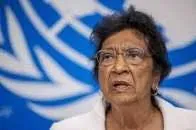
Writing on X, Tharoor was unsparing: 'Shame on the petty men who have made such a deplorable decision.' The Thiruvananthapuram MP, himself a former UN Under-Secretary-General with deep ties to the global Indian diaspora, accompanied his post with what he described as the laureate's story — framing the omission not as bureaucratic oversight but as a deliberate political choice.
What India's record on Nobel congratulations looks like
The precedent could not be clearer. When Kailash Satyarthi won the Nobel Peace Prize in 2014, the Government of India offered prompt, high-profile congratulations, with acknowledgement flowing from the very top of the executive. That response set a benchmark. The contrast with the current silence — now stretching beyond six days — is the sharpest edge of Tharoor's accusation.
Official responses to Nobel awards have historically been calibrated to how favourably the laureate is viewed by the ruling establishment. When the political calculus aligns, statements from the Prime Minister's Office or the Ministry of External Affairs arrive within hours. When it does not, the machinery simply goes quiet — and the Indian diaspora, scattered across the globe, notices.
Why diaspora recognition is a live political fault line
India has long projected 'Vasudhaiva Kutumbakam' — the world is one family — as a cornerstone of its soft-power identity. The government has in recent years mounted elaborate events to celebrate overseas Indians: the Pravasi Bharatiya Divas convention, felicitations at bilateral summits, prime-ministerial stadium rallies abroad. The claim, in short, is that every person of Indian origin reflects India's glory.
Selective silence punctures that claim. Opposition figures have raised precisely this charge across multiple election cycles: that recognition follows political utility rather than achievement. Tharoor's post lands squarely inside that longer argument — and the Nobel Peace Prize, awarded by the Norwegian Nobel Committee, is not a prize the government can quietly wish away.
Whether the Ministry of External Affairs issues a belated statement, or whether the matter is raised in the winter session of Parliament, this episode has already entered the political record — and Tharoor has made certain of that.
Point of View
While continued silence invites escalating pressure in Parliament. The episode also tests whether India's much-advertised soft-power diplomacy survives contact with an inconvenient laureate.
NationPress
18 Oct 2026
Frequently Asked Questions
Why is Tharoor criticising the Government of India over the Nobel Peace Prize?
Dr. Shashi Tharoor says the government failed to issue any congratulations to a woman of Indian origin who won the Nobel Peace Prize, even six days after the announcement — an omission he called 'deplorable' and politically motivated.
Did India congratulate Kailash Satyarthi when he won the Nobel Prize?
Yes. When Kailash Satyarthi won the Nobel Peace Prize in 2014, the Government of India publicly congratulated him, setting a precedent that makes the current silence more politically striking.
Who awards the Nobel Peace Prize?
The Nobel Peace Prize is awarded annually by the Norwegian Nobel Committee, based in Oslo, Norway, to individuals or organisations that have made outstanding contributions to peace, fraternity among nations, or disarmament.
What is the Government of India's usual response to Nobel Prize wins by people of Indian origin?
Historically, official responses — from the Prime Minister or the Ministry of External Affairs — have depended on how favourably the laureate is viewed by the ruling establishment, with swift statements issued when the political calculus aligns.
What happens next after Tharoor's criticism?
Political observers are watching for a possible statement from the Ministry of External Affairs and for opposition MPs to raise the matter during the winter session of Parliament.