Tharoor reappointed Chair of Parliament's External Affairs Panel
Synopsis
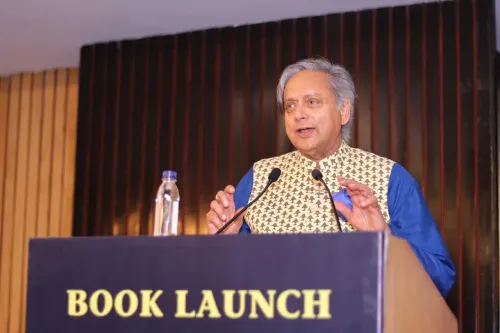
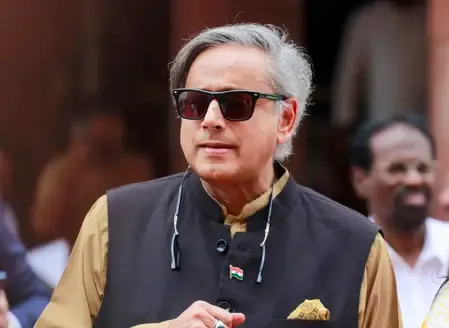
Congress MP Dr. Shashi Tharoor has been reappointed Chair of the Parliamentary Standing Committee on External Affairs, pledging serious deliberations on India's foreign-policy direction amid global turbulence. The committee oversees the Ministry of External Affairs and is a key instrument of parliamentary scrutiny on diplomacy.
Key Takeaways
Shashi Tharoor continues as Chair of the Parliamentary Standing Committee on External Affairs as of October 2026 .
The committee scrutinises the Ministry of External Affairs , its budget, and India's broader diplomatic direction.
Tharoor cited 'a turbulent world' as the backdrop, signalling a substantive agenda for the committee's term.
Tharoor's background — former Minister of State for External Affairs and former UN Under-Secretary-General — gives him rare multilateral expertise for the role.
The convention of Opposition or non-ruling-party members chairing such committees is a constitutional safeguard for executive accountability.
At a moment when India's foreign policy is being stress-tested on multiple fronts — from shifting great-power alignments to neighbourhood tensions — the reappointment of a seasoned diplomat-politician to lead Parliament's most consequential foreign-policy oversight body carries real weight. Congress MP Dr. Shashi Tharoor announced on Saturday, 3 October 2026, that he will continue as Chair of the Parliamentary Standing Committee on External Affairs, signalling continuity at the helm of the panel that scrutinises India's engagement with the world.
What the External Affairs Committee actually does
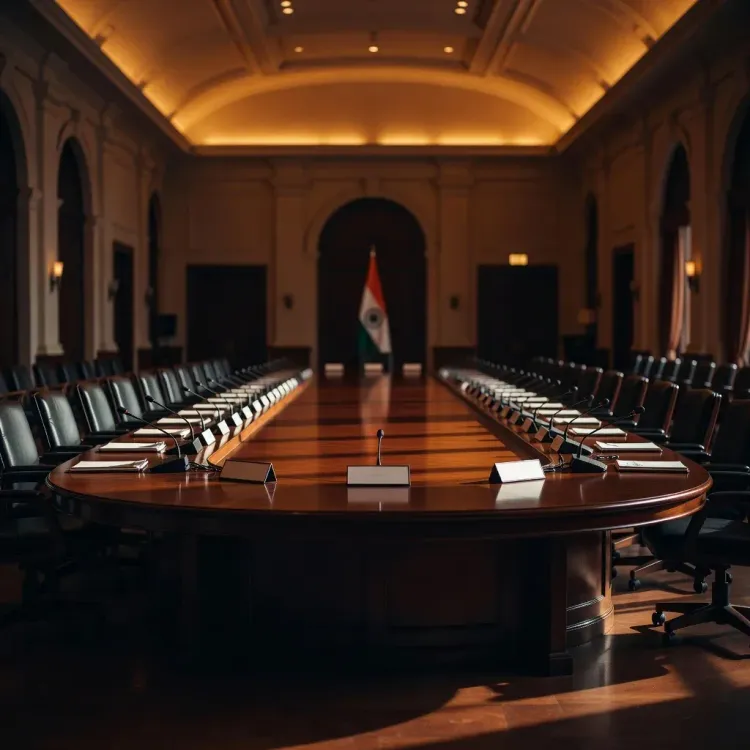
The Parliamentary Standing Committee on External Affairs is one of the most consequential departmentally-related standing committees in the Indian Parliament. It examines the demands for grants of the Ministry of External Affairs, scrutinises legislation referred to it, and — critically — calls senior officials and experts to account on the direction of India's foreign policy. In a turbulent global environment, its deliberations can shape the contours of diplomatic priorities before they harden into policy.
Tharoor's own biography makes him an unusually well-suited Chair. A former Minister of State for External Affairs under the United Progressive Alliance government, he also served as Under-Secretary-General of the United Nations — a rare combination of legislative, executive, and multilateral experience that few parliamentarians can match.
Tharoor's phrase: 'a turbulent world'
The MP's choice of words — 'a turbulent world' — is not rhetorical decoration. It signals the committee's likely agenda: a global order under strain from geopolitical rivalries, trade fragmentation, climate-linked instability, and the reconfiguration of multilateral institutions. India, navigating its role as a major power with interests in every theatre, needs parliamentary oversight that can keep pace with the speed of events.
Tharoor framed his continuation in the role as an opportunity for 'serious and constructive discussions,' a phrase that doubles as a quiet contrast to the performative partisanship that often dominates headline politics. Standing committees are, by design, cross-party bodies — their work happens largely away from the cameras, in deliberation rather than debate.
Opposition in the chair: a constitutional feature, not a bug
The convention of allocating the External Affairs Committee chairship to the Opposition — or at least to a member outside the ruling dispensation — reflects Parliament's intent to ensure independent scrutiny of the executive's foreign-policy decisions. With the Indian National Congress holding that chair through Tharoor, the committee retains a formal check on the Ministry of External Affairs under the current government. That institutional balance, however quietly it operates, matters in a democracy.
For a committee whose remit spans every bilateral relationship India holds, every treaty it signs, and every multilateral forum it participates in, the question of who sits in the Chair is never merely procedural.
Point of View
A committee chair with hands-on UN and ministerial experience can ask sharper questions of the executive than most. The framing of 'serious and constructive discussions' also reads as a quiet bid to position the committee — and by extension the Congress party — as a responsible, policy-oriented opposition rather than a purely adversarial one. Whether that posture translates into substantive influence on foreign-policy outcomes will depend on the government's willingness to engage the committee in good faith.
NationPress
3 Oct 2026
Frequently Asked Questions
What is the Parliamentary Standing Committee on External Affairs?
It is a departmentally-related standing committee of the Indian Parliament that examines the budget and functioning of the Ministry of External Affairs, scrutinises related legislation, and calls officials and experts to account on India's foreign policy.
Why is Shashi Tharoor the Chair of this committee?
Dr. Shashi Tharoor, a Congress MP from Thiruvananthapuram, was appointed Chair due to his extensive background in diplomacy — including serving as Minister of State for External Affairs and as UN Under-Secretary-General — and has now been reappointed to continue in that role.
Is it normal for an Opposition MP to chair the External Affairs Committee?
Yes. Parliamentary convention in India allows Opposition members to chair certain key standing committees, ensuring independent oversight of the executive's decisions — including in sensitive areas like foreign policy.
What issues might the External Affairs Committee focus on in 2026?
Based on Tharoor's reference to 'a turbulent world,' the committee is likely to examine India's responses to shifting great-power dynamics, regional security challenges, trade and multilateral issues, and the overall direction of Indian diplomacy.
How much power does the Parliamentary Standing Committee on External Affairs have?
The committee can summon officials, examine the foreign-affairs budget, and make recommendations, but its findings are advisory. Its real power lies in public accountability — placing diplomatic decisions on the parliamentary record.