Tharoor Marks End of External Affairs Committee Term
Synopsis
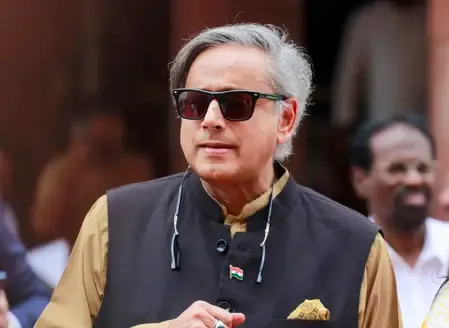
Congress MP Dr. Shashi Tharoor has marked the close of the Parliamentary Standing Committee on External Affairs' annual mandate, sharing a final group photograph with secretariat staff and acknowledging their behind-the-scenes work as the committee's one-year term concludes.
Key Takeaways
The Parliamentary Standing Committee on External Affairs , chaired by Congress MP Dr.
Shashi Tharoor , has completed its annual mandate as of September 2026 .
All 24 Departmentally Related Standing Committees operate on a one-year cycle and must be formally reconstituted each parliamentary year.
The committee system was established in 1993 to strengthen parliamentary oversight of government ministries and their budgets.
The External Affairs Committee provides non-partisan scrutiny of the Ministry of External Affairs, including foreign-policy priorities and budget demands.
Tharoor publicly credited the committee secretariat and personal staff for their detailed, behind-the-scenes work across the term.
Reconstitution of the committee for the next annual term is the immediate next step, with continuity of unfinished reviews at stake.
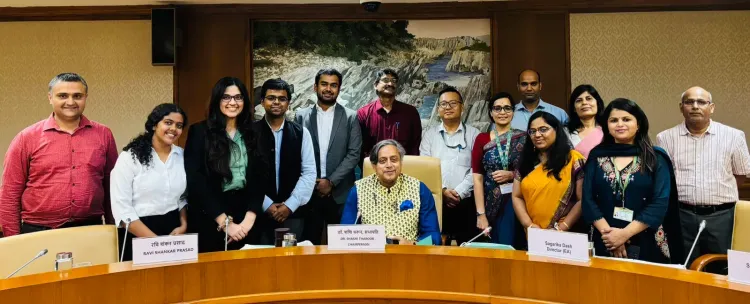
A parliamentary cycle closes quietly but meaningfully — Congress MP Dr. Shashi Tharoor, chairperson of the Parliamentary Standing Committee on External Affairs, shared a moment on Friday, 25 September 2026, as his committee's annual mandate drew to a close and staff gathered for a final group photograph.
Posting on X, Tharoor noted that 'the mandate of each Parliamentary Standing Committee expires every year and must be renewed,' and paid tribute to 'the hard-working Secretariat of the External Affairs Committee and my own staff who diligently assist me on every detail' — the photograph, he said, marked 'the culmination' of the term's work.
A one-year clock that never stops ticking
India's Departmentally Related Standing Committees (DRSCs) were constituted in 1993 to deepen parliamentary scrutiny of the executive — giving elected representatives a dedicated forum to examine ministry budgets, pending legislation, and policy direction before any of it reaches the floor of Parliament. The mechanism now covers all major ministries across 24 committees, and each committee runs on a strict annual cycle: its mandate expires at the end of every parliamentary year and must be formally reconstituted. The Standing Committee on External Affairs holds particular weight — it provides non-partisan oversight of the Ministry of External Affairs, examining demands for grants, scrutinising international agreements, and interrogating foreign-policy priorities away from the theatre of Prime Minister's Questions. That scrutiny happens largely out of the public eye, driven by the very secretariat staff Tharoor singled out for recognition.The unsung engine of parliamentary oversight
The acknowledgement of secretariat staff is a small but pointed gesture. Committee work is grinding — reading thick ministry files, coordinating witnesses, drafting reports, chasing timelines — and the officials who power it rarely surface in headlines. Tharoor's public shoutout puts faces to a function that most political coverage skips entirely. With the current term now concluded, attention turns to the reconstitution of the committee for the next annual cycle — which members return, which rotate out, and whether the incoming panel picks up unfinished examinations of ministry functioning or pending international-agreement reviews. Parliamentary committees are easy to overlook. But when India's foreign-policy machinery is held to account between elections, this is exactly where that accounting happens — one annual term at a time.Point of View
Depending on who chairs the panel and which members are assigned. As a former UN Under-Secretary-General, Tharoor has brought an unusually high-profile lens to the External Affairs Committee, raising its public visibility beyond its traditionally low-key role. The shoutout to secretariat staff also reflects a deliberate effort to frame committee work as institutional rather than personal — important optics for a function whose credibility depends on procedural continuity across political cycles. Watchers of India's foreign-policy accountability machinery should track whether the reconstituted committee pursues the same issue threads or pivots with new membership.
NationPress
25 Sept 2026
Frequently Asked Questions
What is the Parliamentary Standing Committee on External Affairs?
It is one of India's 24 Departmentally Related Standing Committees, tasked with examining the Ministry of External Affairs' budget, legislation, and policy matters. It was part of a committee system constituted in 1993 to strengthen parliamentary oversight of the executive.
Why does the committee's mandate expire every year?
Under Parliament's rules, Departmentally Related Standing Committees operate on a fixed one-year term. At the end of each parliamentary year, the mandate expires and the committee must be formally reconstituted, allowing for rotation of members while maintaining institutional continuity.
Who chairs the External Affairs Standing Committee?
Congress MP Dr. Shashi Tharoor, representing Thiruvananthapuram, has been serving as the chairperson. A former Union Minister and former UN Under-Secretary-General, he has chaired the committee through the term that concluded in September 2026.
What does the External Affairs Committee actually do?
The committee scrutinises the Ministry of External Affairs' demands for grants, examines bills related to foreign affairs, reviews international agreements, and questions ministry officials — all outside the regular floor proceedings of Parliament, providing a detailed non-partisan check on foreign-policy implementation.
What happens after the committee's term ends?
Parliament reconstitutes the committee for a fresh one-year term, assigning new or returning members and a chairperson. Any reports or examinations left incomplete may be carried over or restarted by the incoming panel.