Tharoor Takes On One Nation One Election in New Article

Synopsis
Congress MP Dr. Shashi Tharoor has published a detailed article arguing that the One Nation One Election proposal cannot function within India's parliamentary framework, reigniting a constitutional debate that has simmered since 2014.
Key Takeaways
Shashi Tharoor published an article on August 17, 2026 critiquing the One Nation One Election proposal.
His core argument: simultaneous fixed-term elections are structurally incompatible with a parliamentary system built on no-confidence motions and dissolutions.
The BJP-led government has advocated simultaneous elections since 2014 , citing reduced costs and policy continuity.
The Law Commission of India examined the proposal in 2018 , identifying sweeping constitutional amendments as a prerequisite.
Opposition parties and federalism scholars warn the reform risks undermining state autonomy and parliamentary accountability.
A high-level committee's recommendations and any future constitutional amendment bill remain the key developments to watch.
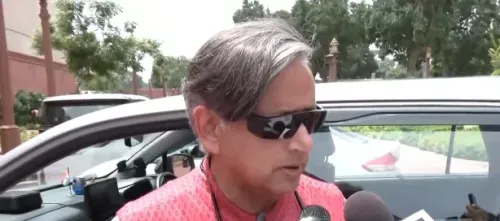
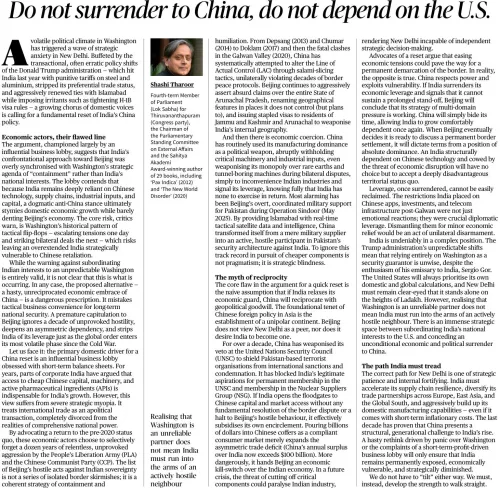
A constitutional fault line that has divided India's political establishment for years is back in the spotlight — this time through the pen of Congress MP Dr. Shashi Tharoor, who on Monday, August 17, 2026, announced a new article dissecting the One Nation One Election proposal and arguing it is fundamentally incompatible with India's parliamentary system.
Why Tharoor Says Simultaneous Polls Can't Work
Tharoor's central argument, as flagged in his post, is structural: a parliamentary democracy is built on the principle that governments survive only as long as they command a legislative majority. Fix all elections to a single calendar and you immediately collide with the possibility of a no-confidence vote, a floor-crossing crisis, or a state assembly dissolution — events that are not anomalies but features of the system. The moment a government falls mid-term, the entire synchronised cycle unravels.
Federalism scholars have long echoed this concern. State governments operate on their own political rhythms, and forcing them onto a national electoral timetable risks subordinating state autonomy to central convenience — a tension that cuts to the heart of India's constitutional design.
The Proposal's Long Paper Trail
The idea of simultaneous elections is not new. The BJP-led government has championed the concept since 2014, with the stated rationale of cutting election expenditure and eliminating the near-permanent 'model code of conduct' blackouts that freeze policy announcements whenever any state goes to polls. In 2018, the Law Commission of India issued a draft report mapping the constitutional amendments that would be required — a list long enough to signal the scale of the overhaul involved. A high-level committee has since examined the proposal further, keeping it alive as a legislative possibility.
Opposition parties and constitutional experts have consistently pushed back, warning that the cure may be worse than the disease: the amendments needed to lock in fixed terms could strip Parliament and state assemblies of the flexibility that makes parliamentary accountability real.
Tharoor's Track Record on Constitutional Debate
Dr. Shashi Tharoor — MP from Thiruvananthapuram, former Union Minister of State for External Affairs and Human Resource Development, and former UN Under-Secretary-General — has built a parallel career as one of India's most prolific writers on governance and constitutional affairs. His intervention in this debate carries weight not just as opposition critique but as a detailed engagement with the mechanics of democratic design.
The timing is pointed. With Parliament's next session on the horizon and the high-level committee's recommendations still in circulation, any renewed push for a constitutional amendment bill would put this debate squarely back on the floor of both Houses.
If India's parliamentary system is the answer, the question is whether any election reform can change the calendar without rewriting the constitution's soul — and that is the argument Tharoor has now put on the table.
Point of View
Giving opposition voices an opportunity to shape public understanding before any bill is tabled. The debate also maps onto a broader contest between centralising impulses at the Union level and the federal autonomy that state governments jealously guard. Whether Tharoor's critique shifts elite opinion or simply hardens existing positions will depend on whether the government chooses to move legislation in the near term.
NationPress
17 Aug 2026
Frequently Asked Questions
What is One Nation One Election?
One Nation One Election is a proposal to hold elections to the Lok Sabha and all state legislative assemblies simultaneously, rather than on separate schedules, with the stated aim of reducing election expenditure and governance disruptions caused by the model code of conduct.
Why does Shashi Tharoor oppose One Nation One Election?
Tharoor argues the proposal is incompatible with India's parliamentary system, which allows governments to fall via no-confidence motions and assemblies to be dissolved — events that would immediately break any fixed simultaneous election cycle.
What constitutional changes would One Nation One Election require?
The Law Commission of India's 2018 draft report found that implementing simultaneous elections would require significant amendments to the Constitution, including provisions governing the terms of the Lok Sabha, state assemblies, and the mechanisms for mid-term dissolutions.
Who supports One Nation One Election in India?
The BJP-led central government has been the primary advocate of the proposal since 2014, arguing it would cut costs and allow uninterrupted policy implementation by reducing the frequency of election cycles.
What are the main arguments against One Nation One Election?
Critics, including opposition parties and federalism scholars, argue the proposal would undermine state autonomy, weaken parliamentary accountability, and require such extensive constitutional amendments that the reform would alter the fundamental character of India's democratic structure.