Tharoor demands Delhi Police explain tiranga detention
Synopsis
Congress MP Dr. Shashi Tharoor publicly demanded that Delhi Police explain alleged action against a citizen for walking with the national flag, citing the constitutionally protected right to carry the tiranga under Article 19(1)(a) and the 2004 Supreme Court ruling.
Key Takeaways
Shashi Tharoor called out Delhi Police on 16 October 2026 , stating that carrying a tiranga on a public street is not a crime.
The post tagged citizen account @abhijeet_dipke , suggesting the MP was responding to a specific alleged incident.
The Supreme Court in Union of India v.
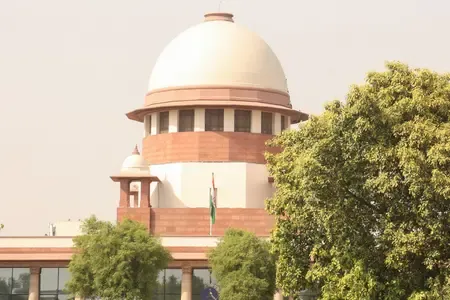
Naveen Jindal (2004) affirmed that flying the national flag is protected under Article 19(1)(a) of the Constitution.
Delhi Police reports directly to the Union Ministry of Home Affairs , not the elected Delhi government, making accountability questions politically significant.
Tharoor framed the demand as one owed 'to the nation', signalling this is a matter of public constitutional concern rather than a private dispute.
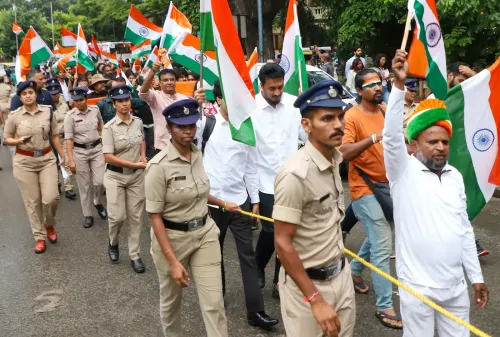
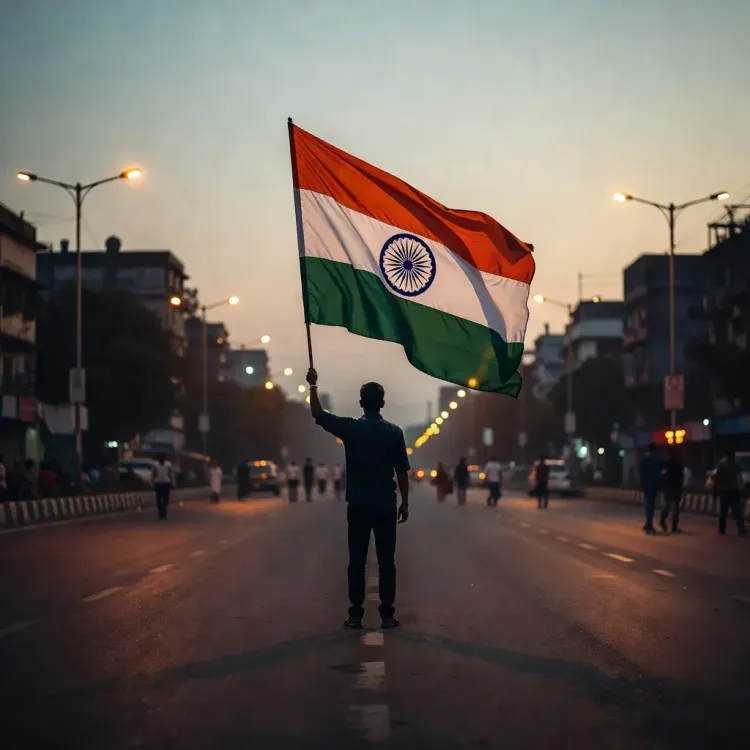
Carrying a tiranga — India's national flag — on a public street is a constitutional right affirmed by the Supreme Court. So when Congress MP Dr. Shashi Tharoor publicly demanded an explanation from Delhi Police on Friday, 16 October 2026, tagging a citizen account @abhijeet_dipke, the post lit up a question that cuts to the heart of civil liberties: can law enforcement stop someone for simply walking with the national flag?
Tharoor's post was blunt and brief: 'Walking on a public street with a tiranga is not a crime, @DelhiPolice. You do owe an explanation to the nation.' No hedging, no diplomatic softening — a direct charge levelled at the capital's police force, which reports to the Ministry of Home Affairs.What the law actually says about flying the tiranga
The legal ground here is well-settled. In the landmark Union of India v. Naveen Jindal (2004) ruling, the Supreme Court of India held that the right to fly the national flag is protected under Article 19(1)(a) of the Constitution — the right to freedom of expression — subject to the reasonable restrictions laid out in the Flag Code of India, 2002. The Flag Code itself was substantially liberalised in 2002 and again in subsequent amendments, expanding citizens' rights to display the flag.
In short: an Indian citizen carrying a tiranga on a public street is, as a baseline matter of constitutional law, exercising a protected right — not committing an offence. Any police action against such a person demands a clear legal basis.
Delhi Police, the MHA link, and accountability
Delhi Police is unique among India's major city forces — it does not report to the elected state government but directly to the Union Ministry of Home Affairs. That structural fact gives any opposition challenge to its conduct an inherently political dimension: questioning Delhi Police is, effectively, questioning a central government-controlled institution. Tharoor's demand for an explanation 'to the nation' — not merely to the affected individual — signals this is being framed as a matter of public accountability, not just a private grievance.
Opposition MPs have repeatedly raised concerns about Delhi Police actions touching on public demonstrations and individual liberties. This post fits a pattern of parliamentary voices using social media to force transparency on executive-controlled bodies when formal channels move slowly.
What happens next
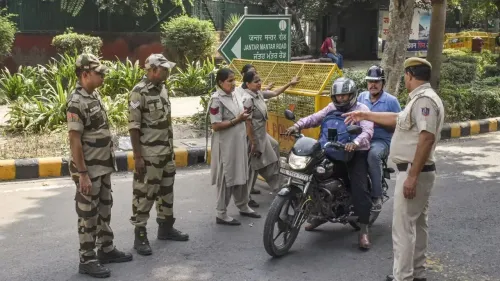
The immediate question is whether Delhi Police responds publicly to Tharoor's call-out. The tagged account @abhijeet_dipke — whose situation appears to be the trigger for Tharoor's intervention — may provide further details of what allegedly occurred. Legal advocates watching flag-rights jurisprudence will note that any confirmed action by police against a person solely for carrying the national flag would face a steep constitutional challenge under the Naveen Jindal precedent.
A senior opposition MP invoking the Supreme Court and demanding a police force explain itself to the entire nation over the right to carry the tiranga — that is not a small moment. The burden of response now sits squarely with Delhi Police.
Point of View
And a flag-carrying incident, if confirmed, is close to an unanswerable optic. The ball is now in Delhi Police's court, and silence will only amplify the story.
NationPress
17 Oct 2026
Frequently Asked Questions
Is it legal to walk on a public street carrying the Indian national flag?
Yes. The Supreme Court in Union of India v. Naveen Jindal (2004) held that the right to fly the national flag is protected under Article 19(1)(a) of the Constitution, subject to the reasonable restrictions in the Flag Code of India, 2002 . Carrying the tiranga on a public street is, as a baseline, a constitutionally protected act.
Why did Shashi Tharoor call out Delhi Police over the tiranga?
Dr. Shashi Tharoor posted on 16 October 2026 that walking on a public street with a tiranga is not a crime, tagging Delhi Police and demanding an explanation to the nation in response to an apparent incident involving the tagged account @abhijeet_dipke .
Who controls Delhi Police?
Delhi Police reports directly to the Union Ministry of Home Affairs , unlike most state police forces which report to elected state governments. This makes it directly accountable to the central government.
What is the Flag Code of India?
The Flag Code of India, 2002 consolidates all laws, conventions, and instructions governing the display of the national flag. It was substantially amended to expand citizens' rights to display the tiranga , and its provisions must be read alongside the Naveen Jindal Supreme Court ruling on constitutional protections.
What action can be taken if police wrongfully restrict someone from carrying the national flag?
Given the Supreme Court's 2004 ruling , any police action against a person solely for carrying the tiranga without a clear violation of the Flag Code would face a strong constitutional challenge under Article 19(1)(a) . Affected citizens can approach courts for relief.