Tharoor Visits Army Post 43, Cites Kargil Lessons
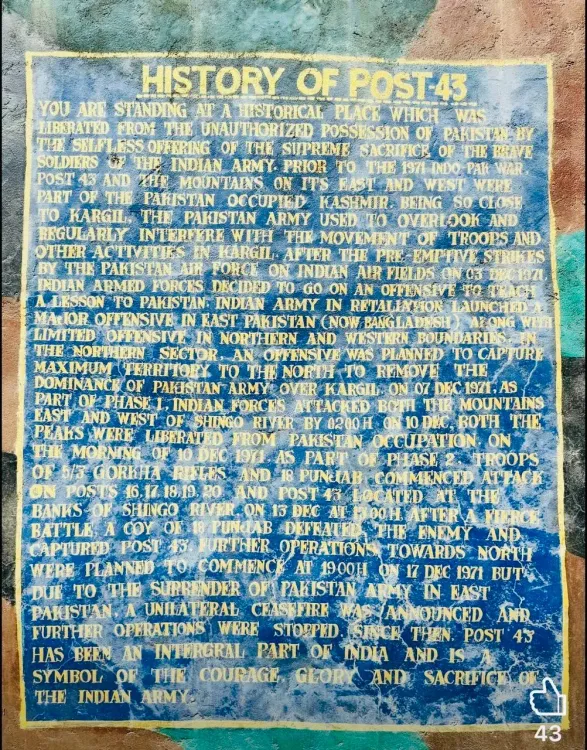
Synopsis
Congress MP Dr. Shashi Tharoor walked through an underground military tunnel at Post 43 on 27 June 2026, describing emergency provisions, LMG portholes and a field hospital for 20 casualties. Invoking the 1999 Kargil War, he declared the Indian Army 'prepared' and 'will never be caught unawares again.'
Key Takeaways
Shashi Tharoor visited Post 43 on 27 June 2026 and walked through an underground military tunnel.
The tunnel contains emergency provisions, medical supplies, spare ammunition, LMG portholes, water, essential rations and a field hospital for up to 20 casualties .
Tharoor quoted a wall sign: 'Victory goes not to the righteous nor to the wicked.
It goes to the prepared.' He explicitly invoked the 1999 Kargil War , stating India 'will never be caught unawares again.' The visit is part of a broader pattern of parliamentary delegations to forward posts, reflecting cross-party support for defence modernisation.
The infrastructure at Post 43 reflects upgrades recommended by the Kargil Review Committee report (2000) .
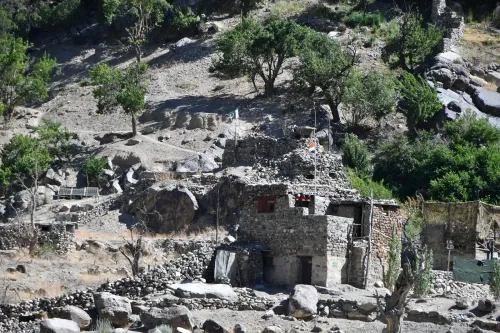
Congress MP Dr. Shashi Tharoor on Saturday, 27 June 2026 shared a first-hand account of walking through an underground military installation at Post 43, describing a fortified tunnel stocked with emergency provisions, medical supplies, ammunition, LMG portholes and a field hospital capable of handling up to 20 casualties — all beneath the surface.
Context
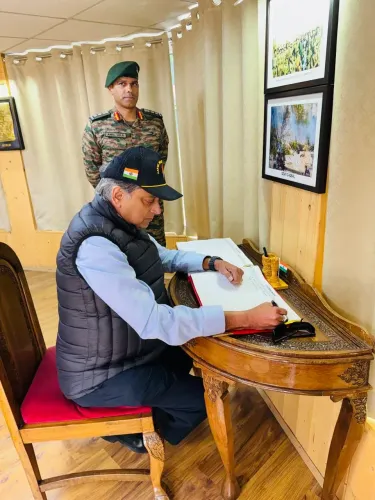
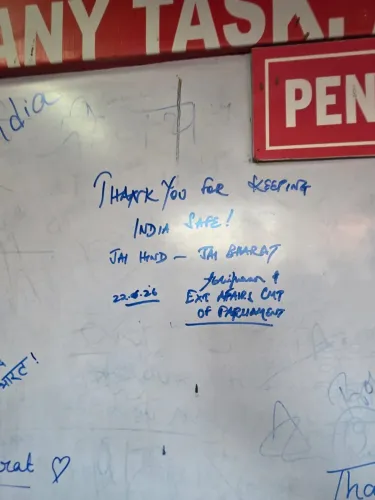
Tharoor, writing in the visitors' book at the post, paid tribute to the 'courage and fortitude of the Army, in arduous conditions, in keeping the nation safe.' He quoted a sign on the tunnel wall: 'Victory goes not to the righteous nor to the wicked. It goes to the prepared' — a maxim he described as emblematic of the Indian Army's current posture.
The visit is part of a broader pattern of parliamentary delegations to forward military positions, which have become a regular feature of cross-party engagement with defence modernisation along India's contested borders.
Policy Backdrop
Tharoor's reference to 1999 is pointed. The Kargil War exposed critical gaps in India's forward surveillance, logistics and border infrastructure when Pakistani forces occupied peaks in the Kargil sector of Jammu and Kashmir during the winter withdrawal of Indian troops. The subsequent Kargil Review Committee report (2000) called for sweeping upgrades to border infrastructure, intelligence networks and forward logistics.
In the more than two decades since, India has progressively hardened forward military positions — constructing tunnels, underground storage facilities and subterranean medical units along both the Line of Control (LoC) and the Line of Actual Control (LAC). The underground field hospital described by Tharoor is a direct product of that post-Kargil doctrine of preparedness.
'We will never be caught unawares again as in 1999,' Tharoor wrote, underscoring the institutional shift from reactive to anticipatory defence planning that has defined Indian military investment in border zones over the past quarter-century.
Stakeholders and Impact
The Indian Army operates and maintains such forward posts under some of the most demanding conditions in the world — high altitude, extreme cold and difficult supply lines. The presence of a self-contained underground facility with water, rations, medical infrastructure and defensive firing positions signals a significant upgrade in the sustainability of forward deployments.
For soldiers stationed at such posts, the infrastructure translates directly into survivability and operational endurance. For the broader public, visits by elected representatives — across party lines — reinforce civilian oversight of and solidarity with the armed forces.
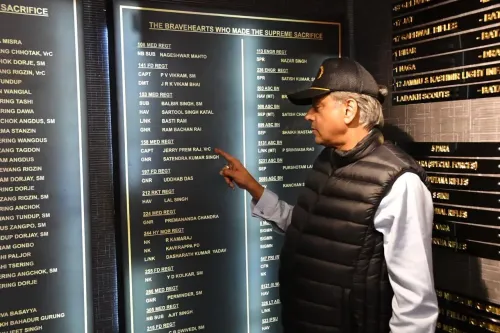
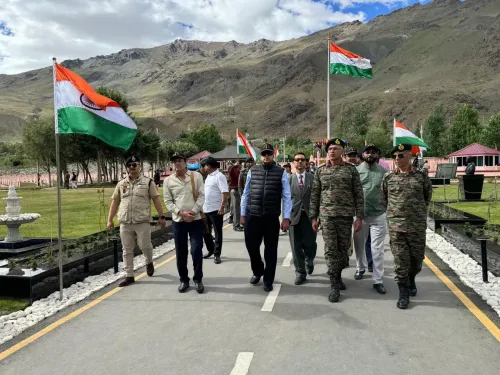
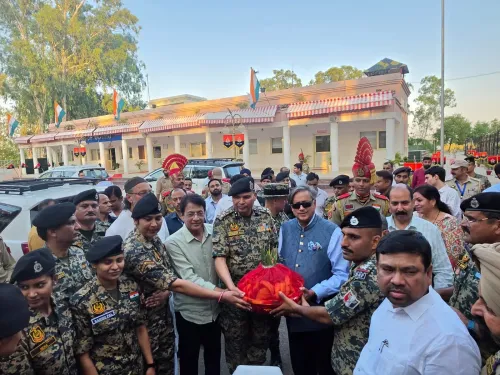
Tharoor, a Congress MP and former Union Minister, has consistently engaged with national security issues. His account, accompanied by three photographs from the site, lends a rare civilian perspective to the often opaque world of forward military infrastructure.
What's Next
The Defence Ministry is expected to continue expanding border-tunnel and underground logistics projects as part of ongoing infrastructure hardening programmes. The Parliamentary Standing Committee on Defence is anticipated to present its next report in the coming session, which may include assessments of forward-post readiness and capital expenditure on border infrastructure.
Tharoor's post, closing with 'Jai Hind', signals that bipartisan acknowledgement of Army preparedness remains a durable feature of Indian political discourse — even as strategic and budgetary debates over defence modernisation continue in Parliament.
Point of View
Positioning the Congress party as a credible stakeholder in national security rather than a critic on the sidelines. By anchoring his remarks to the trauma of 1999 and the doctrine of preparedness that followed, he connects two and a half decades of bipartisan defence investment to a single, vivid tunnel walk. The move also places the opposition on record as endorsing the Army's forward-infrastructure programme, narrowing the political space for partisan point-scoring on border security. Expect the visit to be cited in upcoming parliamentary debates on the defence budget as evidence that cross-party consensus on military preparedness holds.
NationPress
27 Jun 2026
Frequently Asked Questions
Where is Post 43 that Shashi Tharoor visited?
The exact location and classification of Post 43 are not publicly confirmed. Based on the context of Tharoor's remarks about the 1999 Kargil War and forward military preparedness, the post is understood to be a forward Indian Army position along a contested border sector, likely in Jammu and Kashmir or an adjoining high-altitude zone.
What did Shashi Tharoor find inside the underground tunnel at Post 43?
Tharoor described a tunnel stocked with emergency provisions including medical supplies, spare ammunition, LMG portholes and lookout points, water, essential rations and a field hospital capable of handling up to 20 casualties , all located underground.
Why did Tharoor mention the 1999 Kargil War during his army post visit?
Tharoor invoked the Kargil War of 1999 because it exposed major gaps in India's forward surveillance and logistics, leading to a comprehensive overhaul of border infrastructure. He used the reference to underscore that the Army is now far better prepared and 'will never be caught unawares again.'
What was the quote on the wall of the tunnel that Tharoor mentioned?
The sign read: 'Victory goes not to the righteous nor to the wicked. It goes to the prepared.' Tharoor cited it as symbolic of the Indian Army's current preparedness doctrine.
What policy changes followed the 1999 Kargil War in India?
The Kargil Review Committee report (2000) recommended major upgrades in border infrastructure, intelligence and forward logistics. Since then, India has built tunnels, underground storage and medical facilities along the Line of Control and Line of Actual Control to ensure sustained forward deployments.