Ex-IPS Sanjay Singh says resisting pressure cost him 8 transfers
Synopsis
Eight districts, eight years, one reason: retired IPS officer Sanjay Singh says refusing to yield to pressure kept him on the move as an Odisha SP. He also recalls declining a ‘fishing or roving inquiry’ against Gujarat politicians in the 2010 MCI probe, and shares his lessons in a new book.
Key Takeaways
Retired IPS officer Sanjay Singh said he served as SP in eight districts of Odisha over eight years .
Singh linked the frequent transfers to his refusal to act under pressure.
In 2010 , he was transferred to Kolkata in connection with a Gujarat case, but the then Director withdrew the order.
He said he refused a ‘fishing or roving inquiry’ against Gujarat political leaders in a 2010 MCI corruption probe, citing lack of credible evidence.
His book, Code of Honour: No Half Measures in the Indian Police Service , compiles his experiences with various agencies.
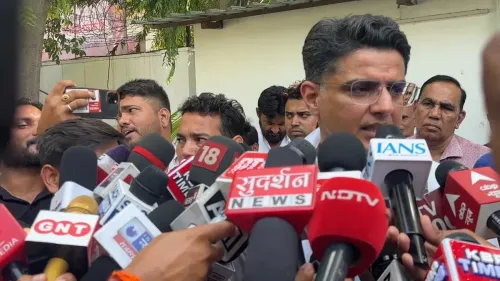
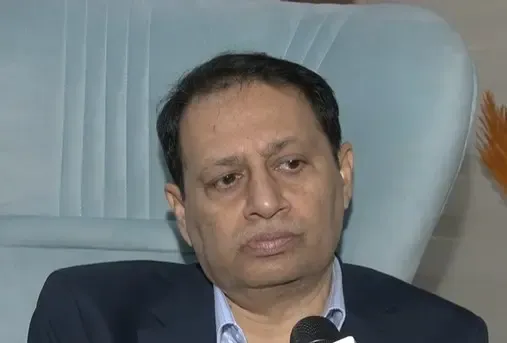
Retired IPS officer Sanjay Singh has said that refusing to bow to pressure during his police career came at a cost, recalling that he was moved across eight districts in Odisha in eight years while serving as a Superintendent of Police (SP). Speaking in an interview in New Delhi on 29 November 2026, Singh described the repeated transfers as a consequence of standing his ground.
Singh, author of the book “Code of Honour: No Half Measures in the Indian Police Service”, also recalled a 2010 episode linked to a Gujarat case in which he was transferred to Kolkata, an order that was later withdrawn.
Pressure and the Price of Saying No
According to Singh, attempts to influence his decisions began early in his career. He said he faced pressure on several occasions, including during his years as an SP.
“Even when I was an SP, attempts were made to exert pressure on me. I would initially try to decline indirectly, but if the pressure persisted, I would state clearly that I would not comply. This has been my practice as a police officer. In every case I investigated, I took action based solely on the evidence. I never made a decision under pressure,” Singh said.
He was candid about what that approach cost him. “There is a price to pay, and I have paid it too. In a place like Odisha, I served as SP in eight districts over eight years. Naturally, if you resist, you are sometimes transferred from that posting,” he said.
The 2010 Gujarat Case
Singh also recalled an instance from 2010 when he was ordered to Kolkata in connection with a Gujarat case. The transfer, he said, was subsequently withdrawn by the then Director.
“Even in the 2010 Gujarat case, I was transferred to Kolkata, but due to some reasons, the Director withdrew the order,” he added.
Notably, Singh said that during a 2010 corruption investigation involving the Medical Council of India (MCI), he refused to conduct a “fishing or roving inquiry” against political leaders in Gujarat. He cited the absence of credible evidence or material that could justify such a probe.
Lessons Compiled in a Book
Singh said his book draws together his experience of working with various investigative and security agencies, along with the lessons he picked up over the course of his service.
“In this book, I have mentioned all the agencies I have worked with and shared the lessons I learnt there, along with both good and bad experiences. If someone benefits from reading this book, or if any organisation, state police force or other security force learns something from my way of working and finds it helpful in making decisions, it would be a matter of great honour for me,” he said.
Why Postings and Tenure Matter
Singh's account touches on a long-running debate over the stability of police postings in India. The Supreme Court, in its 2006 Prakash Singh judgment on police reforms, had directed a minimum fixed tenure for key field officers, including district SPs, to insulate them from arbitrary transfers. Implementation of those directions has varied considerably across states.
Accounts from serving and retired officers have periodically revived questions about how transfers are used and whether field officers can act independently. Singh's remarks add a first-person perspective from an officer who says he chose evidence over expediency.
His book is likely to draw attention from within policing circles, where questions of operational independence and accountability continue to shape the reform conversation.
Point of View
And least scrutinised, tools for disciplining officers who refuse to fall in line. Two decades after the Supreme Court sought fixed tenures for SPs, eight districts in eight years suggests the reform has been honoured more on paper than in practice. Still, memoirs by retired officers are by nature one-sided, and claims of resisting pressure deserve the same evidence-based scrutiny Singh says he applied to his own cases. The bigger question is why such accounts surface only after retirement, when they can no longer change the system they describe.
NationPress
29 Nov 2026
Frequently Asked Questions
Who is Sanjay Singh?
Sanjay Singh is a retired IPS officer who served as Superintendent of Police in several Odisha districts and worked with various investigative and security agencies. He is the author of ‘Code of Honour: No Half Measures in the Indian Police Service’.
Why was Sanjay Singh transferred so often?
Singh says the transfers were a consequence of resisting pressure and refusing to act against the evidence. He said he served as SP in eight Odisha districts over eight years.
What happened in the 2010 Gujarat case involving Sanjay Singh?
Singh said he was transferred to Kolkata in connection with a 2010 Gujarat case, but the then Director withdrew the order. He also said he refused to conduct a ‘fishing or roving inquiry’ against Gujarat political leaders in a 2010 MCI corruption probe due to lack of credible evidence.
What is the book Code of Honour about?
The book compiles Singh's experiences with the different investigative and security agencies he worked with, including both good and bad experiences. He hopes police forces and security organisations find its lessons useful in decision-making.