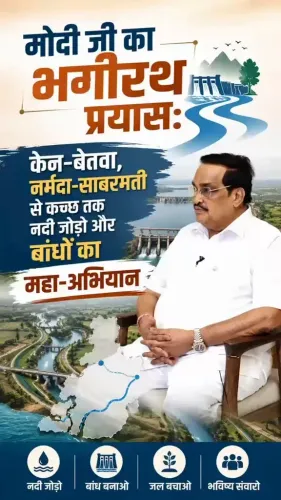
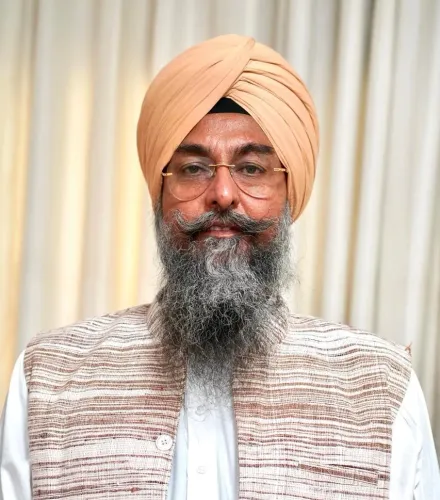
TN BJP chief pushes for fast-track river-linking projects to end water crisis
Synopsis
Tamil Nadu BJP chief Nainar Nagenthran is pushing the Centre to fast-track river-linking projects, holding up the Ken-Betwa initiative as a national model. With Tamil Nadu reliant on rivers that originate outside its borders, his call frames water security as both a political imperative and a survival question for the state.
Key Takeaways
Tamil Nadu BJP president Nainar Nagenthran on 30 May demanded swift implementation of river-linking projects across India.
He cited the Ken-Betwa River Linking Project — connecting Madhya Pradesh and Uttar Pradesh — as a model for inter-state water cooperation.
Nagenthran credited PM Modi 's Gujarat tenure and the Narmada network expansion as proof that large-scale water management works.
The river-linking vision was originally proposed under former PM Atal Bihari Vajpayee , covering rivers including the Cauvery , Ganga , and Brahmaputra .
Tamil Nadu 's dependence on rivers originating outside its borders makes inter-state water infrastructure a long-term security priority, he argued.
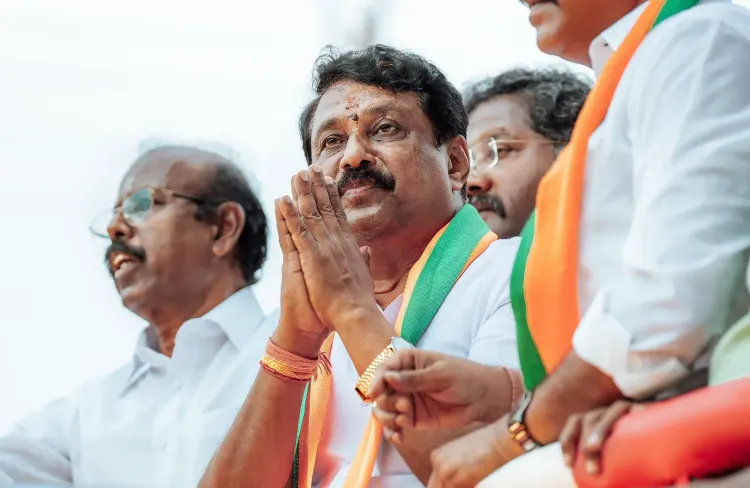
Tamil Nadu Bharatiya Janata Party (BJP) president Nainar Nagenthran on Saturday, 30 May renewed his party's demand for the swift execution of river-linking projects across India, asserting that interconnecting major river systems is no longer optional but essential to resolving the country's deepening water crisis.
Key Demands and the National Case
Nagenthran specifically highlighted the Ken-Betwa River Linking Project — a flagship initiative to channel surplus water from the Ken River in Madhya Pradesh to the drought-prone Betwa basin in Uttar Pradesh — as a model for inter-state cooperation on water resources. He described it as proof that states can collaborate to optimise water distribution and address chronic shortages.
'The interlinking of rivers is no longer merely an option but a necessity for the country's future. Every state, including Tamil Nadu, should extend wholehearted support to such projects in the larger national interest,' Nagenthran said.
Modi Government's Role and Gujarat Precedent
The BJP leader credited Prime Minister Narendra Modi with consistently advocating for balanced and efficient water utilisation across India. He pointed to Modi's tenure as Chief Minister of Gujarat, where the expansion of the Narmada river water distribution network reportedly transformed drought-affected regions and improved agricultural livelihoods — citing it as a scalable blueprint for the rest of the country.
Nagenthran also traced the national river-linking vision to the government of former Prime Minister Atal Bihari Vajpayee, recalling that the original proposal envisaged connecting major systems including the Mahanadi, Krishna, Pennar, Cauvery, Vaigai, and Tamirabarani rivers, as well as linking the Ganga and Brahmaputra basins for more equitable national distribution.
Legal Hurdles and Judicial Support
Referring to decades of litigation and policy debate that have stalled such projects, Nagenthran noted that the prolonged legal process had eventually yielded judicial backing for advancing river-linking initiatives. He said the Modi government had since taken steps to push projects aimed at improving water availability for agriculture, industry, and domestic consumption.
Tamil Nadu's Water Vulnerability
Nagenthran underscored Tamil Nadu's particular exposure to water insecurity, noting that the state depends heavily on rivers that originate beyond its borders. He argued that long-term water security for the state — and the country — requires sustained investment in water-sharing infrastructure and deepened inter-state cooperation.
'River-linking projects must be treated as an urgent national priority. They hold the key to addressing recurring droughts, improving agricultural resilience and securing water resources for future generations,' he added. With water stress projected to intensify across peninsular India, the political pressure on both the Centre and state governments to accelerate such projects is likely to grow.
Point of View
While a legitimate milestone, is geographically distant from Tamil Nadu's own water stress; invoking it as a model without addressing the state's specific river-sharing disputes with Karnataka and Kerala leaves the argument incomplete. Whether this call translates into legislative pressure or remains a press statement will be the real measure of intent.
NationPress
14 Oct 2026
Frequently Asked Questions
What are river-linking projects and why is TN BJP demanding them?
River-linking projects involve engineering canals and infrastructure to transfer surplus water from one river basin to another, aiming to reduce regional water scarcity. Tamil Nadu BJP president Nainar Nagenthran is demanding their fast-track implementation, arguing that states like Tamil Nadu — dependent on rivers originating outside their borders — face chronic water insecurity without such inter-state infrastructure.
What is the Ken-Betwa River Linking Project?
The Ken-Betwa River Linking Project is a flagship initiative to transfer surplus water from the Ken River in Madhya Pradesh to the drought-prone Betwa basin in Uttar Pradesh. Nagenthran cited it as a working model of inter-state cooperation on water resources.
Who originally proposed the national river-linking plan in India?
The national river-linking vision is traced to the government of former Prime Minister Atal Bihari Vajpayee. The original proposal envisaged connecting major river systems including the Mahanadi, Krishna, Cauvery, Ganga, and Brahmaputra for more balanced national water distribution.
Why is Tamil Nadu particularly vulnerable to water scarcity?
Tamil Nadu depends heavily on rivers that originate outside its borders, making it susceptible to upstream decisions and rainfall variability in neighbouring states. Nagenthran argued this makes sustained investment in water-sharing infrastructure and inter-state cooperation essential for the state's long-term water security.
What role does the Modi government play in river-linking projects?
According to Nagenthran, Prime Minister Narendra Modi has consistently advocated for balanced water utilisation and the Modi government has taken steps to advance river-linking projects following years of legal and policy delays. He also pointed to Modi's earlier expansion of the Narmada distribution network in Gujarat as evidence of effective large-scale water management.