Are TN Bull Owners Demanding Changes in Jallikattu Token Approval Process?
Synopsis
As the vibrant jallikattu events unfold in Tamil Nadu, bull owners are raising alarms about the convoluted token and permission system. This article delves into their demands for reform and the implications on the beloved sport.
Key Takeaways
Transparency in the approval process for jallikattu bulls is a major concern.
A significant number of registered bulls do not make it to the event.
The impact of political influences on permissions is being scrutinized.
The State Animal Welfare Board plays a role in ensuring animal welfare.
Increased events indicate a growing popularity of jallikattu.
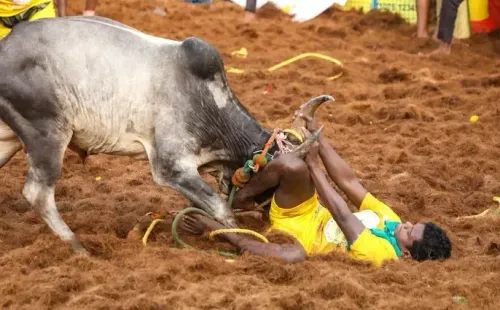
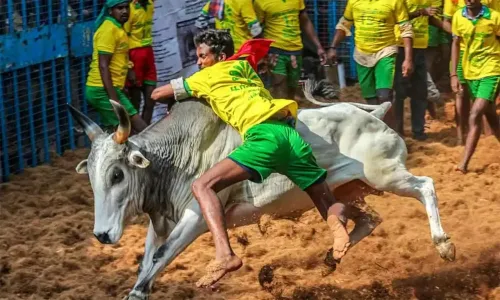
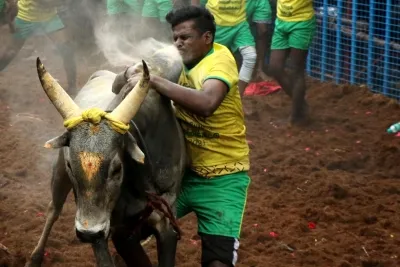
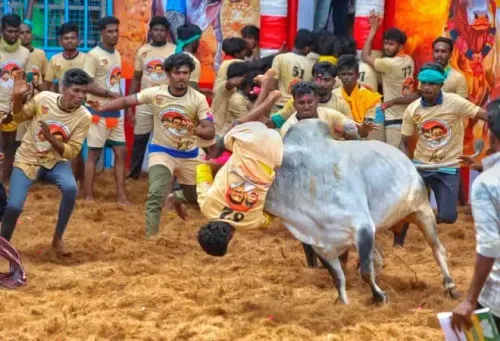
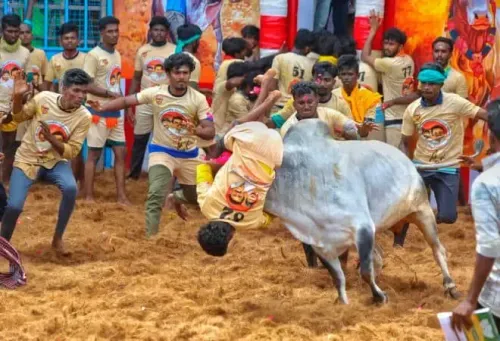
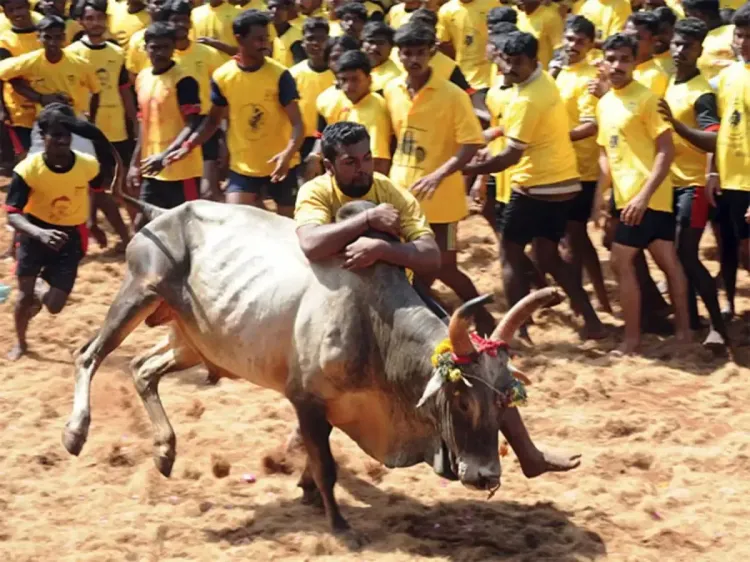
Chennai, Jan 10 (NationPress) As jallikattu events commence throughout the delta regions and various parts of Tamil Nadu, a group of bull owners and jallikattu advocates are voicing significant concerns regarding what they perceive as a non-transparent and subjective method for granting tokens and permissions for bulls to engage in the sport.
According to these owners, the selection process at prominent venues like Alanganallur, Palamedu, and Avaniyapuram in Madurai is devoid of transparency and scientific assessment.
They argue that officials in charge of approving bulls heavily depend on personal judgment rather than objective criteria to evaluate a bull's physical capabilities, agility, or temperament necessary for jallikattu.
This has resulted in bulls that may not be fit for effective performance being allowed to enter the competition, they contend.
Sources from the State Animal Welfare Board have indicated that veterinary professionals and revenue officials are primarily responsible for ensuring no animal cruelty occurs and that the bulls are in medically sound condition.
“There is currently no system in place to evaluate a bull’s capability to perform or succeed in jallikattu,” remarked a senior official.
Bull owners are required to register their animals on the official portal, ahd.tn.gov.in/jallikattu, to secure tokens and approval for participation.
Typically, approximately 1,000 to 2,000 bulls are registered for each event held in districts like Madurai, Pudukkottai, Tiruchy, and Sivaganga.
Jallikattu activist M.P. Periyasamy from Tiruchy, representing the Jallikattu Meetpu Kazhagam, stated that despite the high registration figures, only about 600 to 700 bulls are ultimately permitted to take part in events in Madurai.
He claimed that permissions are granted by tahsildars under the district collectors and are largely based on subjective evaluations rather than clear standards.
A bull owner from Madurai, S. Santhana Pandiyan, alleged that political pressure influences the approval process at major venues.
“Numerous owners dedicate years to raising bulls specifically for jallikattu, yet they are often denied approval. Many have been compelled to sell their bulls as a result,” he shared.
Officials noted that according to the Standard Operating Procedure, jallikattu events should only be held between 6 AM and 2 PM, allowing a maximum of 400 bulls. However, due to local community pressures, permissions are frequently granted for 600 to 700 bulls.
“We will review the feedback from stakeholders on this matter,” an official stated.
In 2025, Tamil Nadu organized 352 events, including jallikattu, Eruthu Vidum Vizha, and Manju Virattu, across 19 districts, involving around 1.14 lakh bulls, reflecting a significant increase from the 214 events held in 2024.
Point of View
It's essential to acknowledge the passionate stance of those involved in jallikattu. While the cultural significance of the sport cannot be understated, the concerns raised about transparency and fairness in the approval process merit serious consideration. It is crucial to foster an environment that respects both animal welfare and the traditions that resonate deeply with the people of Tamil Nadu.
NationPress
19 Sept 2026
Frequently Asked Questions
Why are bull owners concerned?
Bull owners are concerned about the lack of transparency and objectivity in the token approval process for bulls participating in jallikattu.
How many bulls are typically registered for jallikattu events?
Typically, between 1,000 to 2,000 bulls are registered for each jallikattu event in various districts.
What are the operating hours for jallikattu events?
According to the Standard Operating Procedure, jallikattu events should be conducted between 6 AM and 2 PM.
How many events were held in Tamil Nadu in 2025?
In 2025, Tamil Nadu hosted 352 events, including jallikattu, across 19 districts.