TN CM congratulates 15 new Madras HC judges
Synopsis
The Chief Minister's Office of Tamil Nadu congratulated 15 newly appointed Madras High Court judges on 8 August 2026 — five as permanent judges and ten as additional judges — appointed by the President of India through the collegium process, with a call to uphold constitutional values and social justice.
Key Takeaways
15 judges were appointed to the Madras High Court — 5 permanent and 10 additional — by the President of India .
The five permanent judges are Govindarajan Krishnaswamy , Rajnish Pathil , Ramesh Natarajan , G.K.
Muthukumar , and Ramakrishnan Rajesh Vivekananthan .
Ten additional judges include Dr.
Gunasekaran , and five others.
Appointments follow the collegium system established by Supreme Court rulings in 1993 and 1998 under Article 217 of the Constitution.
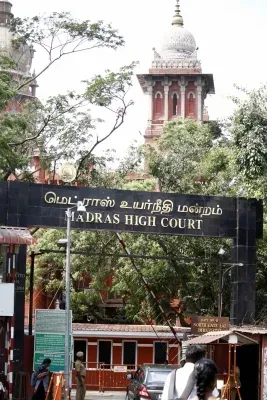
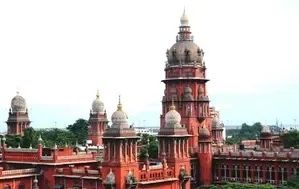
The Madras High Court , founded in 1862 , serves Tamil Nadu and Puducherry .
The CMO's message called on the new judges to ensure equal justice and social justice for all citizens.
Fifteen lawyers and judicial officers stepped into one of India's oldest and most consequential courtrooms on Saturday, 8 August 2026, as the Chief Minister's Office of Tamil Nadu extended warm congratulations to the newly appointed judges of the Madras High Court — five elevated as permanent judges and ten as additional judges, all appointed by the President of India.
The fifteen names now on the Madras bench
The five newly appointed permanent judges are Govindarajan Krishnaswamy, Rajnish Pathil, Ramesh Natarajan, G.K. Muthukumar, and Ramakrishnan Rajesh Vivekananthan. Joining them as additional judges are Raveekumar Shankaranarayanan, Dilip Kumar Nagarajan, Elappan Manoharan, Dr. P. Murugan, M.D. Sumathi, S. Alli, C. Thirumagal, Shanmugam Karthikeyan, Murugesan Baluchamy, and N. Gunasekaran.
Constitutional process behind the appointments
High Court appointments in India flow through the collegium system — a framework cemented by landmark Supreme Court rulings in 1993 and 1998 — under which the Supreme Court collegium recommends names, the Union government processes the notification, and the President of India issues the formal appointment under Article 217 of the Constitution. The Madras High Court, established in 1862, is the apex judicial authority for Tamil Nadu and Puducherry, presiding over civil, criminal, and constitutional matters for tens of millions of litigants.
CM's call for equal justice and constitutional values
Posting in Tamil, the Chief Minister's Office — under the hashtag #CMJosephVijay — conveyed that the new judges should uphold 'the dignity of justice and the values of the Constitution' and ensure that all people receive 'equal justice and social justice.' The message reflects a consistent political emphasis in Tamil Nadu on social equity as a cornerstone of judicial functioning, a theme with deep roots in the state's Dravidian political tradition.
Periodic batch appointments like this one are how India's high courts manage mounting vacancies and rising caseloads. For litigants in Tamil Nadu and Puducherry, more judges on the bench can translate directly into faster hearings and reduced pendency — the most concrete measure of justice delivered.
Point of View
A problem common to most Indian high courts. The CMO's framing of the congratulations around 'social justice' is deliberate: Tamil Nadu's political identity is inseparable from the Dravidian social-justice tradition, and aligning judicial appointments with that rhetoric reinforces the state government's positioning even in matters where it has no direct constitutional role. The collegium system remains the only mechanism for these appointments, and the Centre-state dynamic in judicial appointments — always quietly contested — makes the CMO's public acknowledgement a soft assertion of stake. Watch whether any of the new appointees are elevated to the permanent bench swiftly, as that trajectory will signal collegium confidence in the batch.
NationPress
8 Aug 2026
Frequently Asked Questions
Who are the new permanent judges appointed to Madras High Court in 2026?
The five newly appointed permanent judges of the Madras High Court are Govindarajan Krishnaswamy, Rajnish Pathil, Ramesh Natarajan, G.K. Muthukumar, and Ramakrishnan Rajesh Vivekananthan, all appointed by the President of India.
How are High Court judges appointed in India?
High Court judges in India are appointed by the President of India under Article 217 of the Constitution, based on recommendations from the Supreme Court collegium — a process formalised by Supreme Court judgments in 1993 and 1998.
What is the difference between a permanent judge and an additional judge in a High Court?
A permanent judge holds a full-term appointment to the High Court, while an additional judge is appointed for a fixed term (usually two years) and may be confirmed as permanent thereafter based on collegium review.
Which states does the Madras High Court have jurisdiction over?
The Madras High Court, established in 1862, is the highest judicial authority for the state of Tamil Nadu and the Union Territory of Puducherry.
Why did the Tamil Nadu CMO post about Madras High Court judge appointments?
The Chief Minister's Office of Tamil Nadu congratulated the newly appointed judges and called on them to uphold constitutional values and ensure equal and social justice for all citizens of the state.