Is the SC Collegium Set to Appoint 7 Permanent Judges in Kerala HC?

Synopsis
The Supreme Court Collegium, under Chief Justice Surya Kant, has made a significant recommendation to appoint seven Additional Judges as Permanent Judges in the Kerala High Court, marking an important development in the judiciary.
Key Takeaways
Supreme Court Collegium recommends 7 judges for Kerala HC.
Recommendations are based on judicial performance metrics.
Appointment process is governed by constitutional provisions.
CJI plays a vital role in the recommendation process.
Ensures judicial efficiency and stability.
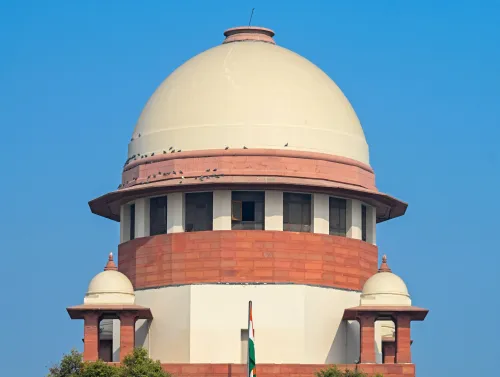
New Delhi, Feb 12 (NationPress) The Supreme Court Collegium, led by Chief Justice of India (CJI) Surya Kant, put forth a recommendation on Thursday for the elevation of seven Additional Judges to the status of Permanent Judges in the Kerala High Court.
According to a statement posted on the apex court's official website, the Collegium's meeting held on February 12, 2026, concluded with the endorsement of the following Additional Judges for permanent appointment: (i) Shri Justice Abdul Hakhim Mullappally Abdul Aziz, (ii) Shri Justice Syam Kumar Vadakke Mudavakkat, (iii) Shri Justice Harisankar Vijayan Menon, (iv) Shri Justice Manu Sreedharan Nair, (v) Shri Justice Easwaran Subramani, (vi) Shri Justice Manoj Pulamby Madhavan, and (vii) Smt. Justice Marakkaparambil Bhargavan Snehalatha.
The appointment of Chief Justice and Judges of High Courts is executed by the President as per clause (1) of Article 217 of the Constitution.
In recommending an Additional Judge for permanent status, the Chief Justice of the High Court is mandated to provide comprehensive statistics, including monthly case disposals and judgments rendered by the concerned judge, along with the number of cases cited in legal journals, duly verified.
The statistics must also encompass details regarding total working days, actual court attendance, and any absences during the relevant timeframe for which the disposal data is submitted.
Additional Judges are appointed by the President in accordance with clause (1) of Article 224 of the Constitution. The Memorandum of Procedure (MoP) that governs High Court judge appointments stipulates that a Chief Justice should not recommend the elevation of an Additional Judge when a Permanent Judge vacancy exists.
Point of View
I emphasize the significance of the Supreme Court Collegium's recommendation for the appointment of Permanent Judges in the Kerala High Court. This decision not only enhances judicial stability but also reflects a commitment to uphold the rule of law in our nation.
NationPress
14 Sept 2026
Frequently Asked Questions
Who heads the Supreme Court Collegium?
The Supreme Court Collegium is headed by the Chief Justice of India.
What is the purpose of appointing Additional Judges as Permanent Judges?
The aim is to ensure a stable judiciary and manage the caseload efficiently.
How are judges appointed in the High Court?
Judges are appointed by the President of India under specific clauses of the Constitution.