Supreme Court Collegium Proposes Permanent Judges for Chhattisgarh and Madras High Courts
Synopsis
The Supreme Court Collegium has recommended the appointment of new permanent judges for the High Courts of Chhattisgarh and Madras, showcasing an important judicial development in India. This move aims to strengthen the judiciary's efficiency and responsiveness.
Key Takeaways
Supreme Court Collegium has recommended permanent judges.
New judges appointed for Chhattisgarh and Madras High Courts.
Recommendation aims to improve judicial efficiency.
Chief Justice provides detailed statistics for appointments.
Governed by Articles 217 and 224 of the Constitution.
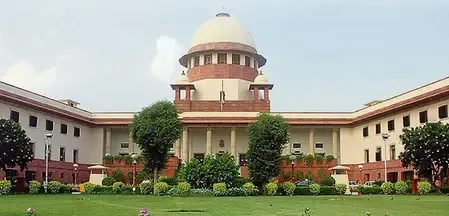
New Delhi, March 24 (NationPress) The Supreme Court Collegium, led by Chief Justice of India (CJI) Surya Kant, has made a significant recommendation for the appointment of permanent judges to the High Courts of Chhattisgarh and Madras. In its session conducted on March 24, 2026, the Collegium sanctioned the transition of the following Additional Judges to Permanent Judges in the High Court of Chhattisgarh: (i) Shri Justice Sachin Singh Rajput, (ii) Shri Justice Radhakishan Agrawal, (iii) Shri Justice Sanjay Kumar Jaiswal, (iv) Shri Justice Bibhu Datta Guru, and (v) Shri Justice Amitendra Kishore Prasad,” as stated on the official Supreme Court website.
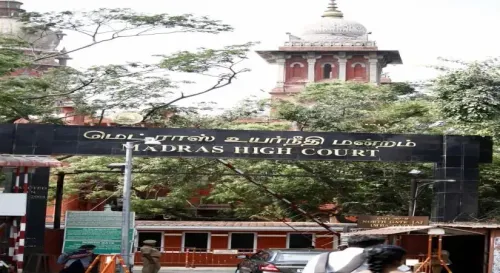
Additionally, the Collegium also approved the appointment of three Additional Judges as Permanent Judges in the Madras High Court. This includes: (i) Ms. Justice R. Poornima, (ii) Shri Justice M. Jothiraman, and (iii) Dr. (Smt.) Justice Augustine Devadoss Maria Clete.
According to Article 217 of the Constitution, the President appoints the Chief Justice and Judges of the High Courts. For recommending the appointment of an Additional Judge as a Permanent Judge, the Chief Justice of the High Court must provide comprehensive statistics, including monthly case disposals, judgments delivered, and the number of cases documented in law journals, all certified by them.
The statistics should detail the total working days, the actual court attendance of the judge, and any days of absence during the relevant period for which disposal statistics are submitted.
Furthermore, Additional Judges are appointed by the President under Article 224 of the Constitution.
Point of View
The recommendation by the Supreme Court Collegium to appoint permanent judges in Chhattisgarh and Madras signifies a proactive step towards strengthening the judiciary. It highlights the importance of judicial continuity and the need for experienced judges to handle the growing caseload effectively.
NationPress
24 Sept 2026
Frequently Asked Questions
Who heads the Supreme Court Collegium?
The Supreme Court Collegium is currently headed by Chief Justice of India, Surya Kant.
What is the purpose of the Collegium's recommendation?
The Collegium's recommendation aims to appoint Additional Judges as Permanent Judges to enhance judicial efficiency in High Courts.
What criteria must be met for appointing a Permanent Judge?
The Chief Justice of the High Court must provide detailed statistics regarding case disposal and the judge's attendance record.
Which High Courts are affected by this recommendation?
The recommendation affects the High Courts of Chhattisgarh and Madras.
What articles govern the appointment of judges?
Judges are appointed under Article 217 and Article 224 of the Constitution.