Tamil Nadu weighs Pallavan House as new Secretariat site amid fisherfolk protests
Synopsis
Tamil Nadu's search for a new Secretariat site has hit another political wall. With fishing communities, Left parties, and the Opposition pushing back against the Foreshore Estate choice, the TVK government is now eyeing the 13.22-acre Pallavan House campus — home to MTC and SETC headquarters — as a face-saving alternative, with a decision expected within a week.
Key Takeaways
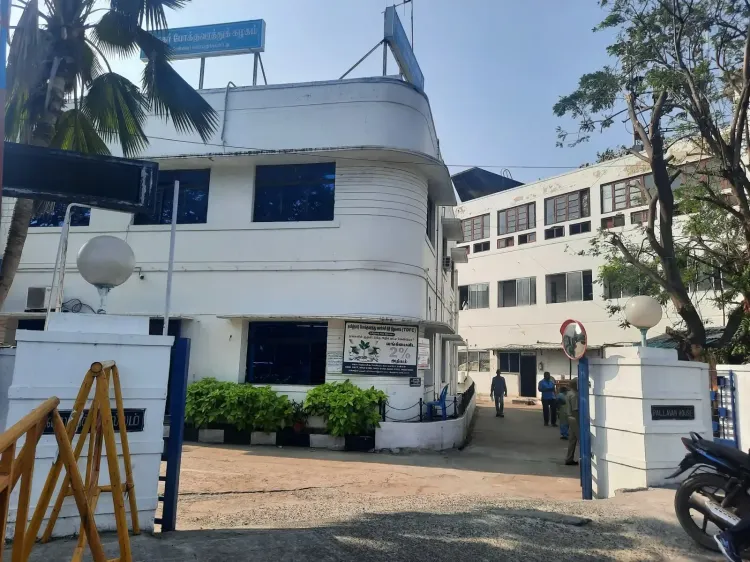
The Tamil Nadu government is considering the 13.22-acre Pallavan House campus in Chennai as an alternative to the Foreshore Estate for its new Secretariat and Assembly complex.
Joseph Vijay had announced the Foreshore Estate project at a cost of ₹1,200 crore with a built-up area of 20 lakh square feet .
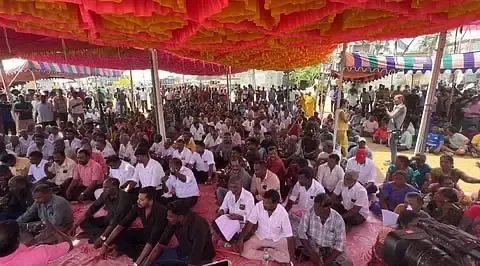
Fishing communities, the CPI , and the CPI-M opposed the Foreshore Estate site, pressuring the TVK -led government to reconsider.
Pallavan House currently houses MTC and SETC headquarters plus two MTC depots ; relocation to Koyambedu is being explored.
A government announcement on the final site is expected within a week .
Earlier Secretariat relocation attempts in 2003 and 2004 also failed; the Omandurar complex built for over ₹1,000 crore was eventually converted into a hospital.
The Tamil Nadu government is actively considering the 13.22-acre Pallavan House campus in Chennai as an alternative location for its proposed Secretariat and Assembly complex, following sustained opposition from fishing communities to the originally chosen Foreshore Estate site. According to government sources, no final decision has been taken, and an announcement is expected within a week.
Why Pallavan House Is Under Consideration
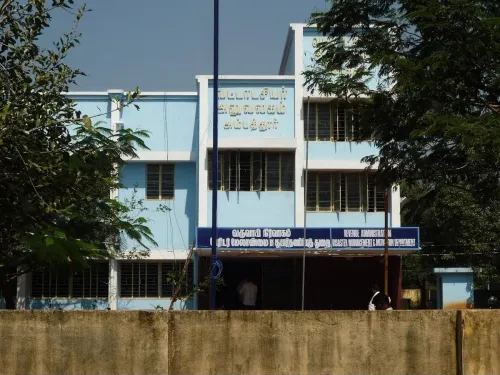
The Pallavan House campus currently serves as the headquarters of the Metropolitan Transport Corporation (MTC) and the State Express Transport Corporation (SETC), and also houses two MTC depots. Officials indicated that the government-owned nature of the property eliminates the need for land acquisition or residential displacement — significant advantages given the controversy surrounding the Foreshore Estate proposal.
The campus's multi-modal connectivity is another factor in its favour. It is accessible via bus services, suburban rail, and the Chennai Metro Rail, which officials said would benefit both Secretariat employees and members of the public who visit government offices.
Relocation Challenges for Transport Bodies
If Pallavan House is selected, the transport corporations' headquarters and depot facilities would need to be moved. Officials have reportedly identified the Chennai Mofussil Bus Terminus at Koyambedu as a possible alternative for the transport headquarters, which would allow administrators to oversee bus operations from a single consolidated premises.
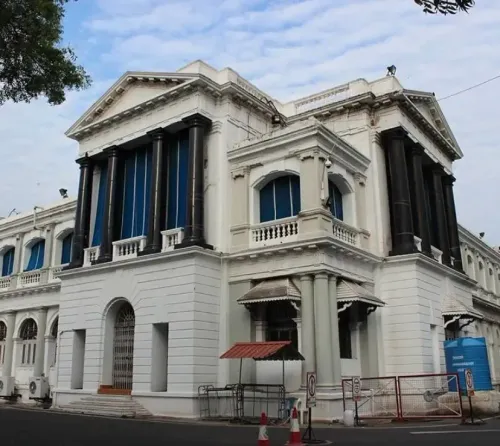
The campus is also located close to the Omandurar Government Estate on Anna Salai, where a previous Dravida Munnetra Kazhagam (DMK) government constructed a Secretariat and Assembly complex that was later converted into a hospital — a precedent that adds political and historical weight to the current deliberations.
The Foreshore Estate Controversy
Chief Minister C. Joseph Vijay had announced in the Assembly that a new Secretariat and Assembly complex would be built at Foreshore Estate for ₹1,200 crore, with a built-up area of 20 lakh square feet. The proposal triggered immediate protests from fishing communities, who raised concerns about the coastal location and its potential impact on their livelihoods.
Opposition parties and Left formations — including the Communist Party of India (CPI) and the Communist Party of India (Marxist) (CPI-M) — subsequently backed the protesters' cause, mounting political pressure on the Tamilaga Vettri Kazhagam (TVK)-led government to reconsider the site selection.
A Pattern of Failed Secretariat Relocations
This is not Tamil Nadu's first attempt at establishing a new administrative headquarters, and each earlier effort has been derailed by opposition. In 2003, then Chief Minister J. Jayalalithaa proposed building a Secretariat on the Queen Mary's College campus; student agitation, combined with political and legal resistance, forced the government to abandon the plan. An alternative site at Kotturpuram was explored in 2004 but did not materialise either.
The DMK government under M. Karunanidhi eventually built the Omandurar Secretariat and Assembly complex, inaugurated in March 2010. It served as the administrative headquarters only briefly. When Jayalalithaa returned to power, she shifted operations back to Fort St. George. The Omandurar complex, which cost more than ₹1,000 crore to construct, was subsequently repurposed as a government hospital — representing one of Tamil Nadu's most expensive abandoned infrastructure decisions.
What Happens Next
A government announcement on the final site is expected within the coming week. The decision will hinge not only on logistical factors but on the administration's political calculus, given the broad coalition of voices — fishing communities, Left parties, and the Opposition — that mobilised against the Foreshore Estate choice. Whether Pallavan House can avoid a similarly contentious fate remains to be seen.
Point of View
000 crore spent on a complex that lasted barely one political cycle before being repurposed. If Pallavan House is chosen, the government will need to demonstrate not just that the site works logistically, but that it has the political durability to survive beyond the next election. The fisherfolk protest also signals something broader: coastal communities in Tamil Nadu are increasingly organised and emboldened, and any project that touches the shoreline — however indirectly — now carries real mobilisation risk.
NationPress
19 Oct 2026
Frequently Asked Questions
Why is Tamil Nadu considering Pallavan House as the new Secretariat site?
The Tamil Nadu government is exploring Pallavan House as an alternative after fishing communities and opposition parties protested against the originally proposed Foreshore Estate site. The 13.22-acre government-owned campus avoids the need for land acquisition or residential displacement, and offers strong public transport connectivity.
What was the original plan for the Tamil Nadu Secretariat?
Chief Minister C. Joseph Vijay announced in the Assembly that a new Secretariat and Assembly complex would be built at Foreshore Estate in Chennai for ₹1,200 crore, with a built-up area of 20 lakh square feet. The proposal drew immediate opposition from coastal fishing communities.
Who opposed the Foreshore Estate Secretariat proposal?
Fishing communities who live and work along the Chennai coastline led the protests against the Foreshore Estate site. The Communist Party of India (CPI), Communist Party of India (Marxist) (CPI-M), and other opposition parties subsequently backed their resistance, amplifying pressure on the government.
What will happen to MTC and SETC if Pallavan House is selected?
The Metropolitan Transport Corporation (MTC) and State Express Transport Corporation (SETC) headquarters, along with two MTC depots currently at Pallavan House, would need to be relocated. Officials have flagged the Chennai Mofussil Bus Terminus at Koyambedu as a possible alternative for the transport headquarters.
How does this compare to earlier attempts to relocate Tamil Nadu's Secretariat?
Tamil Nadu has a long history of failed Secretariat relocation bids. A 2003 proposal to build on the Queen Mary's College campus was abandoned after student and political protests. A 2004 alternative at Kotturpuram also fell through. The DMK's Omandurar complex, inaugurated in March 2010 at a cost exceeding ₹1,000 crore, was converted into a hospital after Jayalalithaa returned the Secretariat to Fort St. George.