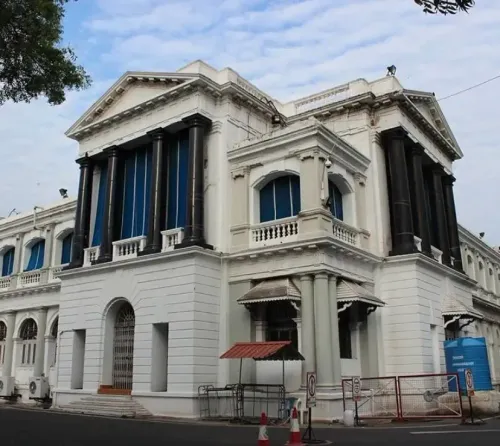
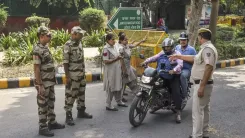
Tamil Nadu Secretariat security tightened amid visitor surge at ministers' offices
Synopsis
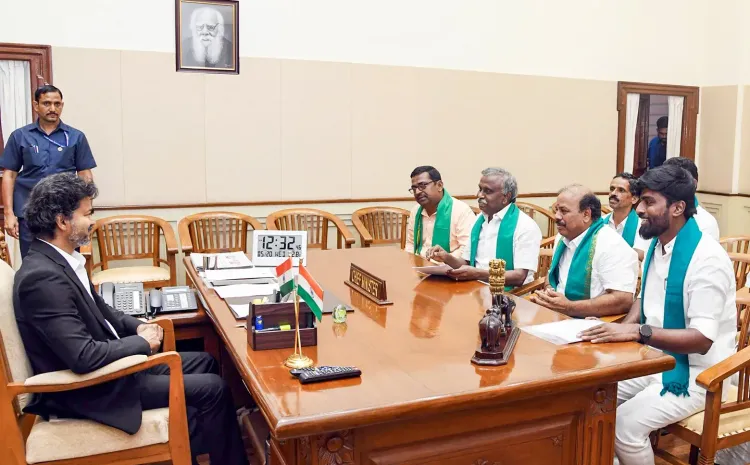
Days into the new Tamil Nadu government's tenure, the Fort St George Secretariat is buckling under an extraordinary visitor surge — petitioners, party cadres, and well-wishers flooding ministerial corridors from dawn to dusk. Police have moved in with additional deployments and queue systems, flagging just how intense the public-access pressure on a newly formed government can get.
Key Takeaways
Police have reinforced security across ministerial offices at the Tamil Nadu Secretariat , Fort St George, Chennai , as of 25 May 2025 .
Visitor footfall has risen sharply since the newly formed Tamil Nadu government assumed charge, with queues running from early morning to late evening.
Visitors include party functionaries , government officials, petitioners, and supporters offering congratulations to newly appointed ministers.
Authorities have deployed additional police personnel and introduced queue-management systems in selected sections of the Secretariat.
Officials said the priority is ensuring regular government work is not disrupted despite the high public turnout.
Enhanced security during political transitions is standard practice, but officials noted this surge is exceptionally high compared to typical transition periods.
Police security has been significantly reinforced across ministerial chambers at the Tamil Nadu Secretariat in Fort St George, Chennai, following an unprecedented surge in visitor footfall since the newly formed state government assumed charge, officials said on Monday, 25 May. The influx, spanning from early morning to late evening, has prompted authorities to deploy additional personnel to regulate movement and prevent overcrowding inside the complex.
Scale of the Visitor Rush
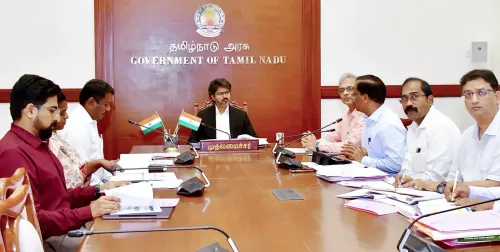
Ministerial offices have been witnessing long queues comprising party functionaries, government officials, supporters, well-wishers, and members of the public seeking appointments. A substantial number of visitors have arrived specifically to submit petitions, raise civic grievances, and seek interventions on constituency-level issues. Newly appointed ministers have simultaneously been receiving congratulatory calls from party cadres turning up in large numbers following the formation of the new administration.
What Officials Said
'The deployment is primarily for crowd management and administrative convenience. There has been a steady and continuous flow of visitors to almost every minister's office,' an official said. Authorities noted that courtesy meetings and discussions on local development issues have further compounded the footfall at the Secretariat premises.
Security and Queue Management Measures
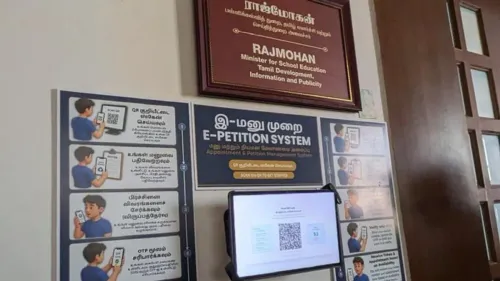
Police personnel have been stationed outside individual ministerial offices to streamline visitor entry, regulate queues, and prevent congestion in key administrative corridors. Authorities have also introduced dedicated queue-management systems in selected sections of the building to reduce disruptions and ensure uninterrupted movement. Officials stressed that a priority concern was ensuring regular government work remained unaffected despite the heavy public turnout.
Context: Transition-Period Norms and This Government's Scale
Enhanced security and crowd-control arrangements are standard practice during periods of political transition and the early days of a new government. However, officials indicated that the exceptionally high public turnout this time had necessitated stronger measures than are typically deployed. Sources within the Secretariat noted that visitor numbers had climbed sharply in recent days as ministers simultaneously launched departmental review exercises and public outreach activities — a dual workload that has amplified both official and public-facing traffic through the complex.
The situation at Fort St George reflects a broader pattern seen after state elections in India, where the initial weeks of a new government draw intense public engagement before administrative routines stabilise. How quickly the Secretariat transitions to a structured appointment system is likely to determine whether the current security posture needs to be maintained.
Point of View
But the scale matters. When ministerial corridors become petition-filing queues, administrative bandwidth gets squeezed at precisely the moment it is most needed — during the critical first weeks of a new government. The real test is not crowd management but whether Tamil Nadu's new administration moves quickly to a structured, digitally mediated appointments system that separates public grievance redressal from day-to-day governance. Without that, the police deployment is a band-aid on a structural access problem that repeats after every election cycle.
NationPress
10 Oct 2026
Frequently Asked Questions
Why has security been tightened at the Tamil Nadu Secretariat?
Security has been tightened at the Tamil Nadu Secretariat in Fort St George, Chennai, because of an unusually high surge in visitors to ministerial offices following the formation of the new state government. Authorities deployed additional police to manage crowds, regulate queues, and ensure regular government work is not disrupted.
Who has been visiting the Tamil Nadu Secretariat in such large numbers?
Visitors include party functionaries, government officials, supporters, well-wishers, and members of the public. Many have come to submit petitions, raise civic grievances, seek appointments, or congratulate newly appointed ministers after the formation of the new administration.
What crowd-control measures have been put in place at Fort St George?
Police personnel have been stationed outside individual ministerial offices to streamline entry and regulate queues. Authorities have also introduced queue-management systems in selected sections of the Secretariat to reduce congestion in administrative corridors.
Is heavy footfall at a new government's secretariat unusual?
Enhanced security during political transitions is standard practice in India. However, officials at the Tamil Nadu Secretariat noted that the current public turnout is exceptionally high even by those standards, necessitating stronger measures than are typically deployed after a change of government.
How long is the visitor rush expected to continue?
Officials have not specified a timeline, but historically such surges ease once a new government establishes structured appointment and grievance-redressal systems. The pace at which the Tamil Nadu administration formalises these processes will likely determine how long the heightened security posture is maintained.