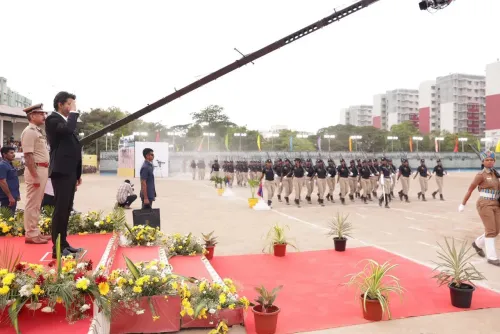
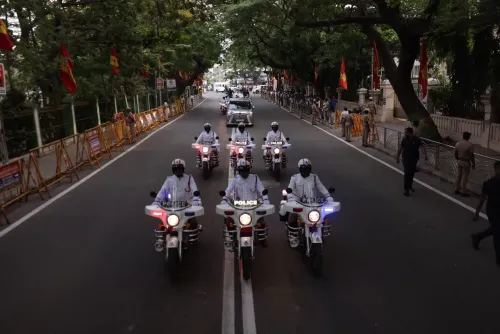
CM Vijay launches Singappen all-women strike force in Tamil Nadu
Synopsis
Tamil Nadu's Chief Minister's Office launched the Singappen Special Strike Force on 9 June 2026, a dedicated rapid-response unit to enhance women's safety. The initiative builds on the state's decades-long tradition of women-focused policing, including all-women police stations established in the 1990s.
Key Takeaways
The Chief Minister's Office of Tamil Nadu announced the launch of the Singappen Special Strike Force on 9 June 2026 .
The force is designed specifically to enhance the safety and security of women across Tamil Nadu.
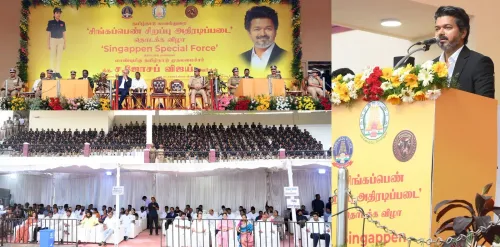
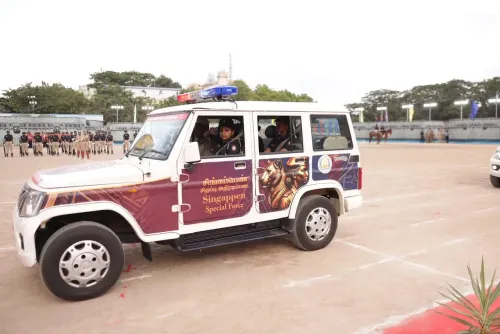
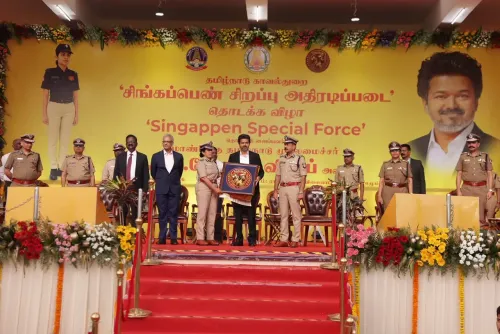
The initiative was announced under Chief Minister Joseph Vijay , with an official inauguration ceremony documented in three images.
Tamil Nadu was among the first Indian states to establish all-women police stations in the 1990s , and this force extends that legacy.
Operational details including recruitment, training timelines, and budget allocations are yet to be publicly outlined.
The Singappen model may serve as a template for other Indian states seeking to strengthen rapid-response policing for crimes against women.
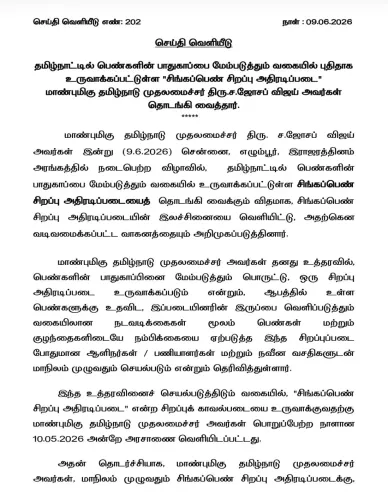
The Chief Minister's Office of Tamil Nadu announced on Tuesday, 9 June 2026 the launch of the Singappen special strike force, a dedicated unit aimed at strengthening the safety and security of women across the state. The announcement was made under the banner of Chief Minister Joseph Vijay, marking a significant addition to Tamil Nadu's women-centric policing architecture.
Context
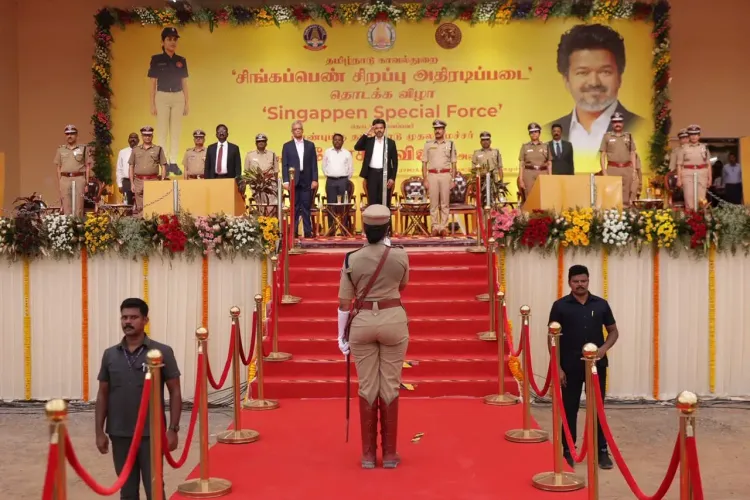
The Tamil post reads: 'பெண்களின் பாதுகாப்பினை மேம்படுத்தும் சிங்கப்பெண் சிறப்பு அதிரடிப்படை தொடக்க விழா' — translated as 'Inauguration of the Singappen Special Strike Force to enhance the safety of women.' The name Singappen, combining the Tamil words for lion and woman, signals an intent to project strength and swift action in responding to crimes against women.
The launch event was accompanied by three images shared by the Chief Minister's Office, indicating an official inauguration ceremony. The hashtags #CMJosephVijay and #Singappen were used, suggesting a coordinated public communication campaign around the initiative.
Policy Backdrop
Tamil Nadu has a long record of institutionalising women-focused policing. The state was among the first in India to establish all-women police stations in the 1990s, creating dedicated units to handle crimes against women. Over the following decades, this framework expanded to include women's helplines and one-stop crisis centres, particularly after national directives in the 2010s called for faster response mechanisms to gender-based violence.
The Singappen force appears to build on this lineage by creating a specialised rapid-response or strike unit, distinct from the general all-women station model. Across India, several states have periodically constituted such commando-style or fast-track units following high-profile cases of violence against women, aiming to reduce response times and improve deterrence.
Stakeholders and Impact
The primary beneficiaries of the new force are women across Tamil Nadu, particularly those in situations requiring swift police intervention. State police personnel, especially women officers likely to staff the unit, will be directly affected through new recruitment, training, and operational protocols that will need to be established.
Civil society organisations and women's rights groups in the state have long advocated for more visible and responsive policing. The formation of a named, branded unit like Singappen also carries a public-awareness dimension, potentially encouraging more women to approach police in times of distress.
What's Next
Key details that will determine the force's effectiveness include its operational guidelines, the scope of its mandate, recruitment and training timelines, and whether dedicated state budget allocations will be made to sustain it. Crime data reports measuring changes in response times and conviction rates for offences against women will serve as the eventual benchmark for the initiative's success.
As Tamil Nadu moves forward with this initiative, attention will turn to whether the Singappen model is extended statewide or piloted in specific districts first — and whether it inspires similar specialised formations in other Indian states grappling with women's safety challenges.
Point of View
Branded policing units to signal political commitment to women's safety — often in response to public pressure following high-profile crimes. For CM Joseph Vijay, whose political identity is still consolidating, the initiative carries both a governance and an optics dividend. The choice of a Tamil name with strong symbolic resonance suggests a deliberate effort to embed the scheme in local cultural identity rather than position it as a top-down directive. Whether the force translates into measurable improvements in response times and prosecution rates will ultimately determine its legacy beyond the inauguration moment.
NationPress
23 Oct 2026
Frequently Asked Questions
What is the Singappen Special Strike Force in Tamil Nadu?
The Singappen Special Strike Force is a newly launched dedicated police unit in Tamil Nadu, announced on 9 June 2026, aimed at enhancing the safety and security of women across the state.
Who launched the Singappen force in Tamil Nadu?
The force was launched by the Chief Minister's Office of Tamil Nadu under Chief Minister Joseph Vijay.
What does 'Singappen' mean?
'Singappen' is a Tamil compound word combining terms for lion and woman, symbolising strength and swift protective action for women.
How is the Singappen force different from all-women police stations?
While Tamil Nadu's all-women police stations handle the registration and investigation of crimes against women, the Singappen unit appears to function as a specialised rapid-response or strike force, though full operational details are yet to be announced.
What is Tamil Nadu's history with women-focused policing?
Tamil Nadu was among the first Indian states to establish all-women police stations in the 1990s, and has since expanded women-centric policing through helplines and one-stop centres, making the Singappen force the latest addition to this long-standing framework.