Tamil Nadu orders anti-bribery boards in all govt offices by July 14 order
Synopsis
Tamil Nadu has ordered every government office, PSU, and local body to display bilingual anti-bribery boards and link to the DVAC portal — a directive that should have been routine since 2006 but wasn't. Paired with a new WhatsApp helpline, the Vijay government is betting that visibility and accessibility can finally move the needle on public corruption reporting.
Key Takeaways
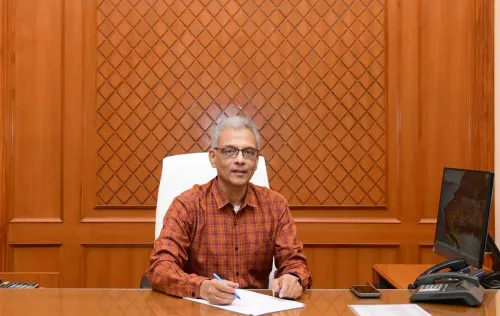
The Tamil Nadu government issued a Government Order on 14 July , signed by Chief Secretary M.
Sai Kumar , mandating anti-bribery notice boards in all state offices.
Boards must be bilingual (Tamil and English) and prominently display DVAC contact details including a WhatsApp number.
The order acknowledged that compliance with similar directives issued since 2006 had been incomplete or absent in many offices.
Departments must also publish the anti-corruption message on official websites with a direct link to the DVAC portal.
Inspection wings and district collectorate cells will verify compliance; department heads must submit reports to the Human Resources Management Department .
A dedicated DVAC WhatsApp helpline — 9498180936 — was recently launched to complement the initiative.
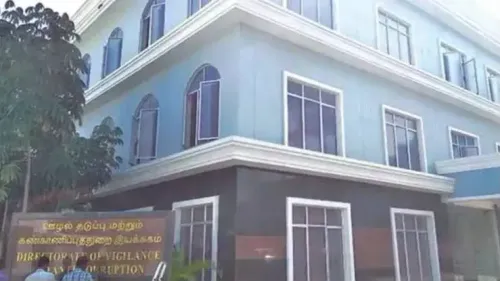
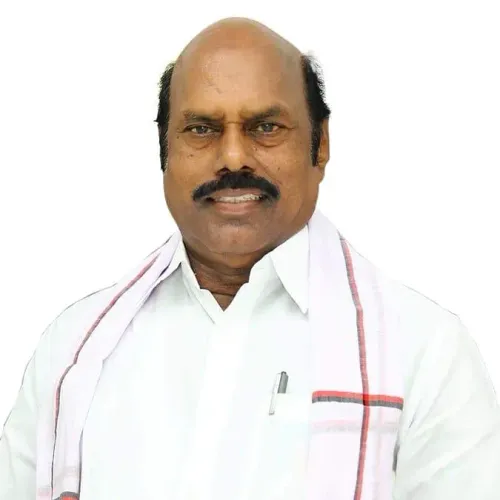
The Tamil Nadu government has directed all state departments, district administrations, local bodies, public sector undertakings (PSUs), and government-owned companies to mandatorily display anti-bribery notice boards at prominent, publicly visible locations — reinforcing a transparency push that successive administrations have struggled to enforce since 2006. The directive was formalised through a Government Order signed by Chief Secretary M. Sai Kumar on 14 July.
What the Order Mandates
Every government office must install bilingual notice boards in Tamil and English carrying the message: 'Bribe giving and receiving is an offence.' The boards must also display the Directorate of Vigilance and Anti-Corruption (DVAC) address, telephone numbers, WhatsApp number, fax number, and official email ID — giving citizens a direct channel to report corruption.
Departments have additionally been instructed to publish the same anti-corruption message on their official websites, along with a direct hyperlink to the DVAC portal, widening digital access for complainants.
Why the Government Acted Now
The order candidly acknowledged that despite repeated instructions issued since 2006, compliance had remained inconsistent. In several offices, anti-corruption boards were either absent entirely or installed in locations not easily visible to visitors — undermining the very purpose of the exercise.
The latest directive seeks to close that implementation gap by mandating uniform compliance across all government establishments, including statutory boards, corporations, and PSUs functioning under departmental control. Notably, this initiative follows the state's recent launch of a dedicated DVAC WhatsApp helpline — 9498180936 — enabling citizens to report corruption quickly and without bureaucratic friction.
Monitoring and Compliance Mechanism
To ensure the order does not suffer the fate of its predecessors, the government has built in a verification layer. Inspection wings of various departments and inspection cells under district collectorates have been tasked with physically verifying whether boards have been installed in the prescribed manner.
Department secretaries and heads of departments have been directed to submit formal compliance reports to the Human Resources Management Department after confirming that every office under their jurisdiction has carried out the instructions. Officials have been asked to act without delay.
Broader Context
Tamil Nadu's anti-corruption architecture has long centred on the DVAC, but enforcement of basic visibility measures — such as notice boards — has historically been patchy. The Vijay government's move to combine physical signage, website disclosures, and a WhatsApp helpline represents a multi-channel approach to lowering the barrier for public complaints.
Whether this round of directives achieves lasting compliance will depend on how rigorously the inspection mechanism is activated — and whether non-compliant offices face tangible consequences. The government's next steps on enforcement will be closely watched.
Point of View
Which raises a pointed question: what makes this iteration different? The addition of an inspection and compliance-reporting mechanism is a structural improvement, but its effectiveness hinges on whether non-compliant offices face consequences. Tamil Nadu has the institutional machinery in the DVAC; the test is political will to use it against its own bureaucracy.
NationPress
20 Oct 2026
Frequently Asked Questions
What has the Tamil Nadu government ordered regarding anti-bribery boards?
The Tamil Nadu government has directed all state departments, district administrations, local bodies, PSUs, and government companies to install bilingual anti-bribery notice boards in Tamil and English at publicly visible locations. The order, signed by Chief Secretary M. Sai Kumar on 14 July, also requires departments to publish the anti-corruption message on their official websites with a link to the DVAC portal.
What information will the anti-bribery notice boards display?
The boards will carry the message 'Bribe giving and receiving is an offence' along with the DVAC's address, telephone numbers, WhatsApp number, fax number, and official email ID, giving citizens direct access to report corruption.
Why did Tamil Nadu need to reissue this directive?
The government acknowledged that despite repeated instructions since 2006, many offices had not installed the boards or had placed them in locations not easily visible to visitors. The new order seeks to enforce uniform compliance across all government establishments.
How will compliance be monitored?
Inspection wings of departments and inspection cells under district collectorates will verify whether boards are installed correctly. Department secretaries and heads of departments must submit compliance reports to the Human Resources Management Department.
What is the DVAC WhatsApp helpline and how can citizens use it?
The DVAC WhatsApp helpline number is 9498180936, launched just before this order as part of Tamil Nadu's broader anti-corruption drive. Citizens can use it to report bribery incidents quickly without visiting an office or filing a formal written complaint.