TN teachers demand CCTV cameras, random invigilator postings at Class 10, 12 exam centres
Synopsis
Tamil Nadu government school teachers are demanding CCTV cameras at over 7,000 public examination centres and a computerised random draw for invigilator postings — driven by POCSO cases against invigilators and a single private school where over 100 students scored centums in Chemistry one year and none the next. The state's exam directorate hasn't said no, but the price tag of covering 42,000 halls is a real obstacle.
Key Takeaways
Tamil Nadu government school teachers have proposed CCTV cameras and randomised invigilator allocation for Class 10 and 12 public exams in 2026-27 .
In one private school, more than 100 of 148 Class 12 candidates scored centums in Chemistry in 2025 ; none did in 2026 .
The Directorate of Government Examinations cited the cost of covering roughly 42,000 halls across 7,000+ centres as a key obstacle to full CCTV rollout.
Srinivasan of the Tamil Nadu Higher Secondary Headmasters' Association proposed plug-and-play cameras at randomly selected centres as a cost-effective alternative.
Teachers also demanded withdrawal of the provision allowing chief invigilators to use mobile phones during the first hour of exams, citing misuse risk.
Computerised random allocation of examination personnel was sought to eliminate alleged local-influence-driven postings.
Government school teachers in Tamil Nadu have proposed a series of reforms — including installation of CCTV cameras and computerised random allocation of examination personnel — to strengthen the conduct of Class 10 and Class 12 public examinations in 2026-27. The demands, submitted to the state school education department, come in the wake of questions over unusually high concentrations of perfect scores at certain private schools.
What Triggered the Demands
Irregularities in recent examination results have fuelled the push for reform. In one private institution, more than 100 of its 148 Class 12 candidates secured centum scores in Chemistry in 2025, while none achieved the same in 2026. Such sharp swings at select private schools had already prompted the department to deploy officers on special duty to oversee examinations at those institutions in 2026.
Additionally, teachers cited cases registered under the Protection of Children from Sexual Offences (POCSO) Act against government teachers serving as invigilators. Students had alleged sexual assault, while the accused teachers maintained they were checking for malpractice — a dispute that, according to teachers, underscores the need for independent surveillance at examination halls.
The Case for CCTV Surveillance
R. Srinivasan, state general secretary of the Tamil Nadu Higher Secondary Headmasters' Association, advocated camera surveillance as both a safeguard for students and a tool for improving accountability. He cited circulars from the Central Board of Secondary Education (CBSE) and Karnataka's school education department that reportedly mandated CCTV coverage, and called for similar arrangements in Tamil Nadu.
Officials at the Directorate of Government Examinations, however, flagged the scale of the challenge. With more than 7,000 examination centres across the state, each containing multiple halls, and roughly 8.5 lakh candidates accommodated at 20 students per hall, an estimated 42,000 halls would require coverage — a cost concern that officials say complicates blanket implementation.
As a practical alternative, Srinivasan proposed equipping randomly selected centres with plug-and-play cameras during examination periods, reducing the financial burden while maintaining a credible deterrent against malpractice.
Other Concerns Raised by Teachers
Beyond surveillance, teachers raised several operational concerns. They argued that lengthy gaps between examination papers weaken students' concentration and called on the department to reduce inter-paper intervals. Assigning government teachers to invigilation duty at private schools, they added, disrupts regular instruction for lower-class students left without adequate cover.
A specific provision permitting chief invigilators to use mobile phones during the first hour of examinations — ostensibly to relay attendance and administrative details — has also drawn criticism. Teachers demanded its withdrawal, citing the risk of misuse to facilitate malpractice.
The Push for Transparent Personnel Allocation
Perhaps the most significant systemic demand is for fully computerised, randomised assignment of all examination personnel. Teachers alleged that local influence has sometimes determined invigilation postings, allowing lenient supervisors to be deployed at favoured schools. Randomisation, they argued, would ensure consistent and impartial supervision across all centres statewide, removing the scope for manipulation at the appointment stage.
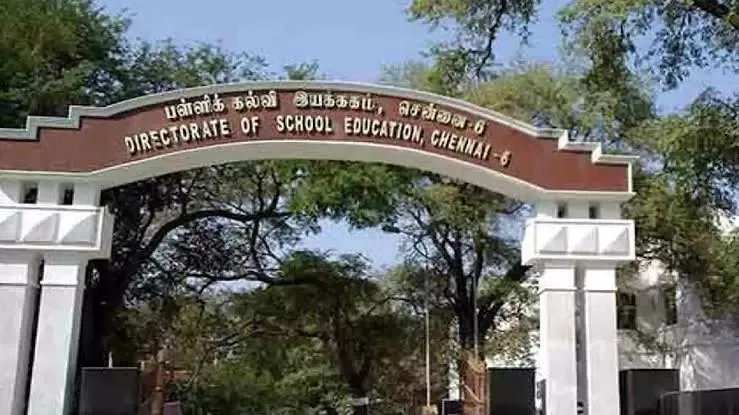
The school education department has not publicly responded to the full set of proposals; its next steps on the CCTV cost question and the invigilator allocation reform are expected to shape the examination framework for 2026-27.
Point of View
None the next in the same school — is the kind of statistical outlier that should have triggered an inquiry, not just a special-duty officer deployment. Tamil Nadu's reluctance to mandate CCTV, citing the cost of 42,000 halls, is understandable in isolation but less convincing when set against the reputational and legal costs of malpractice scandals and POCSO cases against invigilators. The plug-and-play random-centre approach is a pragmatic middle path that the department has yet to formally accept or reject. Absent a clear accountability framework, the same structural conditions that enabled score manipulation will persist into 2026-27.
NationPress
26 Oct 2026
Frequently Asked Questions
Why are Tamil Nadu teachers demanding CCTV cameras at examination centres?
Teachers are demanding CCTV cameras to deter malpractice, protect students, and create an independent record of invigilator conduct after POCSO cases were filed against government teachers serving as invigilators. They also cited unusual centum-score patterns at certain private schools as evidence that existing supervision is inadequate.
What unusual score pattern triggered concerns at Tamil Nadu private schools?
At one private school, more than 100 of its 148 Class 12 candidates scored centums in Chemistry in 2025, while none achieved the same score in 2026. Such sharp year-on-year swings prompted the state to deploy special-duty officers at those institutions during 2026 examinations.
Why is the government hesitant to install cameras at all exam centres?
The Directorate of Government Examinations cited the cost and scale of the exercise — Tamil Nadu has more than 7,000 examination centres, and with 8.5 lakh candidates at 20 per hall, an estimated 42,000 halls would need to be covered. As an alternative, teachers have proposed plug-and-play cameras at randomly selected centres.
What is the demand regarding mobile phone use by chief invigilators?
A current provision allows chief invigilators to use mobile phones during the first hour of examinations to communicate attendance and administrative details. Teachers want this withdrawn, arguing it creates an opportunity for misuse that could facilitate malpractice.
How would computerised random allocation of invigilators help?
Teachers allege that local influence has sometimes allowed lenient invigilators to be assigned to specific private schools, enabling malpractice. A fully randomised, computerised allocation system would remove this scope for manipulation and ensure consistent supervision standards across all centres in Tamil Nadu.