TN Assembly Election Results: Vote Counting on May 4 at 62 Centres
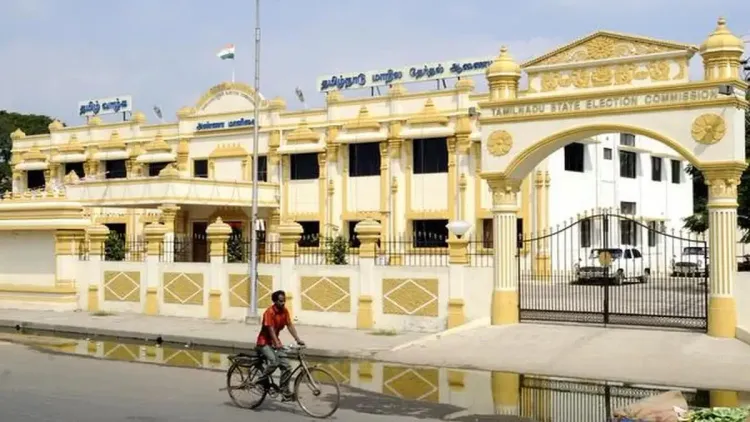
Synopsis
Tamil Nadu's Assembly election vote count begins May 4 at 62 centres statewide, with a record 3.36 lakh election personnel casting postal ballots and 1.73 lakh elderly and disabled voters voting from home — making this one of the most inclusive electoral exercises in the state's recent history.
Key Takeaways
Vote counting for the Tamil Nadu Assembly elections (April 23) will be held on May 4 across 62 counting centres .
Counting begins at 8:00 a.m. with postal ballots; EVM counting starts at 8:30 a.m. and final EVM rounds follow only after postal tallying is complete.
Approximately 3.36 lakh election personnel — out of 3.60 lakh deployed — voted via postal ballot; 1.10 lakh voted in person using EDCs.
A total of 1.73 lakh elderly (85+) and disabled voters cast votes from home under Form 12D .
Around 18,000 service voter ballots received so far; acceptance continues until 8:00 a.m. on May 4 .
Overall, 6.37 lakh voters were facilitated through special provisions beyond standard polling stations.
The counting of votes cast during the Tamil Nadu Assembly elections held on April 23 is scheduled to begin on Monday, May 4, across 62 designated counting centres spread throughout the state, according to election officials. The process will kick off at 8:00 a.m., with postal ballots taking precedence before Electronic Voting Machine (EVM) tallying begins at 8:30 a.m.
This comes amid heightened anticipation across Tamil Nadu's political landscape, with parties and candidates closely watching the outcome of what has been described as a high-stakes electoral exercise. The structured counting protocol reflects the Election Commission of India's emphasis on transparency and procedural rigour.
Key Counting Arrangements
Officials confirmed that EVM counting in the final round will commence only after postal ballot counting is fully completed. At every counting centre, separate halls and dedicated counting tables have been set up for both postal ballots and EVM votes, ensuring no overlap or procedural delay.
To maintain oversight, officers at the level of Assistant Returning Officer (ARO) have been independently appointed for each segment. Postal ballots will be processed at a ratio of one counting table for every 500 ballots, a measure designed to maintain accuracy and pace simultaneously.
Record Postal Ballot Participation
Of the 3.60 lakh officials deployed for election duty across Tamil Nadu, approximately 2.88 lakh personnel — nearly 80 per cent — exercised their franchise through postal ballots after registering as voters. This figure includes personnel from the police department, zonal and sector officers, and officials engaged in election monitoring teams.
In total, around 3.36 lakh election personnel cast their votes via postal ballot, while an additional 1.10 lakh officials voted in person at polling stations using Election Duty Certificates (EDC). Notably, this level of postal ballot participation among election workers underscores the scale of administrative mobilisation behind the Tamil Nadu polls.
Inclusive Voting Provisions
Special provisions were extended to elderly voters aged 85 years and above as well as persons with disabilities, allowing them to vote from home under Form 12D. A total of 1.73 lakh such voters availed this home-voting facility — a significant step toward inclusive democratic participation.
Service voters, including armed forces personnel, also participated in the electoral process. Around 18,000 service ballots have been received so far, and their postal votes will continue to be accepted until 8:00 a.m. on May 4, the day of counting itself.
Impact on Citizens and the Broader Electoral Picture
Overall, beyond those who voted at polling stations, arrangements were made to facilitate voting for an additional 6.37 lakh voters through various special provisions. This expanded framework reflects a deliberate push by election authorities to ensure no eligible voter is disenfranchised due to logistical barriers.
The Tamil Nadu Assembly election results on May 4 are expected to set the political tone for the state ahead of upcoming national conversations around governance and regional autonomy. All eyes will be on the 62 counting centres as the verdict unfolds through the course of the day.
Point of View
A fact rarely scrutinised. The inclusion of 1.73 lakh home voters through Form 12D is commendable, yet it also raises questions about verification rigour at scale. What mainstream coverage often misses is that the counting protocol — where postal ballots must fully conclude before EVMs are tallied — could meaningfully delay result declarations in closely contested constituencies. The outcome on May 4 will not just reflect voter preferences but also the Election Commission's capacity to manage an increasingly complex, multi-modal electoral infrastructure.
NationPress
1 Oct 2026
Frequently Asked Questions
When will Tamil Nadu election results be declared?
Tamil Nadu Assembly election results will be declared on May 4, 2025 , as vote counting begins at 8:00 a.m. across 62 centres statewide. Results are expected to emerge progressively through the day.
How many counting centres are set up for TN election results?
A total of 62 counting centres have been established across Tamil Nadu for counting votes from the April 23 Assembly elections. Each centre has separate arrangements for postal ballots and EVM votes.
What is the order of counting in Tamil Nadu elections?
Postal ballots will be counted first starting at 8:00 a.m. , followed by EVM counting from 8:30 a.m. The final round of EVM counting begins only after all postal ballots are fully tallied.
How many postal ballots were cast in Tamil Nadu elections 2025?
Approximately 3.36 lakh election personnel cast votes via postal ballot, and 1.73 lakh elderly and disabled voters used the home-voting facility under Form 12D. Around 18,000 service voter ballots have also been received.
Who was eligible for home voting in Tamil Nadu Assembly elections?
Voters aged 85 years and above and persons with disabilities were eligible to vote from home under Form 12D . A total of 1.73 lakh such voters availed this facility during the April 23 elections.