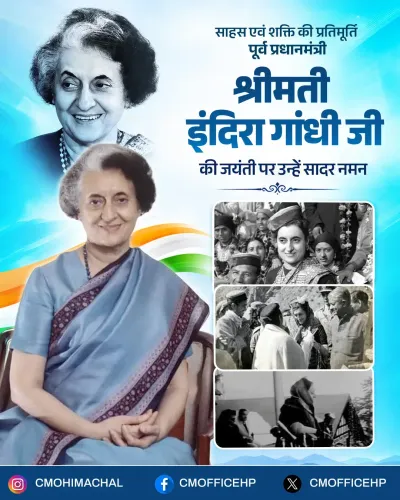
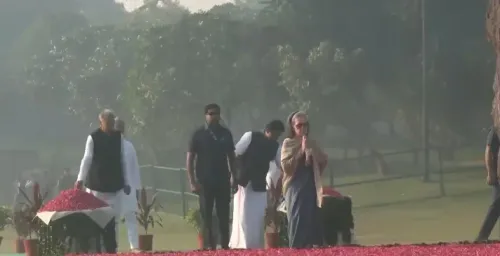
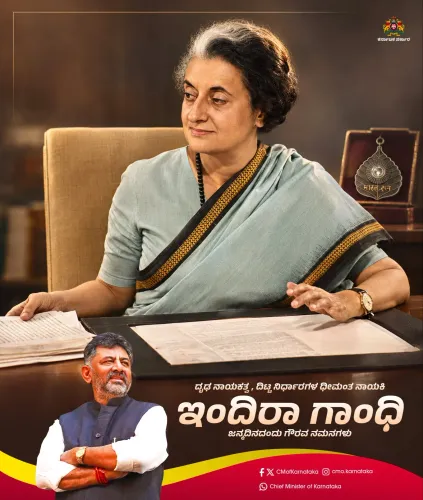
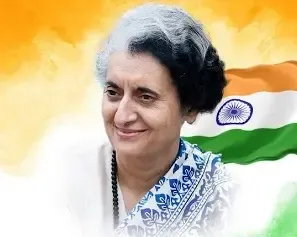
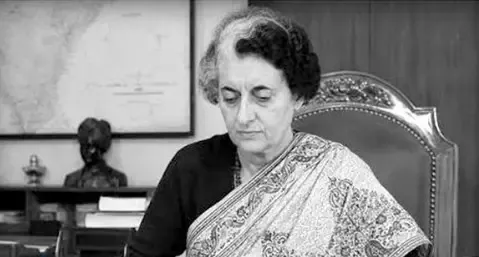
Indira Gandhi birth anniversary: TNCC chief Manickam Tagore hails 'Iron Lady of India'
Synopsis
On Indira Gandhi's 108th birth anniversary, TNCC president Manickam Tagore hailed her as the 'Iron Lady of India' on X, spotlighting bank nationalisation and the Green Revolution as her defining economic contributions — even as her legacy remains contested over the Emergency of 1975–77.
Key Takeaways
TNCC president Manickam Tagore paid tribute to Indira Gandhi on her 108th birth anniversary on 19 November 2026 .
Tagore described her as the 'Iron Lady of India' in a post on social media platform X .
He highlighted the nationalisation of major commercial banks in 1969 and the Green Revolution as transformative contributions.
Indira Gandhi, born 19 November 1917 in Allahabad (now Prayagraj) , was India's first and only woman Prime Minister.
She was assassinated on 31 October 1984 ; her tenure also included the controversial Emergency (1975–77) .
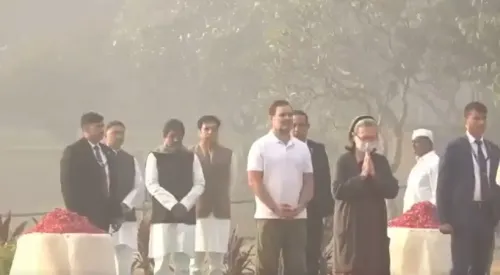
Tamil Nadu Congress Committee (TNCC) president and Member of Parliament Manickam Tagore on Thursday, 19 November, paid tribute to former Prime Minister Indira Gandhi on her 108th birth anniversary, honouring her legacy of nation-building, economic reform, national integration, and welfare of marginalised communities.
Tagore's Tribute on X
In a post on social media platform X, Tagore described Indira Gandhi as the 'Iron Lady of India', saying her courage, vision, and unwavering commitment to the country would continue to inspire generations to come. He reaffirmed the importance of remembering her contributions to India's development and her dedication to the welfare of ordinary citizens.
Tagore said Indira Gandhi had devoted her life to safeguarding India's unity, sovereignty, and secular credentials while working towards the progress and empowerment of the poor. 'May the glory and memory of Mother Indira live forever,' he said in his tribute.
Landmark Initiatives of Her Tenure
The TNCC president highlighted several transformative initiatives undertaken during Indira Gandhi's time in office. The nationalisation of major commercial banks in 1969 was a defining economic intervention aimed at expanding banking access and ensuring institutional credit for farmers, small entrepreneurs, and economically weaker sections. The move brought banking services to millions who had previously been excluded from the formal financial system.
Tagore also pointed to the Green Revolution, which significantly boosted India's agricultural output and steered the country toward self-sufficiency in foodgrains, reducing its dependence on imports and reinforcing national food security. These two initiatives, he argued, laid a solid foundation for India's subsequent economic development.
Life and Legacy of Indira Gandhi
Born on 19 November 1917 in Allahabad (now Prayagraj), Indira Gandhi remains India's first — and so far only — woman Prime Minister. She served in office from 1966 to 1977 and again from 1980 until her assassination on 31 October 1984. Her tenure witnessed several defining moments in modern Indian history, including the 1971 Bangladesh Liberation War and India's first nuclear test at Pokhran in 1974.
Her political legacy, however, also remains contested. Critics and historians continue to debate the period of the Emergency imposed between 1975 and 1977, widely regarded as one of the most controversial chapters in post-independence Indian politics.
Context: Congress Marks the Anniversary Nationally
Tributes from Congress leaders across the country marked the occasion, with the party using the anniversary to reinforce its foundational narrative around Indira Gandhi's contributions to India's economic sovereignty and territorial integrity. The TNCC chief's remarks reflect the Congress's continued effort to position her legacy as a touchstone for its political identity in Tamil Nadu and nationally.
Point of View
Particularly in states like Tamil Nadu where the party is in alliance with the DMK. What is notable in Tagore's framing is the deliberate emphasis on economic nationalism — bank nationalisation and the Green Revolution — at a time when Congress is seeking to reclaim a credible economic identity. The Emergency, which remains a live wound in India's democratic memory, goes unaddressed in such tributes, as it almost always does. A fuller reckoning with her legacy — transformative and authoritarian in equal measure — would better serve the historical record than hagiography alone.
NationPress
19 Nov 2026
Frequently Asked Questions
Why is Indira Gandhi's birth anniversary observed on 19 November?
Indira Gandhi was born on 19 November 1917 in Allahabad, now Prayagraj. The date is observed annually by the Indian National Congress and its affiliated organisations to commemorate her contributions to India's political and economic development.
What did TNCC president Manickam Tagore say about Indira Gandhi?
Tagore described Indira Gandhi as the 'Iron Lady of India' in a post on X, crediting her with safeguarding India's unity, sovereignty, and secular values, and highlighting bank nationalisation and the Green Revolution as landmark achievements of her tenure.
What were Indira Gandhi's most significant policy contributions?
Two of her most cited contributions are the nationalisation of major commercial banks in 1969, which expanded credit access for farmers and small businesses, and the Green Revolution, which boosted agricultural output and helped India achieve foodgrain self-sufficiency. Her tenure also included the 1971 Bangladesh Liberation War and India's first nuclear test at Pokhran in 1974.
Why is Indira Gandhi's legacy considered controversial?
While widely credited for economic reforms and national security decisions, Indira Gandhi's imposition of the Emergency between 1975 and 1977 — during which civil liberties were curtailed and political opponents were jailed — remains a deeply contested chapter in Indian democratic history.
Who is Manickam Tagore?
Manickam Tagore is the president of the Tamil Nadu Congress Committee (TNCC) and a Member of Parliament. He is a senior Congress leader from Tamil Nadu and has been an active voice on national political issues.