Kharge, Sonia Gandhi pay tribute to Indira Gandhi on 109th birth anniversary
Synopsis
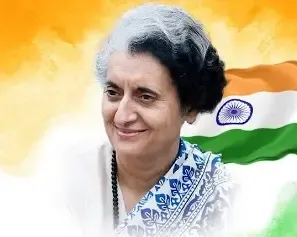
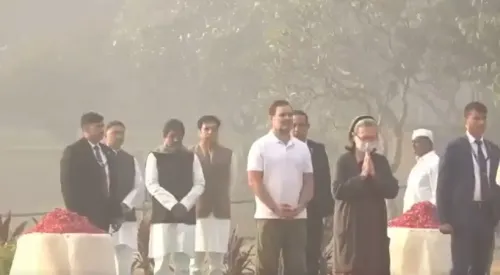
On Indira Gandhi's 109th birth anniversary, Congress President Kharge and CPP Chairperson Sonia Gandhi gathered at Shakti Sthal to pay tribute to the 'Iron Lady of India' — a leader whose decisions on banking, war and separatism still define debates about India's post-independence trajectory.
Key Takeaways
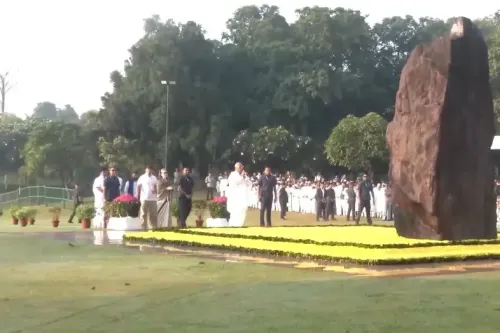
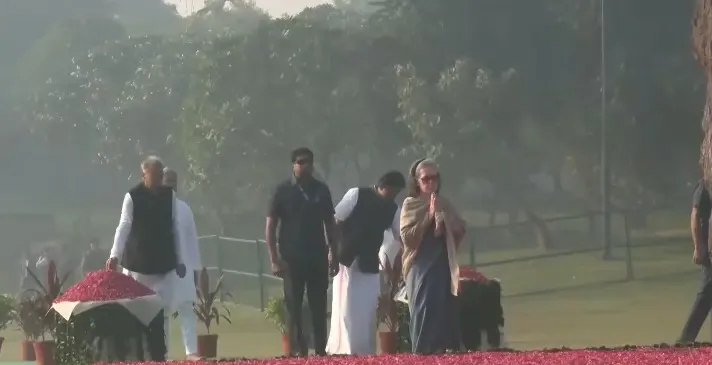
Congress President Mallikarjun Kharge and CPP Chairperson Sonia Gandhi paid floral tributes at Shakti Sthal , New Delhi, on 19 November 2026 .
Kharge described Indira Gandhi as India's 'Iron Lady' and praised her 'indomitable courage, struggle and strong leadership' in a post on X .
Shivakumar also paid tribute, highlighting her role in agriculture, banking and India's space and nuclear programmes.
Indira Gandhi was born on 19 November 1917 in Allahabad and served as Prime Minister from 1966–1977 and 1980–1984 .
She was assassinated on 31 October 1984 after ordering Operation Bluestar at the Golden Temple in Amritsar.
Her birth anniversary is observed annually as National Integration Day .
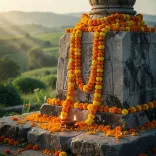
Congress President Mallikarjun Kharge and Congress Parliamentary Party (CPP) Chairperson Sonia Gandhi on Thursday, 19 November 2026, paid floral tributes to former Prime Minister Indira Gandhi at Shakti Sthal in New Delhi, marking her 109th birth anniversary. The occasion, observed annually as National Integration Day, drew senior Congress leaders to the memorial to honour the legacy of India's only woman Prime Minister.
Kharge Pays Homage on X
Kharge also took to social media platform X to pay his respects, describing Indira Gandhi as India's 'Iron Lady' and a symbol of courage, struggle and strong leadership. 'With deepest reverence on the birth anniversary of India's Iron Lady and former Prime Minister, Smt. Indira Gandhi, a symbol of indomitable courage, struggle and strong leadership. She sacrificed her life to protect the country's unity, integrity and sovereignty. Her dedication to the nation, her contributions, her unwavering resolve and her decisive leadership will forever inspire us,' he wrote in Hindi.
Karnataka CM Recalls Her Contributions
Karnataka Chief Minister D.K. Shivakumar also paid tribute, posting on X that Indira Gandhi's tenure witnessed significant political, economic and institutional developments. He highlighted her role in strengthening agricultural production, expanding access to banking services and supporting India's space and nuclear programmes. 'As we remember her journey in public life, we also recognise the mark she left on India's political landscape and its development trajectory. Her contributions remain an important part of India's post-independence history, and her memory will continue to be remembered with respect,' he said.
Indira Gandhi: Life and Legacy
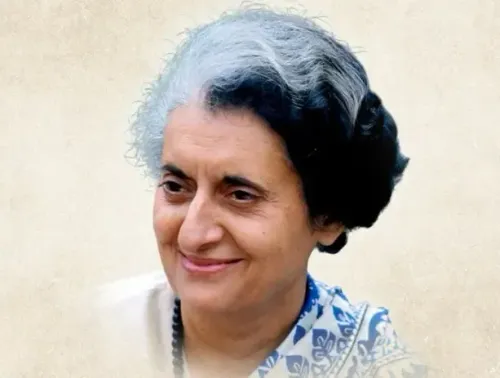
Indira Gandhi was born on 19 November 1917 in Allahabad, Uttar Pradesh, the daughter of India's first Prime Minister Jawaharlal Nehru and Kamala Nehru. She served as Prime Minister from 1966 to 1977 and again from January 1980 until her assassination in 1984, making her India's second-longest-serving Prime Minister after her father. She entered the Rajya Sabha in August 1964, and later served in the Lok Sabha across its fourth, fifth and sixth terms.
Among her most consequential decisions was her leadership during the 1971 India-Pakistan war, which culminated in the creation of Bangladesh — an outcome that cemented her reputation as a decisive and resolute leader. On the economic front, she is remembered for the nationalisation of banks and the abolition of privy purses granted to former princely states.
Assassination and Operation Bluestar
Indira Gandhi was assassinated on 31 October 1984 by two of her bodyguards, months after she ordered Operation Bluestar — a military operation launched to flush out armed separatists who had taken shelter inside the Golden Temple in Amritsar, one of Sikhism's holiest shrines. The operation and its aftermath remain among the most contested episodes in post-independence Indian history.
National Integration Day
Her birth anniversary is observed each year as National Integration Day, commemorating her efforts to unite India's diverse regions, cultures and communities under a shared national identity. Throughout her political career, she emphasised unity and cohesion as central pillars of governance — a theme that continues to frame how her party invokes her memory today.
Point of View
Particularly when the party is on the opposition benches. What is worth noting is that the 'Iron Lady' invocation glosses over the contested episodes of her tenure — the Emergency, Operation Bluestar — that remain live fault lines in Indian political discourse. Kharge's post focuses exclusively on sacrifice and unity, which is a selective framing. A fuller reckoning with her legacy, including its authoritarian chapters, would make for a more honest and historically grounded tribute.
NationPress
19 Nov 2026
Frequently Asked Questions
Why is 19 November observed as National Integration Day?
19 November is observed as National Integration Day to mark the birth anniversary of former Prime Minister Indira Gandhi, who was born on this date in 1917. The day commemorates her contributions to national unity and India's development.
What did Congress President Kharge say about Indira Gandhi?
Kharge described Indira Gandhi as India's 'Iron Lady' and 'a symbol of indomitable courage, struggle and strong leadership' in a post on X. He wrote that she sacrificed her life to protect the country's unity, integrity and sovereignty.
How long did Indira Gandhi serve as Prime Minister?
Indira Gandhi served as Prime Minister from 1966 to 1977 and again from January 1980 until her assassination on 31 October 1984. She was India's second-longest-serving Prime Minister after her father, Jawaharlal Nehru.
How did Indira Gandhi die?
Indira Gandhi was assassinated on 31 October 1984 by two of her bodyguards, months after she ordered Operation Bluestar — a military operation to remove armed separatists sheltering inside the Golden Temple in Amritsar.
What were Indira Gandhi's key contributions to India?
Indira Gandhi is remembered for the nationalisation of banks, the abolition of privy purses, her leadership during the 1971 India-Pakistan war that led to the creation of Bangladesh, and her support for India's space and nuclear programmes.