Is TNGECL Securing the Centre’s Green Clearance for the Kanyakumari Pumped Storage Project?
Synopsis
The Tamil Nadu Green Energy Corporation Limited is taking significant steps to secure environmental clearance for a major energy storage project in Kanyakumari. This initiative aims to enhance renewable energy capacity and stabilize the power grid, making it a vital component of Tamil Nadu's energy future.
Key Takeaways
1,000 MW capacity pumped storage project in Kanyakumari.
Estimated project cost of Rs 5,624 crore .
Designed as a closed-loop, off-river system .
Construction of two new off-river reservoirs .
Significant enhancement of renewable energy integration.
Chennai, Jan 29 (NationPress) The Tamil Nadu Green Energy Corporation Limited (TNGECL) has commenced the environmental clearance process for a significant energy storage initiative at Vellimalai in Kanyakumari district. This step involves reaching out to the Union Ministry of Environment, Forest and Climate Change (MoEFCC) for the Terms of Reference (ToR).
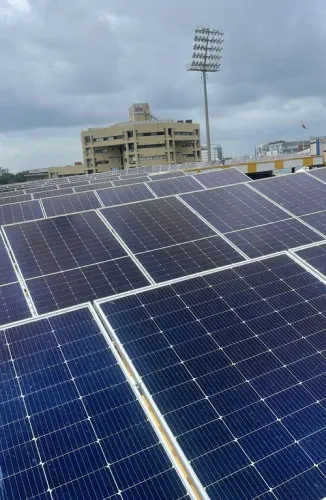
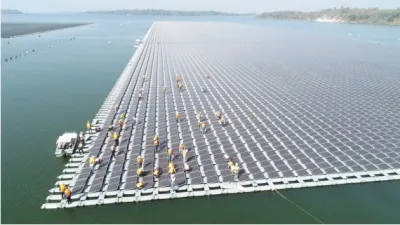
The proposed 1,000 MW pumped storage project, structured under a public-private partnership (PPP) model, is seen as a vital infrastructure enhancement aimed at bolstering Tamil Nadu’s swiftly growing renewable energy capacity and enhancing grid stability during peak demand periods.
Designed as a closed-loop, off-river pumped storage system, the Vellimalai project is poised to be essential in balancing intermittent renewable energy sources like solar and wind. The facility will feature four fixed-speed units, each with a capacity of 250 MW, bringing the total installed capacity to 1,000 MW. The projected cost of the project, excluding transmission infrastructure, stands at Rs 5,624 crore. When operational, it is anticipated to significantly improve peak power management and ensure continuous availability of clean energy in the state.
Project documentation reveals plans for the construction of two entirely new off-river reservoirs. The upper reservoir is slated to be located near Maruvattar Kannu village, boasting a gross storage capacity of approximately 4.39 million cubic metres.
The lower reservoir is planned near Madathattuvilai village, situated upstream of the existing Mambazhathuraiyar Dam, with a projected gross storage capacity of around 4.91 million cubic metres.
According to the proposed operational cycle, nearly 3.94 million cubic metres of water will be pumped from the lower reservoir to the upper reservoir during off-peak hours over approximately 6.94 hours. Power generation is expected to occur for about six hours a day during peak demand, with annual peak energy production estimated at 2,080.55 gigawatt hours (GWh).
As a closed-loop off-river system, the project does not depend on perennial rivers or natural streams. The water will circulate between the two reservoirs in a controlled cycle, minimizing reliance on natural inflows.
TNGECL emphasizes that this design greatly mitigates environmental and hydrological impacts compared to open-loop pumped storage projects that are directly connected to rivers or existing reservoirs.
The total land requirement for this initiative is approximately 159 hectares, including nearly 62 hectares of forest land. This encompasses areas for reservoirs, water conductor systems, an underground powerhouse and adits, approach roads, muck disposal sites, labor camps, and residential zones.
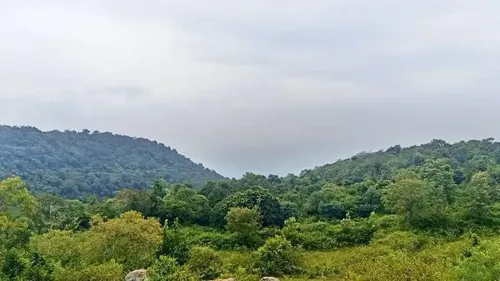
Although the project does not entail rehabilitation and resettlement, it will necessitate forest clearance. As the upper reservoir is located within the eco-sensitive zone of the Kanyakumari Wildlife Sanctuary, obtaining clearance from the National Board for Wildlife will also be essential.
Point of View
It is crucial to acknowledge the steps taken by TNGECL towards enhancing Tamil Nadu's renewable energy infrastructure. This initiative reflects the state's commitment to sustainable energy solutions, balancing growth with environmental considerations. The project's emphasis on minimizing ecological impact through a closed-loop system is commendable, marking a progressive approach to energy management.
NationPress
20 Sept 2026
Frequently Asked Questions
What is the capacity of the pumped storage project?
The pumped storage project has a total capacity of 1,000 MW.
Where will the upper reservoir be located?
The upper reservoir is proposed near Maruvattar Kannu village.
What is the estimated cost of the project?
The estimated cost of the project is Rs 5,624 crore, excluding transmission infrastructure.
How much land is required for the project?
The total land requirement for the project is estimated at around 159 hectares.
Will the project require forest clearance?
Yes, the project will require forest clearance as the upper reservoir is located within the eco-sensitive zone of the Kanyakumari Wildlife Sanctuary.